

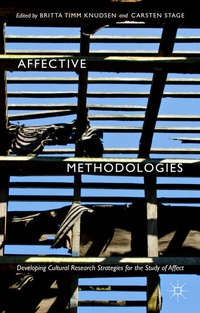
Affective Methodologies
Developing Cultural Research Strategies for the Study of Affect
Published on 10. February 2016
XIV, 258 pages
978-1-137-48319-5 (ISBN)
Description

The collection proposes inventive research strategies for the study of the affective and fluctuating dimensions of cultural life. It presents studies of nightclubs, YouTube memes, political provocations, heritage sites, blogging, education development, and haunting memories.
Reviews / Votes
"Affective Methodologies redefines the way we can work with affect in our research assemblages. In a considered and timely application of affect theory to qualitative research practices, Knudsen and Stage have brought together a diverse collection of scholars. From defining figures in the field such as Blackman and Gibbs, to new voices including To and Kølvraa, this book provides a much needed consolidation of the existing trajectories of scholarship on and of affect while opening new ways forward for qualitative research." - Anna Hickey-Moody, Goldsmiths, University of London, UK
More details
Series
Edition
1st ed. 2015
Language
English
Place of publication
London
United Kingdom
Publishing group
Palgrave Macmillan UK
Target group
Professional and scholarly
Product notice
Reflowable
Illustrations
XIV, 258 p.
File size
2,37 MB
ISBN-13
978-1-137-48319-5 (9781137483195)
DOI
10.1057/9781137483195
Schweitzer Classification
Other editions
Additional editions
Britta Timm Knudsen | Carsten Stage
Affective Methodologies
Developing Cultural Research Strategies for the Study of Affect
Book
12/2017
Palgrave Macmillan
€80.24
Shipment within 15-20 days

Britta Timm Knudsen | Carsten Stage
Affective Methodologies
Developing Cultural Research Strategies for the Study of Affect
Book
08/2015
Palgrave Macmillan
€90.94
Shipment within 10-20 days
Persons
Lisa Blackman, Goldsmiths, University of London, UK. Frederik Bøhling, Aarhus University, Denmark. Anna Gibbs, University of Western Sydney, Australia. Jette Kofoed, Aarhus University, Denmark. Christoffer Kølvraa, Aarhus University, Denmark. Celia Lury, University of Warwick, UK. Camilla Møhring Reestorff, Aarhus University, Denmark Mikkel Rytter, Aarhus University, Denmark. Dorthe Staunæs, Aarhus University, Denmark Nathan M.L. To, Goldsmiths, University of London, UK. Elena Trivelli, Goldsmiths, University of London, UK. Emma Waterton, University of Western Sydney, Australia. Steve Watson, York St John University, United Kingdom.
Content
1. Introduction: Affective methodologies; Britta Timm Knudsen and Carsten Stage
Part I: Inventive experiments
2. Researching Affect and Embodied Hauntologies: Exploring an Analytics of Experimentation; Lisa Blackman
3. Experimenting with affects and senses - A performative pop-up-laboratory (self) critically revisited; Dorthe Staunæs and Jette Kofoed
4. Diasporic montage and critical autoethnography: Mediated visions of intergenerational memory and the affective transmission of trauma; Nathan To
Part II: Embodied fieldwork
5. Methods in Motion: Affecting Heritage Research; Emma Waterton and Steve Watson
6. Exploring a ' 'remembering crisis ' ': ' 'Affective attuning ' ' and ' 'assemblaged archive ' ' as theoretical frameworks and research methodologies; Elena Trivelli
7. The scent of a rose: imitating imitators as they learn to love the Prophet; Mikkel Rytter
8. The field note assemblage: Researching the bodily-affective dimensions of drinking and dancingethnographically; Frederik Bøhling
Part III: Textualities
9. Affect, Provocation and Far Right Rhetoric; Christoffer Kølvraa
10. From Artwork to Net-work: Affective Effects of Political Art; Camilla M. Reestorff
11. Writing as Method: Attunement, Resonance and Rhythm; Anna Gibbs
12. Epilogue; Celia Lury
Part I: Inventive experiments
2. Researching Affect and Embodied Hauntologies: Exploring an Analytics of Experimentation; Lisa Blackman
3. Experimenting with affects and senses - A performative pop-up-laboratory (self) critically revisited; Dorthe Staunæs and Jette Kofoed
4. Diasporic montage and critical autoethnography: Mediated visions of intergenerational memory and the affective transmission of trauma; Nathan To
Part II: Embodied fieldwork
5. Methods in Motion: Affecting Heritage Research; Emma Waterton and Steve Watson
6. Exploring a ' 'remembering crisis ' ': ' 'Affective attuning ' ' and ' 'assemblaged archive ' ' as theoretical frameworks and research methodologies; Elena Trivelli
7. The scent of a rose: imitating imitators as they learn to love the Prophet; Mikkel Rytter
8. The field note assemblage: Researching the bodily-affective dimensions of drinking and dancingethnographically; Frederik Bøhling
Part III: Textualities
9. Affect, Provocation and Far Right Rhetoric; Christoffer Kølvraa
10. From Artwork to Net-work: Affective Effects of Political Art; Camilla M. Reestorff
11. Writing as Method: Attunement, Resonance and Rhythm; Anna Gibbs
12. Epilogue; Celia Lury
