

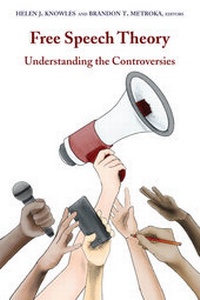
Free Speech Theory
Description

The rallying cry of "Free speech!" has long served as a touchstone for liberals and conservatives, alike, engaged in political polarization conflict and discourse. The democratization of media and the feverish pitch of political polarization, however, have contributed to the weaponization of free expression. From Colin Kaepernick to "fake news," boycotts of partisan television programming to removals of Confederate monuments, internet neutrality to the silencing of college professors and all points between, citizens and pundits all too frequently wield the slogan of "Free speech!" as the sword and shield of political discourse. Oftentimes, ironically they do so with little regard for the views of their opponents. As a result, society risks trading a substantive value for an empty slogan or, far worse, blind authority.To rediscover the underlying assumptions and social values served by free expression, and to move current controversies beyond rhetorical flourishes, Helen J. Knowles and Brandon T. Metroka assemble an impressive group of legal and political scholars to address one overarching question: "Why should we value free speech?" Through analyses of several recent controversies invoking concerns for free expression, the contributors to this volume make complex political theory accessible, informative, and entertaining. Beginning with internet neutrality and ending with an overview of developing free expression controversies in comparable western democracies, experts reestablish the link between free expression and the underlying values it may serve. In doing so, this volume unearths values previously unexamined in our modern-but increasingly impoverished and bitter-political discourse.
Reviews / Votes
"Not since Watergate have mass media and free speech issues been so critically implicated in the health and ills of our democracy. This volume highlights the most urgent contemporary challenges to our Western free speech tradition, from the persistent drive of polarized politics to the crisis of intellectual freedom on campus. Experienced educators in constitutional law and the courts, Helen J. Knowles and Brandon T. Metroka present authors in an accessible discourse over free speech today, and whether it will survive tomorrow."-Richard J. Peltz-Steele, Chancellor Professor, University of Massachusetts Law SchoolMore details
Other editions
Additional editions
Persons
Helen J. Knowles is Associate Professor of Political Science at the State University of New York at Oswego.
Brandon T. Metroka is Assistant Professor of Political Science at the University of the Incarnate Word in San Antonio, Texas. He has authored and co-authored articles examining free expression and judicial behavior that have appeared in the Justice System Journal, American University International Law Review, and Washington & Lee Law Review.
Content
Acknowledgments - Helen J. Knowles/Brandon T. Metroka: Introduction: Why Free Speech Theory Matters - James C. Foster: No Neutrality: Hobbesian Constitutionalism in the Internet Age - Mark A. Graber: Freedoms of Speech in the Multiversity - Keith J. Bybee/Laura E. Jenkins: Free Speech, Free Press, and Fake News: What If the Marketplace of Ideas Isn't About Identifying Truth? - Logan Strother/Nathan T. Carrington: Free Speech and Confederate Symbols - Aaron Lorenz: Speech and National Past Times: The NFL, the Flag, and Professional Athletes - Jason Zenor: The Slants and Blurred Lines: The Conflict Between Free Speech and Intellectual Property Law - Katharine Gelber: Free Speech Debates in Australia: Contemporary Controversies - Ian Cram: Parliamentary and Judicial Treatments of Free Speech Interests in the UK - Helen J. Knowles/Brandon T. Metroka: Conclusion: It's Still Complicated - Contributors - Index
