

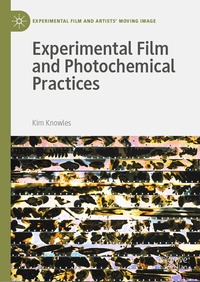
Experimental Film and Photochemical Practices
Description

This book assesses the contemporary status of photochemical film practice against a backdrop of technological transition and obsolescence. It argues for the continued relevance of material engagement for opening up alternative ways of seeing and sensing the world. Questioning narratives of replacement and notions of fetishism and nostalgia, the book sketches out the contours of a photochemical renaissance driven by collective passion, creative resistance and artistic reinvention. Celluloid processes continue to play a key role in the evolution of experimental film aesthetics and this book takes a personal journey into the work of several key contemporary film artists. It provides fresh insight into the communities and infrastructures that sustain this vibrant field and mobilises a wide range of theoretical perspectives drawn from media archaeology, new materialism, ecocriticism and social ecology.
More details
Other editions
Additional editions
Person
Kim Knowles lectures in Alternative and Experimental Film at Aberystwyth University in Wales and curates the Black Box strand of the Edinburgh International Film Festival. She is the author of A Cinematic Artist: The Films of Man Ray (2009) and co-editor (with Marion Schmid) of Cinematic Intermediality: Theory and Practice (2021).
