

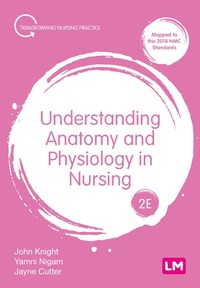
Understanding Anatomy and Physiology in Nursing
2nd Edition
Published on 21. March 2024
432 pages
978-1-5296-7646-4 (ISBN)
Description

Covering all the key aspects of anatomy and physiology that nursing students need to know, this second edition condenses vast amounts of scientific information into short, concise, and easily accessible chapters. It introduces aspiring nurses to all of the vital information on this tricky subject, from an overview of cells, blood, and the major organ systems through to key developmental stages, genetics and ageing. Case studies link core principles of anatomy and physiology to common real-world clinical scenarios, helping students apply this knowledge to their everyday working practice.
Key features:
- Each short chapter is mapped to the 2018 NMC Standards
- Scientific information is broken down into easily digestible chunks with accompanying illustrations, to help aspiring nurses get to grips with this complex subject
- Case studies, activities and other learning features help students translate the theory to practice
- Provides revision guidance and strategies for tackling exams and assessments
Key features:
- Each short chapter is mapped to the 2018 NMC Standards
- Scientific information is broken down into easily digestible chunks with accompanying illustrations, to help aspiring nurses get to grips with this complex subject
- Case studies, activities and other learning features help students translate the theory to practice
- Provides revision guidance and strategies for tackling exams and assessments
More details
Series
Edition
Second Edition
Language
English
Place of publication
London
United Kingdom
Publishing group
Sage Publications Ltd
Target group
College/higher education
ISBN-13
978-1-5296-7646-4 (9781529676464)
Copyright in bibliographic data and cover images is held by Nielsen Book Services Limited or by the publishers or by their respective licensors: all rights reserved.
Schweitzer Classification
Other editions
Additional editions
John Knight | Yamni Nigam | Jayne Cutter
Understanding Anatomy and Physiology in Nursing
Book
03/2024
2nd Edition
SAGE Publications Ltd
€98.90
Shipment within 3-4 weeks
John Knight | Yamni Nigam | Jayne Cutter
Understanding Anatomy and Physiology in Nursing
Book
03/2024
2nd Edition
SAGE Publications Ltd
€51.40
Shipment within 3-4 weeks
Persons
Dr John Knight is Associate Professor in Biomedical Science within the College Of Human and Health Sciences at Swansea University. For the last 20 years he has taught Anatomy, Physiology and Pathophysiology on a wide variety of professional degree and diploma programmes including: Health and Social Care, Paramedic Science, Nursing and Midwifery. John's first degree is in microbiology; additionally he holds a Ph.D. in immunology and has over 50 published articles in peer reviewed journals. His teaching at Swansea University has recently been recognized by the presentation of a Distinguished Teaching Award; John has a variety of research interests including the evolution of immune responses, the physiological effects of ageing and immobility and the use of Virtual Reality simulations in the teaching of Anatomy and Physiology.
Dr Yamni Nigam is a Professor in Biomedical Science (anatomy, physiology and pathophysiology) and a Fellow of the Higher Education Academy, teaching to a wide range of health professionals including nurses and paramedics. Her specialist subjects include digestion, blood, immunology, microbiology, parasitology, wounds (infection and healing) and maggot therapy. Yamni graduated from Kings College, London and undertook a Master's degree in Applied Parasitology and Medical Entomology at the Liverpool School of Tropical Medicine. After successful completion of her doctorate, Yamni was offered a lectureship teaching anatomy and physiology at Swansea University. In 2001, she set up the Swansea University Maggot Research Group, focusing on scientific investigations of the medicinal maggot and its role in wound healing. Her love of human A&P has persisted and she continues to write articles to support the learning of these subjects for all health professionals. Yamni is an author of over 75 peer reviewed articles, book chapters and papers.
After qualifying as a nurse, Dr Jayne Cutter worked in surgery and intensive care before becoming a Clinical Nurse Specialist in Infection Control. She spent 15 years in this post before leaving the NHS and joining Swansea University as a lecturer. Jayne's research interests include infection control and pedagogy. Although interested in all aspects of infection prevention and control, Jayne has a particular interest in factors influencing compliance. In 2009 she gained a PhD following a study entitled "Factors influencing sustaining and reporting inoculation injuries in healthcare professionals undertaking exposure prone procedures". In April 2015, Jayne was appointed as the Head of the Department of Nursing at Swansea University and became a professor in 2019. She has been closely involved in developing the new curriculum at Swansea to meet the new NMC Standards for pre-registration nursing programmes. Jayne currently chairs the all Wales Pre-Registration Nursing and Midwifery Group and has contributed to the development of all Wales documentation to support the new NMC standards.
After qualifying as a nurse, Dr Jayne Cutter worked in surgery and intensive care before becoming a Clinical Nurse Specialist in Infection Control. She spent 15 years in this post before leaving the NHS and joining Swansea University as a lecturer. Jayne's research interests include infection control and pedagogy. Although interested in all aspects of infection prevention and control, Jayne has a particular interest in factors influencing compliance. In 2009 she gained a PhD following a study entitled "Factors influencing sustaining and reporting inoculation injuries in healthcare professionals undertaking exposure prone procedures". In April 2015, Jayne was appointed as the Head of the Department of Nursing at Swansea University and became a professor in 2019. She has been closely involved in developing the new curriculum at Swansea to meet the new NMC Standards for pre-registration nursing programmes. Jayne currently chairs the all Wales Pre-Registration Nursing and Midwifery Group and has contributed to the development of all Wales documentation to support the new NMC standards.
Dr Yamni Nigam is a Professor in Biomedical Science (anatomy, physiology and pathophysiology) and a Fellow of the Higher Education Academy, teaching to a wide range of health professionals including nurses and paramedics. Her specialist subjects include digestion, blood, immunology, microbiology, parasitology, wounds (infection and healing) and maggot therapy. Yamni graduated from Kings College, London and undertook a Master's degree in Applied Parasitology and Medical Entomology at the Liverpool School of Tropical Medicine. After successful completion of her doctorate, Yamni was offered a lectureship teaching anatomy and physiology at Swansea University. In 2001, she set up the Swansea University Maggot Research Group, focusing on scientific investigations of the medicinal maggot and its role in wound healing. Her love of human A&P has persisted and she continues to write articles to support the learning of these subjects for all health professionals. Yamni is an author of over 75 peer reviewed articles, book chapters and papers.
After qualifying as a nurse, Dr Jayne Cutter worked in surgery and intensive care before becoming a Clinical Nurse Specialist in Infection Control. She spent 15 years in this post before leaving the NHS and joining Swansea University as a lecturer. Jayne's research interests include infection control and pedagogy. Although interested in all aspects of infection prevention and control, Jayne has a particular interest in factors influencing compliance. In 2009 she gained a PhD following a study entitled "Factors influencing sustaining and reporting inoculation injuries in healthcare professionals undertaking exposure prone procedures". In April 2015, Jayne was appointed as the Head of the Department of Nursing at Swansea University and became a professor in 2019. She has been closely involved in developing the new curriculum at Swansea to meet the new NMC Standards for pre-registration nursing programmes. Jayne currently chairs the all Wales Pre-Registration Nursing and Midwifery Group and has contributed to the development of all Wales documentation to support the new NMC standards.
After qualifying as a nurse, Dr Jayne Cutter worked in surgery and intensive care before becoming a Clinical Nurse Specialist in Infection Control. She spent 15 years in this post before leaving the NHS and joining Swansea University as a lecturer. Jayne's research interests include infection control and pedagogy. Although interested in all aspects of infection prevention and control, Jayne has a particular interest in factors influencing compliance. In 2009 she gained a PhD following a study entitled "Factors influencing sustaining and reporting inoculation injuries in healthcare professionals undertaking exposure prone procedures". In April 2015, Jayne was appointed as the Head of the Department of Nursing at Swansea University and became a professor in 2019. She has been closely involved in developing the new curriculum at Swansea to meet the new NMC Standards for pre-registration nursing programmes. Jayne currently chairs the all Wales Pre-Registration Nursing and Midwifery Group and has contributed to the development of all Wales documentation to support the new NMC standards.
Content
Chapter 1: Cellular physiology and histology
Chapter 2: Homeostasis
Chapter 3: The cardiovascular system
Chapter 4: The respiratory system
Chapter 5: The endocrine system
Chapter 6: The nervous system
Chapter 7: The skin
Chapter 8: The musculoskeletal system
Chapter 9: Blood
Chapter 10: Immunity and the lymphatic system
Chapter 11: The digestive system
Chapter 12: The urinary system
Chapter 13: The reproductive systems
Chapter 14: Genetics and inheritance
Chapter 2: Homeostasis
Chapter 3: The cardiovascular system
Chapter 4: The respiratory system
Chapter 5: The endocrine system
Chapter 6: The nervous system
Chapter 7: The skin
Chapter 8: The musculoskeletal system
Chapter 9: Blood
Chapter 10: Immunity and the lymphatic system
Chapter 11: The digestive system
Chapter 12: The urinary system
Chapter 13: The reproductive systems
Chapter 14: Genetics and inheritance
