

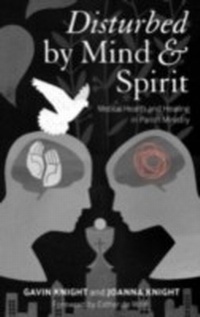
Disturbed by Mind and Spirit
Mental Health and Healing in Parish Ministry
1st Edition
Published on 9. April 2009
160 pages
978-1-4411-4938-1 (ISBN)
Description

Set in the specific context of a culturally diverse inner urban parish where mental health needs are high and the previous incumbent was murdered. The book reflects on issues of mental health, loss and trauma which are common to all parishes.
It offers a unique exploration of how mental health in a parish setting can be addressed via the dual perspectives of pastoral theology and clinical psychology. It is constructed in pairs of chapters, with each theological chapter followed by its psychological counterpart. Thus psychological thinking is used to reflect upon the liturgical pattern of the Eucharist as a means of deepening our awareness of and response to mental health and trauma.
It aims:
- to help raise the profile of mental health issues present in parish life
- to encourage individuals to reflect on their own personal stories, ideas and belief systems, and how these might impact on their ministry and/or discipleship in the context of mental health
- to help recognise and acknowledge that mental health is often a stigmatized, forbidden and misunderstood subject; one which has no clear-cut answers, but which challenges our core selves and requires us, if we are to respond to it authentically, to recognise our own strengths and limitations, our areas of expertise, and the times when we need to seek additional help or support
- to offer hope for the renewal of parish life in general, not necessarily through specific strategies and solutions but through a deepened understanding of our shared stories of brokenness and healing.
It offers a unique exploration of how mental health in a parish setting can be addressed via the dual perspectives of pastoral theology and clinical psychology. It is constructed in pairs of chapters, with each theological chapter followed by its psychological counterpart. Thus psychological thinking is used to reflect upon the liturgical pattern of the Eucharist as a means of deepening our awareness of and response to mental health and trauma.
It aims:
- to help raise the profile of mental health issues present in parish life
- to encourage individuals to reflect on their own personal stories, ideas and belief systems, and how these might impact on their ministry and/or discipleship in the context of mental health
- to help recognise and acknowledge that mental health is often a stigmatized, forbidden and misunderstood subject; one which has no clear-cut answers, but which challenges our core selves and requires us, if we are to respond to it authentically, to recognise our own strengths and limitations, our areas of expertise, and the times when we need to seek additional help or support
- to offer hope for the renewal of parish life in general, not necessarily through specific strategies and solutions but through a deepened understanding of our shared stories of brokenness and healing.
More details
Edition
1. Auflage
Language
English
Place of publication
London
United Kingdom
Publishing group
Bloomsbury Publishing PLC
Target group
Professional and scholarly
ISBN-13
978-1-4411-4938-1 (9781441149381)
Copyright in bibliographic data and cover images is held by Nielsen Book Services Limited or by the publishers or by their respective licensors: all rights reserved.
Schweitzer Classification
Other editions
Additional editions
Gavin Knight | Joanna Knight
Disturbed by Mind and Spirit
Mental Health and Healing in Parish Ministry
Book
04/2009
Continuum International Publishing Group Ltd.
€39.80
Article exhausted; check different version
Persons
Gavin Knight worked for Saatchi & Saatchi before reading theology at St Andrew's University. Since training for ordination at Cuddesdon, he has served in parishes in Birmingham and London and is currently Chaplain of Monmouth School. He has a post-graduate Masters Degree in Applied Theology from Oxford.Gavin and Jo live in Monmouth with their three boys. They are co-authors of Disturbed by Mind and Spirit: Mental Health and Healing in Parish Ministry (Continuum, 2009).
Content
Introduction
Part I: Story-telling
Chapter 1: A Priest's Story
Chapter 2: A Psychologist's Story
Part II: Frameworks
Chapter 3: The Drama of the Liturgy
Chapter 4: Mapping out Clinical Psychology
Part III: Starting Out
Chapter 5: The Preparation-Gathering
Chapter 6: Psychological Assessment
Part IV: Listening and Meaning
Chapter 7: The Liturgy of the Word
Chapter 8: Psychological Formulation
Part V: Transformations
Chapter 9: The Liturgy of the Sacrament
Chapter 10: Psychological Intervention
Part VI: Moving On
Chapter 11: The Dismissal
Chapter 12: Psychological Evaluation
Epilogue
Note: Each section ends with questions which can be used either for individual reflection, or as a starting point for group discussion.
Part I: Story-telling
Chapter 1: A Priest's Story
Chapter 2: A Psychologist's Story
Part II: Frameworks
Chapter 3: The Drama of the Liturgy
Chapter 4: Mapping out Clinical Psychology
Part III: Starting Out
Chapter 5: The Preparation-Gathering
Chapter 6: Psychological Assessment
Part IV: Listening and Meaning
Chapter 7: The Liturgy of the Word
Chapter 8: Psychological Formulation
Part V: Transformations
Chapter 9: The Liturgy of the Sacrament
Chapter 10: Psychological Intervention
Part VI: Moving On
Chapter 11: The Dismissal
Chapter 12: Psychological Evaluation
Epilogue
Note: Each section ends with questions which can be used either for individual reflection, or as a starting point for group discussion.
