

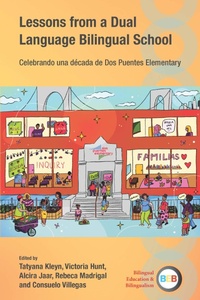
Lessons from a Dual Language Bilingual School
Celebrando una decada de Dos Puentes Elementary
Published on 13. August 2024
284 pages
978-1-80041-740-3 (ISBN)
Description

An exploration of the lessons, successes and challenges of starting and growing a dual language school, directly from those within the school community.
Reflecting on the first 10 years of Dos Puentes Elementary School in New York City, it explores the evolution of the school through its four founding pillars:
- bilingueismo, biliteracidad y multiculturalismo
- las familias son partners, leaders and advocates
- investigaciones and hands-on learning
- partnerships with universities, organizations y la comunidad
The chapter authors include families, teachers, school administrators and university partners, centering the voices of those directly involved in the school community and highlighting key moments in the life of the school. At the end of each chapter, researcher commentary contextualizes these experiences within the wider literature and discusses implications and next steps for the field of bilingual education.
This book will be of interest to pre- and in-service teachers and school administrators, particularly those looking to develop bilingual programs in their own context.
Reflecting on the first 10 years of Dos Puentes Elementary School in New York City, it explores the evolution of the school through its four founding pillars:
- bilingueismo, biliteracidad y multiculturalismo
- las familias son partners, leaders and advocates
- investigaciones and hands-on learning
- partnerships with universities, organizations y la comunidad
The chapter authors include families, teachers, school administrators and university partners, centering the voices of those directly involved in the school community and highlighting key moments in the life of the school. At the end of each chapter, researcher commentary contextualizes these experiences within the wider literature and discusses implications and next steps for the field of bilingual education.
This book will be of interest to pre- and in-service teachers and school administrators, particularly those looking to develop bilingual programs in their own context.
Reviews / Votes
In a political moment, where so much seems impossible and so many seem bent on using our differences to divide, Lessons from a Dual Language Bilingual School is a balm. Through rich narrative, scholarly reflections, and dynamic collaboration, this book offers a roadmap of possibilities not just for those interested in bilingual education, but for all interested in creating and maintaining schools that not only teach but care for communities. * R. L'Heureux Lewis-McCoy, New York University, USA * This decade of rich reflections and experiences serves as a powerful lesson and inspiration for anyone interested in developing equitable dual language bilingual programs. This volume emerges from a committed community and guides readers on an incredible and unique journey, making it an indispensable resource for pre- and in-service teachers and leaders. * Juan A. Freire, Brigham Young University, USA * Dive into the transformative world of Dos Puentes, where educators, parents, and university partners cultivate a bilingual sanctuary rooted in cultural affirmation and critical consciousness. In a rich tapestry of voices, this book celebrates joyful teaching and learning, authentic collaboration, and unwavering commitment to students' identities as agents of change. An indispensable source of inspiration for building truly equitable dual language programs. * Claudia G. Cervantes-Soon, Arizona State University, USA *More details
Series
Language
English
Place of publication
Bristol
United Kingdom
Target group
College/higher education
Product notice
Reflowable
ISBN-13
978-1-80041-740-3 (9781800417403)
Copyright in bibliographic data and cover images is held by Nielsen Book Services Limited or by the publishers or by their respective licensors: all rights reserved.
Schweitzer Classification
Other editions
Additional editions
Tatyana Kleyn | Victoria Hunt | Alcira Jaar
Lessons from a Dual Language Bilingual School
Celebrando una decada de Dos Puentes Elementary
Book
08/2024
Multilingual Matters
€42.50
Shipment within 10-20 days
Persons
Tatyana Kleyn is Professor of Bilingual Education and TESOL at The City College of New York, USA, and co-founder of Dos Puentes Elementary School. She is Principal Investigator for the City University of New York - Initiative on Immigration and Education (CUNY-IIE) and has produced numerous books, articles and films on bilingual education, translanguaging and immigration.
Victoria Hunt is the current and founding Principal of Dos Puentes Elementary School. She holds a doctorate in leadership and bilingual education and received dissertation awards from the American Educational Research Association (AERA) Bilingual Education Research SIG and the National Association for Bilingual Education (NABE).
Alcira Jaar is Assistant Principal and founding staff member of Dos Puentes Elementary School. Alcira holds a doctorate from Teachers College, Columbia University, and has been an educator in New York City Public Schools for over 20 years.
Rebeca Madrigal is a founding bilingual teacher of Dos Puentes Elementary School. She earned an MA from Teachers College, Columbia University, and has over 20 years of experience in New York City Public Schools. Rebeca received the Bilingual Teacher of the Year Award from the New York State Association for Bilingual Education (NYSABE).
Consuelo Villegas was the founding Parent Coordinator at Dos Puentes Elementary School. She held numerous positions in New York City Public Schools over 23 years and has been honored for her work in Civil Service. She was awarded NYSABE Bilingual Support Personnel of the Year.
Victoria Hunt is the current and founding Principal of Dos Puentes Elementary School. She holds a doctorate in leadership and bilingual education and received dissertation awards from the American Educational Research Association (AERA) Bilingual Education Research SIG and the National Association for Bilingual Education (NABE).
Alcira Jaar is Assistant Principal and founding staff member of Dos Puentes Elementary School. Alcira holds a doctorate from Teachers College, Columbia University, and has been an educator in New York City Public Schools for over 20 years.
Rebeca Madrigal is a founding bilingual teacher of Dos Puentes Elementary School. She earned an MA from Teachers College, Columbia University, and has over 20 years of experience in New York City Public Schools. Rebeca received the Bilingual Teacher of the Year Award from the New York State Association for Bilingual Education (NYSABE).
Consuelo Villegas was the founding Parent Coordinator at Dos Puentes Elementary School. She held numerous positions in New York City Public Schools over 23 years and has been honored for her work in Civil Service. She was awarded NYSABE Bilingual Support Personnel of the Year.
Content
Contributors
Acknowledgements
Ofelia Garcia: Foreword
Tatyana Kleyn and Victoria Hunt: Dos Puentes Elementary: An Introduction
Pillar 1: Bilingueismo, Biliteracidad y Multiculturalismo
Rebeca Madrigal: Introduction
Chapter 1. Jason Horowitz and Armando Lopez, Commentary by Cecilia M. Espinosa: Celebrating Dos Lenguajes
Chapter 2: Diane Figueroa and Karina Malik, Commentary by Laura Ascenzi-Moreno: Translanguaging: Moving beyond "los dos" Lenguajes
Chapter 3. Lara Ginsberg, Commentary by Carmen M. Martinez-Roldan: Building Biliteracy through Educators, Resources and Curricula
Chapter 4. Ashley Busone-Rodriguez and Karen Mondol, Commentary by Luz Yadira Herrera: Bilingual Activism a Traves de la Lectoescritura
Chapter 5. Sabrina Poms and Teresita Prieto, Commentary by Maria Cioe-Pena: Critical Collaboration to Support the Bilingualism and Biliteracy of Children with Disabilities
Pillar 2: Las Familias son Partners, Leaders and Advocates
Consuelo Villegas, Yesenia J. Moreno and Tatyana Kleyn: Introduction
Chapter 6. Stephanie Ubiera, Adriana Cando and Ained Casado, Translated by Angela Paredes Montero, Commentary by Ivana Espinet: Families as Educators, Leaders and Advocates
Chapter 7. Sacha Mercier and Amy Withers, Commentary by Carmina Makar: Bridging Home and School
Chapter 8. Annette Fernandez, Commentary by Kate Menken: Family Diversity as a Strength and a Challenge
Chapter 9. Elga Castro Ramos, Commentary by Bertha Perez: Building Comunidad
Chapter 10. Irving Mota and Kimberly Bautista, Commentary by Mary Mendenhall: Socioemotional Learning and Support
Chapter 11. Aaron Sidlo, Commentary by Devon Hedrick-Shaw: Remote Learning through a Pandemic
Pillar 3: Investigaciones and Hands-on Learning
Alcira Jaar: Introduction
Chapter 12. Elizabeth Menendez and Catherine Velasquez-Leacock, Commentary by Dina Lopez: Exploraciones en Early Childhood
Chapter 13. Hazel Garcia-Banguela, Michelle Madera Taveras and Carmen Morel, Commentary by Gladys Y. Aponte: Transition to Investigations and Inquiry in the Upper Grades
Chapter 14. Karin DeJesus and Yesenia J. Moreno, Commentary by Patricia Martinez-Alvarez: Learning Science through Hands-on-Experiences and Animals
Chapter 15. Peggy McQuaid and Kristen Minno-Bingham, Commentary by Sara Vogel: Field Trips as Paseos to Real World Connections
Pillar 4: Partnerships with Universities, Organizations y La Comunidad
Victoria Hunt: Introduction
Chapter 16. Wendy Barrales, Patricia Martinez-Alvarez, Maite T. Sanchez, Belinda Arana and Victoria Hunt, Commentary by Nancy Stern: University Collaborations: Service and Research Projects
Chapter 17. Rebeca Madrigal, Silvia Pena and Jennifer Aquino Pena, Commentary by Sharon Chang: University Partners: Bilingual Student Teaching
Chapter 18. Clara Bello and Lorene Phillips, Commentary by Heather H. Woodley: Expanding the Arts through Partnerships and Passion
Chapter 19. Queila Cordero and Joyce Veras, Commentary by Crissa Stephens: Center-Based Learning: Partnerships with Staff Developers and Schools
Chapter 20. Katherine Higuera-McCoy and Maggie Orzechowski, Commentary by Kate Seltzer: Connections with the Community and Beyond
Raphael S. Kollin: A Student's Closing Remarks
Carmen Farina and Manuel Ramirez: Afterword
Index
Acknowledgements
Ofelia Garcia: Foreword
Tatyana Kleyn and Victoria Hunt: Dos Puentes Elementary: An Introduction
Pillar 1: Bilingueismo, Biliteracidad y Multiculturalismo
Rebeca Madrigal: Introduction
Chapter 1. Jason Horowitz and Armando Lopez, Commentary by Cecilia M. Espinosa: Celebrating Dos Lenguajes
Chapter 2: Diane Figueroa and Karina Malik, Commentary by Laura Ascenzi-Moreno: Translanguaging: Moving beyond "los dos" Lenguajes
Chapter 3. Lara Ginsberg, Commentary by Carmen M. Martinez-Roldan: Building Biliteracy through Educators, Resources and Curricula
Chapter 4. Ashley Busone-Rodriguez and Karen Mondol, Commentary by Luz Yadira Herrera: Bilingual Activism a Traves de la Lectoescritura
Chapter 5. Sabrina Poms and Teresita Prieto, Commentary by Maria Cioe-Pena: Critical Collaboration to Support the Bilingualism and Biliteracy of Children with Disabilities
Pillar 2: Las Familias son Partners, Leaders and Advocates
Consuelo Villegas, Yesenia J. Moreno and Tatyana Kleyn: Introduction
Chapter 6. Stephanie Ubiera, Adriana Cando and Ained Casado, Translated by Angela Paredes Montero, Commentary by Ivana Espinet: Families as Educators, Leaders and Advocates
Chapter 7. Sacha Mercier and Amy Withers, Commentary by Carmina Makar: Bridging Home and School
Chapter 8. Annette Fernandez, Commentary by Kate Menken: Family Diversity as a Strength and a Challenge
Chapter 9. Elga Castro Ramos, Commentary by Bertha Perez: Building Comunidad
Chapter 10. Irving Mota and Kimberly Bautista, Commentary by Mary Mendenhall: Socioemotional Learning and Support
Chapter 11. Aaron Sidlo, Commentary by Devon Hedrick-Shaw: Remote Learning through a Pandemic
Pillar 3: Investigaciones and Hands-on Learning
Alcira Jaar: Introduction
Chapter 12. Elizabeth Menendez and Catherine Velasquez-Leacock, Commentary by Dina Lopez: Exploraciones en Early Childhood
Chapter 13. Hazel Garcia-Banguela, Michelle Madera Taveras and Carmen Morel, Commentary by Gladys Y. Aponte: Transition to Investigations and Inquiry in the Upper Grades
Chapter 14. Karin DeJesus and Yesenia J. Moreno, Commentary by Patricia Martinez-Alvarez: Learning Science through Hands-on-Experiences and Animals
Chapter 15. Peggy McQuaid and Kristen Minno-Bingham, Commentary by Sara Vogel: Field Trips as Paseos to Real World Connections
Pillar 4: Partnerships with Universities, Organizations y La Comunidad
Victoria Hunt: Introduction
Chapter 16. Wendy Barrales, Patricia Martinez-Alvarez, Maite T. Sanchez, Belinda Arana and Victoria Hunt, Commentary by Nancy Stern: University Collaborations: Service and Research Projects
Chapter 17. Rebeca Madrigal, Silvia Pena and Jennifer Aquino Pena, Commentary by Sharon Chang: University Partners: Bilingual Student Teaching
Chapter 18. Clara Bello and Lorene Phillips, Commentary by Heather H. Woodley: Expanding the Arts through Partnerships and Passion
Chapter 19. Queila Cordero and Joyce Veras, Commentary by Crissa Stephens: Center-Based Learning: Partnerships with Staff Developers and Schools
Chapter 20. Katherine Higuera-McCoy and Maggie Orzechowski, Commentary by Kate Seltzer: Connections with the Community and Beyond
Raphael S. Kollin: A Student's Closing Remarks
Carmen Farina and Manuel Ramirez: Afterword
Index
