


The Animal World of the Ancient Greeks
Will be published approx. on 28. September 2026
328 pages
E-Book
978-1-040-45944-7 (ISBN)
Description

This book offers a modern, accessible, engaging overview of the interactions between ancient Greeks and animals in all phases of their life, both inside and outside of the walls of the ancient polis.
The field of ancient animal studies has exhibited rapid growth in recent years, typically focusing on individual animals or on animals in ancient religion or art; however, there has been no modern book that offers an overview of how animals pervaded ancient Greek life. This volume fills that gap, delving into areas such as what separates humans from animals, the difference between wild, domesticated, and tame, and pointing out parallels between the Greeks' views and our own today. It studies the roles of animals in the houses, streets, speech, and literature of the ancient Greeks. It also examines the various levels of intimacy between animals and humans, ranging from animals as dire enemies to cherished pets, and even bestiality. This book follows those interactions from birth through death, studying the extent to which animals informed many of the social rituals of ancient Greece.
The Animal World of the Ancient Greeks appeals to students and scholars working on animal-human interaction in the ancient world. Scholars in related fields, including literature, archaeology, art history, religion, numismatics, and social history will also find material that helps them better understand their speciality.
The field of ancient animal studies has exhibited rapid growth in recent years, typically focusing on individual animals or on animals in ancient religion or art; however, there has been no modern book that offers an overview of how animals pervaded ancient Greek life. This volume fills that gap, delving into areas such as what separates humans from animals, the difference between wild, domesticated, and tame, and pointing out parallels between the Greeks' views and our own today. It studies the roles of animals in the houses, streets, speech, and literature of the ancient Greeks. It also examines the various levels of intimacy between animals and humans, ranging from animals as dire enemies to cherished pets, and even bestiality. This book follows those interactions from birth through death, studying the extent to which animals informed many of the social rituals of ancient Greece.
The Animal World of the Ancient Greeks appeals to students and scholars working on animal-human interaction in the ancient world. Scholars in related fields, including literature, archaeology, art history, religion, numismatics, and social history will also find material that helps them better understand their speciality.
More details
Language
English
Place of publication
London
United Kingdom
Publishing group
Taylor & Francis Ltd
Target group
College/higher education
Illustrations
4 Tables, black and white; 50 Halftones, black and white; 50 Illustrations, black and white
ISBN-13
978-1-040-45944-7 (9781040459447)
Copyright in bibliographic data is held by Nielsen Book Services Limited or its licensors: all rights reserved.
Schweitzer Classification
Other editions
Additional editions
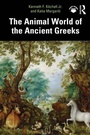
Kenneth F. Kitchell Jr. | Katia Margariti
The Animal World of the Ancient Greeks
Book
approx. 09/2026
1st Edition
Routledge
€52.50
Not yet published
Kenneth F. Kitchell Jr. | Katia Margariti
The Animal World of the Ancient Greeks
Book
approx. 09/2026
1st Edition
Routledge
€192.50
Not yet published
Persons
Kenneth F. Kitchell Jr. is professor emeritus of Louisiana State University and the University of Massachusetts Amherst. He is the author or co-author of several books dealing with animals and animal lore from antiquity to the Middle Ages, especially in Albertus Magnus. The current volume serves as a continuation of his Animals in the Ancient World from A-Z, also published with Routledge in 2014.
Katia Margariti (PhD, Classical Archaeology) is a Research Associate of the Department of Classics at the University of Reading (UK). She is the author of three books and several articles on animals in antiquity, Athenian funerary art and ritual. Her most recent monograph, titled Dogs in Athenian Sculpture and Vase Painting of the Archaic and Classical Periods was published in 2025.
Katia Margariti (PhD, Classical Archaeology) is a Research Associate of the Department of Classics at the University of Reading (UK). She is the author of three books and several articles on animals in antiquity, Athenian funerary art and ritual. Her most recent monograph, titled Dogs in Athenian Sculpture and Vase Painting of the Archaic and Classical Periods was published in 2025.
Content
Introduction: Human or Animal?; 1. Animals in the House; 2. Animals in the Streets; 3. Animals Outside the Walls; 4. Animals on the Page; 5. Animal Intimacy; 6. Animals on the Tongue; 7. Animals at the End; Epilogue.
