

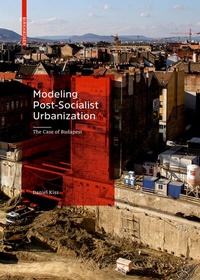
Modeling Post-Socialist Urbanization
Description

Der Autor untersucht die Stadtentwicklung von Budapest von 1990 bis 2010. Diese Periode ist durch die signifikante Abnahme einer kommunal gelenkten Stadtplanung gekennzeichnet: Angesichts der strukturellen Vermächtnisse sozialistischer Urbanisierung, der Dezentralisierung von Regierung und Ressourcen und der Auswirkung eines postsozialistischen Kulturkampfes wird ein Trend analysiert, der zu unklaren Kompetenzen und damit zu einem Versagen übergeordneter Planung führt.
Die Konsequenz daraus ist eine Zunahme investmentgetriebener privater Großprojekte: diese entziehen sich naturgemäß einer übergeordneten Lenkung, speziell dann, wenn diese zu schwach ausgeprägt ist. Die vorliegende Modellanalyse stellt dieses Phänomen als beispielhaft für die Entwicklung post-sozialistischer Städte dar.
Reviews / Votes
"Die Publikation ist sowohl für Leser interessant, die sich mit osteuropäischen Städten, die sich häufig mit der beschriebenen planungskulturellen Transformation auseinandersetzen müssen, beschäftigen, als auch für diejenigen, die ein Interesse an der wissenschaftlichen Methode besitzen. Denn der Autor entwickelt ein abstraktes Modell der postsozialistischen Stadt, das auch auf andere ähnlich gelagerte Fragestellungen für eine vergleichende Fallstudienanalyse angewendet werden könnte."
Stefan Netsch in: Planerin 5 (2019), 71
More details
Other editions
Additional editions
Person
Daniel Kiss Oberassistent und Dozent für Städtebau am Lehrstuhl Prof. Kees Christiaanse, ETH Zürich
Content
- Intro
- Contents
- Preface
- Chapter 1: Budapest's Post-Socialist Urbanization. From Facts to Model and Back
- Chapter 2: The Socialist Urban Legacy Narrative. Tensions of Socialist Urbanization
- Chapter 3: The Decentralization Narrative. Retroactive Urban Planning vis-à-vis New Local Governance and Property Regimes
- Chapter 4: The Kulturkampf Narrative. From the Hungarian Tulip Dispute to a Post-Socialist Clash of Ideologies
- Chapter 5: The Abstract Model and its Formal Scheme. A Systemic Explanation
- Chapter 6: The Corvin-Quarter. Emergence of an 'Absolutely Best Plan' in the Backdrop of Post-Socialist Transformation
- Chapter 7: Conclusions and Lookout. An Abstract Model of Post-Socialist Urbanization Based on and Applied to the Case of Budapest
- About the Author
- Bibliography
- Illustration Credits
- Reflections. on the Nexus Between a Case Study, an Abstract Model built on it, and General Theories
