

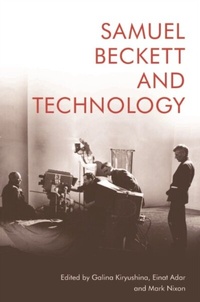
Samuel Beckett and Technology
Description

Explores Beckett's engagement with various technologies throughout his artistic career
- Approaches the topic of technology from multiple perspectives previously unexplored in Beckett criticism
- Intervenes in current debates within Beckett Studies and related fields of literary and cultural criticism by exploring matters of technicity, intermediality, post-humanism, and the digital age
- Considers previously unpublished material and employs digital manuscript tools to trace the significance of technology for Beckett
This collection of essays is the first comprehensive discussion of the role technology plays in shaping Beckett's trademark aesthetics. Samuel Beckett and Technology assembles an innovative and diverse range of scholarly approaches to the topic, which collectively renegotiate our understanding of his work in prose, theatre, film, radio and television. What emerges from these discussions is the centrality of technology for Beckett's creative imagination, a factor that is equally enabling as it is limiting. At the same time, the book reveals how theories of technology can yield new readings of the way Beckett responds to the conditions of technological modernity. As such, Beckett's work is examined in its relation to historical and contemporary technologies, discourses of technicity and techne, post-humanism, and the digital age.
More details
Other editions
Additional editions
Content
- Intro
- Acknowledgements
- Notes on Contributors
- Preface
- Introduction: 'Up to the neck in technical muck': The Enduring Success of Beckett's Technological Failures
- Part I: Mechanical and Electrical Technologies
- 1. The Unmaking of Homo Faber: Beckett and the Exhaustion of Techne
- 2. The Permanent Way: Movement and Stasis in Beckett's Railways
- 3. 'with the mechanics of which I am unfamiliar': The Strangeness of Technology in Beckett
- 4. Beckett and La Mettrie: From Man a Machine to Techno-Human Being
- 5. Monadic Clocks in Samuel Beckett's Quad: Decomposing the 'dramatized taboo'
- Part II: Media Technologies and Intermediality
- 6. Beckett's Technography: Traces of Radio in the Later Prose
- 7. Beckett's Words and Music, 'or some other trouble': Vagenuing on the Airwaves
- 8. 'a medium for fl eas': Beckett, Mitrani and 1950s-1960s French Television Drama
- 9. Beckett's Multimedial Authorship: Language of Technology in the Genesis of Play and Film
- 10. Beckett and Television: Anachronism as Innovation
- 11. Making and Remaking Samuel Beckett's What Where
- Part III: Ideas of Technology
- 12. Portals of Invention: A 'techno-logical' Reading of the Prometheus Figure in Beckett's The Unnamable
- 13. Technology and the Naive Artist: Beckett's Krapp's Last Tape
- 14. Beckett's Invisible Matter: Echo, Technology and Posthuman Affect
- 15. Digital Poetics and Digital Hermeneutics in Beckett Studies: Toward a Manuscript Chronology
- Coda: Viral Beckett
- Index
