

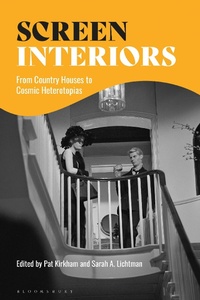
Screen Interiors
From Country Houses to Cosmic Heterotopias
1st Edition
Published on 11. March 2021
368 pages
978-1-350-15060-7 (ISBN)
Description

Covering everything from Hollywood films to Soviet cinema, London's queer spaces to spaceships, horror architecture and action scenes, Screen Interiors presents an array of innovative perspectives on film design.
Essays address questions related to interiors and objects in film and television from the early 1900s up until the present day. Authors explore how interior film design can facilitate action and amplify tensions, how rooms are employed as structural devices and how designed spaces can contribute to the construction of identities. Case studies look at disjunctions between interior and exterior design and the inter-relationship of production design and narrative.
With a lens on class, sexuality and identity across a range of films including Twilight of a Woman's Soul (1913), The Servant (1963), Caravaggio (1986), and Passengers (2016), and illustrated with film stills throughout, Screen Interiors showcases an array of methodological approaches for the study of film and design history.
Essays address questions related to interiors and objects in film and television from the early 1900s up until the present day. Authors explore how interior film design can facilitate action and amplify tensions, how rooms are employed as structural devices and how designed spaces can contribute to the construction of identities. Case studies look at disjunctions between interior and exterior design and the inter-relationship of production design and narrative.
With a lens on class, sexuality and identity across a range of films including Twilight of a Woman's Soul (1913), The Servant (1963), Caravaggio (1986), and Passengers (2016), and illustrated with film stills throughout, Screen Interiors showcases an array of methodological approaches for the study of film and design history.
More details
Edition
1. Auflage
Language
English
Place of publication
London
United Kingdom
Publishing group
Bloomsbury Publishing PLC
Target group
College/higher education
Illustrations
47 bw illus
ISBN-13
978-1-350-15060-7 (9781350150607)
Copyright in bibliographic data and cover images is held by Nielsen Book Services Limited or by the publishers or by their respective licensors: all rights reserved.
Schweitzer Classification
Other editions
Additional editions
Book
05/2021
Bloomsbury Visual Arts
€136.50
Article exhausted; check different version
Persons
Pat Kirkham is Professor of Design History at Kingston University, UK, Professor Emerita at the Bard Graduate Centre, USA, and Associate Research Fellow at the Cinema and Television Research History Centre, De Montfort University, UK.
Sarah A. Lichtman is Assistant Professor of Design History at Parsons School of Design, USA.
Sarah A. Lichtman is Assistant Professor of Design History at Parsons School of Design, USA.
Content
List of Figures
Acknowledgements
Introduction, Pat Kirkham (Kingston University, UK) and Sarah A. Lichtman (Parsons School of Design, USA)
Section One: House and Home: Space, Comfort, Class, Gender, and Generation
1. Comfort and the Domestic Interior in Soviet Fiction Cinema of the 1920s, Eleanor Rees (University of College London, UK)
2. Furnishing I Love Lucy (1951-57), Marilyn Cohen (Parsons School of Design, USA)
3. From the Country House Film to the House in the Country Film: Space, Class, and Generation, Christine Geraghty (University of Glasgow, UK)
4. Space, Interiors, and 1980s Hollywood Teen Films, Patrick O'Neill (Kingston University, UK)
Section Two: The Curated Home
5. Mobilizing Material Culture: Collecting and Interiority in Luchino Visconti's Conversation Piece (1974), Shax Reigler (Architectural Digest, USA)
6. From Sex to Narcissism: Understanding Minimalist Interiors in New York Films of the 1970s, Timothy M. Rohan (University of Massachusetts Amherst, USA)
7. "Home furnishing takes a cue from Paris, too": The Fashion Professional at Work and Home in Postwar Hollywood Films, c. 1957-1961, Rebecca C. Tuite (Bard Graduate Center, USA)
Section Three: Framing Interiors and Interiorities: Inside and Out
8. Framing Interiorities: Interiors, Objects, and Hidden Desires in Billy Wilder's The Apartment (1960), Imma Forino (Politecnico di Milano, Italy)
9. Frames, Veils, and Windows: Modern Cinematic Set Design in Early Russian Films by Evgenii Bauer, Maria Korolkova (University of Greenwich, UK)
Section Four: Screening Queerness: Class, Gender, Sexual Orientation, Ambiguity, Authorit, and Power
10. Interiors, Class, Perversity, and Ambiguity in The Servant (1963), Barry Curtis (Royal College of Art, UK)
11. In Plain View: London Commercial Interiors as Queer spaces in Three 1960s British Films: Victim (1961), The Leather Boys (1964), and The Killing of Sister George (1968), Andrew Stephenson (University of East London, UK)
12. Queer Interiors: Derek Jarman's Caravaggio (1986) and Edward II (1992), Adam Vaughan (University of Southampton, UK)
Section Five: Horror and Homicide
13. The Horror of the Homicidal Floor: Destabilized Elements of Interior Architecture, Alexandra Brown (Monash University, Australia) and Kirsty Volz (Queensland University of Technology, Australia)
14. Designed to Destroy: Action Film Interiors and the Construction of Killscapes, Lennart Soberon (Ghent University, Belgium)
Section Six: Living in Outer Space: Sci-Fi Interiors
15. Visions of Home: Nostalgia and Mobility, Past, Present, and Future, in Serenity's Domestic Spaceship Interior, Sorcha O'Brien (Kingston University, UK)
16. Cosmic Heterotopia: Banality and Disjunction in the Interiors of Passengers (2016), Ersi Ioannidou (Kingston University, UK)
Author Biographies
Index
Acknowledgements
Introduction, Pat Kirkham (Kingston University, UK) and Sarah A. Lichtman (Parsons School of Design, USA)
Section One: House and Home: Space, Comfort, Class, Gender, and Generation
1. Comfort and the Domestic Interior in Soviet Fiction Cinema of the 1920s, Eleanor Rees (University of College London, UK)
2. Furnishing I Love Lucy (1951-57), Marilyn Cohen (Parsons School of Design, USA)
3. From the Country House Film to the House in the Country Film: Space, Class, and Generation, Christine Geraghty (University of Glasgow, UK)
4. Space, Interiors, and 1980s Hollywood Teen Films, Patrick O'Neill (Kingston University, UK)
Section Two: The Curated Home
5. Mobilizing Material Culture: Collecting and Interiority in Luchino Visconti's Conversation Piece (1974), Shax Reigler (Architectural Digest, USA)
6. From Sex to Narcissism: Understanding Minimalist Interiors in New York Films of the 1970s, Timothy M. Rohan (University of Massachusetts Amherst, USA)
7. "Home furnishing takes a cue from Paris, too": The Fashion Professional at Work and Home in Postwar Hollywood Films, c. 1957-1961, Rebecca C. Tuite (Bard Graduate Center, USA)
Section Three: Framing Interiors and Interiorities: Inside and Out
8. Framing Interiorities: Interiors, Objects, and Hidden Desires in Billy Wilder's The Apartment (1960), Imma Forino (Politecnico di Milano, Italy)
9. Frames, Veils, and Windows: Modern Cinematic Set Design in Early Russian Films by Evgenii Bauer, Maria Korolkova (University of Greenwich, UK)
Section Four: Screening Queerness: Class, Gender, Sexual Orientation, Ambiguity, Authorit, and Power
10. Interiors, Class, Perversity, and Ambiguity in The Servant (1963), Barry Curtis (Royal College of Art, UK)
11. In Plain View: London Commercial Interiors as Queer spaces in Three 1960s British Films: Victim (1961), The Leather Boys (1964), and The Killing of Sister George (1968), Andrew Stephenson (University of East London, UK)
12. Queer Interiors: Derek Jarman's Caravaggio (1986) and Edward II (1992), Adam Vaughan (University of Southampton, UK)
Section Five: Horror and Homicide
13. The Horror of the Homicidal Floor: Destabilized Elements of Interior Architecture, Alexandra Brown (Monash University, Australia) and Kirsty Volz (Queensland University of Technology, Australia)
14. Designed to Destroy: Action Film Interiors and the Construction of Killscapes, Lennart Soberon (Ghent University, Belgium)
Section Six: Living in Outer Space: Sci-Fi Interiors
15. Visions of Home: Nostalgia and Mobility, Past, Present, and Future, in Serenity's Domestic Spaceship Interior, Sorcha O'Brien (Kingston University, UK)
16. Cosmic Heterotopia: Banality and Disjunction in the Interiors of Passengers (2016), Ersi Ioannidou (Kingston University, UK)
Author Biographies
Index
