

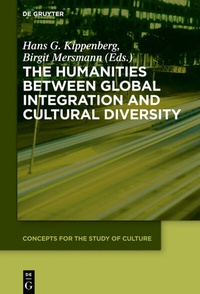
The Humanities between Global Integration and Cultural Diversity
Description

Modernization and digital globalization have proven to mark major thresholds where paradigmatic shifts and realignments take place. This volume aims to capture the reconfiguration of humanistic study between the forces of global integration and cultural diversification from a full range of disciplines within the humanities and social sciences.
The key issue is discussed in three major parts. The first chapter examines transnational interpolations of the humanities as potential indicator for a globalizing humanistic research. The second chapter deals with humanistic revisions of modernity with and against globality. The third chapter discusses the ambiguous constitution of cultural diversity as a complement and counter-movement to global integration, ideologically moving between social cohesion and exclusion. The final chapter outlines what the threshold-crossing from modern to global humanities will mean for the future of humanistic research.
The multidisciplinary study of culture within the history of the humanities documents and reflects the mobility and migration of its concepts and methods, moving and translating between disciplines, research traditions, historical periods, academic institutions, and the public sphere.
More details
Other editions
Additional editions
Persons
Content
- Intro
- Preface
- Table of Contents
- Introduction: Reconfiguring the Humanities
- Part I: Transnational Interpolations of the Humanities
- Transnational History versus International History: A Case of Revisionism ?
- The Transnational Study of Culture: A Plea for Translation
- Migrant, Nomad, Traveler - Towards a Transnational Art History
- Art History and the Culture of the Image: A Manifesto for Global Art History
- Part II: Revisions of Modernity with and against Globality
- Globality and Modernity: Making Concepts Raise Research Questions
- 'African Renaissance' - Between Pan-African Rhetoric and the Reality of National Identity Politics
- Feeling Modern: Narratives of Slavery as Entangled Literary History
- Theses on the Future of Language
- Western Modernism at and beyond the Margins: Frantisek Kupka and Margaret Preston
- Modern Work and Identity
- Part III: Per/versions of Cultural Diversity: Including Exclusions
- Global Pressures and Cultural Relativity: The Case of Media Anthropology
- Long-Term Power Presentation Shifts: From Key Audio-Visual Narratives to an Update of Elias's Theory on the Process of Civilization
- Inner Language Spaces: Migration and Plurilingualism from a Psycholinguistic Perspective
- Relational Diversity: Religious Pluralization and Politics of Cohesion
- Manifesting Religion in Public: A Universal Human Right - An International Law - National Restrictions
- Part IV: Peroration
- Devolvement: From Modern Humanities towards Global Humanities
- List of Illustrations
- About the Authors
- Index
