

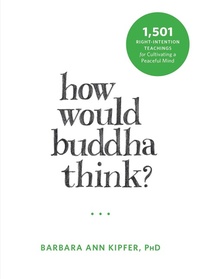
How Would Buddha Think?
Description

"All that we are is the result of what we have thought." ¿The Buddha
Every word and every action begins with a thought. Negative thoughts based in jealousy, greed, or hatred may seem harmless on the surface. After all, they're only thoughts, right? But while thoughts are only in our head, they often betray our intentions, and can directly shape our actions. So, how can you overcome internal negativity and live more consciously?
In How Would Buddha Think?, best-selling author of 14,000 Things to Be Happy About, Barbara Ann Kipfer offers an insightful, modern take on the ancient teaching of Right Intention¿an important tenet of the Buddhist Eightfold Path focused on the belief that our intentions drive our actions.
With this book as your guide, you'll learn how to move past negative thoughts or ill will toward others and instead focus on altruism, purpose, and self-actualization¿qualities needed to help you live a...
More details
Person
Barbara Ann Kipfer, PhD, is author of What Would Buddha Say? and more than sixty other books, including the best-selling 14,000 Things to Be Happy About, as well as The Wish List, Instant Karma, 8,789 Words of Wisdom, and Self-Meditation. Kipfer is a lexicographer, and has an MPhil and PhD in linguistics, a PhD in archaeology, and an MA and PhD in Buddhist studies. Visit her website at thingstobehappyabout.com.
