

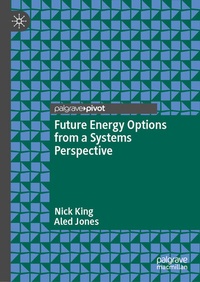
Future Energy Options from a Systems Perspective
Description

This book is an exploration of energy and its unique role to date as one of the fundamental enabling and controlling factors in human development and progress at the scale of global civilization, and how it will be fundamental to the type of future that collective humanity is likely to experience. The first section provides a contextual overview of energy and human civilization through a chronological description of how human energy use has evolved over time and led to the current 'energy bind'. The second section explores what this energy bind might mean for our future energy choices when trying to meet the various challenges of dwindling resources, costs, and climate change, through exploration of three broad systems-based scenarios for the human 'energy future'. The final section draws conclusions as to which scenario is most achievable and desirable, and what this might mean for longer-term human prospects.
More details
Other editions
Additional editions
Persons
Nick King is a chartered earth and environmental scientist working primarily in professional consulting and the energy industry. He has worked with the Global Sustainability Institute at Anglia Ruskin University since 2018 on subject areas including energy and global risk and is also affiliated with the Schumacher Institute think tank. He has also presented and written opinion pieces about a number of environmental and systems thinking topics.
Aled Jones is the inaugural Director of the Global Sustainability Institute (GSI) at Anglia Ruskin University. Professor Jones' work in climate finance has been recognized by the State of California and he has received a key to the city of North Little Rock, USA. He is a Co-Investigator on the ESRC Centre for the Understanding of Sustainable Prosperity (CUSP), and the UK Government funded Economics of Energy Innovation and System Transition.
Content
1. Introduction.- 2. The Trifurcation of Energy Futures.- 3. Conclusions.
