

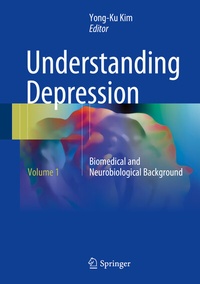
Understanding Depression
Description

This book, in two volumes, focuses on contemporary issues and dilemmas in relation to depression. The aim is to equip readers with an up-to-date understanding of the clinical and neurobiological underpinnings of depression and their relation to clinical manifestations and the development of more effective treatments. This first volume is devoted specifically to biomedical and neurobiological issues. Detailed information is presented on a wide range of topics, including genetics, molecular and cellular biology, and aspects at the neural circuit and multicellular system levels. Readers will gain a deeper appreciation of the factors and interactions underlying individual variation in responsiveness to stress and vulnerability to depression, as well as a clear understanding of potential treatment targets and causes of treatment resistance based on the latest research. A concluding section considers progress towards precision psychiatry and gender and cultural differences in depression.The companion volume is dedicated to clinical and management issues in depression. Understanding Depression will be an excellent source of information for both researchers and practitioners in the field.
More details
Other editions
New editions
Additional editions
Person
Yong-Ku Kim, MD, PhD is a Professor of Psychiatry at College of Medicine, Korea University. He received a MD degree from College of Medicine, Korea University in 1987 and a PHD in psychiatry from Korea University in 1998. Dr. Kim has been affiliated with Korea University since 1998, first as an assistant professor (1998-2000), then as associated professor (2001-2005), professor (2006- present). For the past 20 years, his professional activities have extended beyond the area of pure clinical or research work. Dr. Kim has well over 200 publications in peer-reviewed international journals, including Biological Psychiatry, Molecular Psychiatry, Clinical Journal of Psychiatry, and Progress in Neuropsychopharmacology and Biological Psychiatry and 30 publications of book chapters and have made over 90 academic presentations in my area of interest. Dr. Kim is a fellow of Collogicum Internationale Neuropsychopharmacologicum, International Society for Affective Disorders, World Federation ofthe Society of biological Psychiatry. He currently sits on the editorial boards of some leading academic journals in the field of neurobiology, including Progress in Neuropsychopharmacology and Biological Psychiatry, Psychiatry Investigation, World Journal Psychiatry, Annals of Depression and Anxiety, Psychiatry Journal and so on. Dr. Kim received prestigious awards such as Astrageneca Award and Dr. Paul Janssen Schizophrenia Research Award. Dr. Kim is currently the president of Korean society of Biological Psychiatry (2016-present).
