

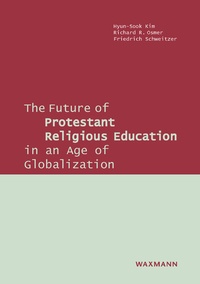
The Future of Protestant Religious Education in an Age of Globalization
1st Edition
Published on 15. September 2018
170 pages
978-3-8309-8876-2 (ISBN)
Description

Global developments have come to shape our lives, economically, culturally, and even religiously. Young people growing up in a global age have to be prepared for living in this age. Economic and technological demands are important, but there also is a need for personal and social orientations that go beyond them.
This book provides both insights into the Protestant tradition in education as well as its meaning for the future of the church, for society and for individual persons. It follows an innovative approach by combining perspectives from three different contexts - Germany with its important Protestant starting points in the Reformation, the United States as a country which has been strongly influenced by Protestantism, and South Korea with its comparatively young Protestant tradition.
The book is based on a combination of international points of view, on transnational cooperation, on comparative insights, and on making constant reference to a global horizon. Its presentations and ideas not only address globalization as a driving force behind many future developments, but also demonstrate an exercise of global educational thinking.
Hyun-Sook Kim is professor of Christian Education at the College of Theology, Yonsei University, Korea.
This book provides both insights into the Protestant tradition in education as well as its meaning for the future of the church, for society and for individual persons. It follows an innovative approach by combining perspectives from three different contexts - Germany with its important Protestant starting points in the Reformation, the United States as a country which has been strongly influenced by Protestantism, and South Korea with its comparatively young Protestant tradition.
The book is based on a combination of international points of view, on transnational cooperation, on comparative insights, and on making constant reference to a global horizon. Its presentations and ideas not only address globalization as a driving force behind many future developments, but also demonstrate an exercise of global educational thinking.
Hyun-Sook Kim is professor of Christian Education at the College of Theology, Yonsei University, Korea.
More details
Other editions
Additional editions
Hyun-Sook Kim | Richard R. Osmer | Friedrich Schweitzer
The Future of Protestant Religious Education in an Age of Globalization
Book
09/2018
1st Edition
Waxmann
€27.90
Shipment within 7-9 days
Content
1 - Book Cover [Seite 1]
2 - Imprint [Seite 4]
3 - Contents [Seite 5]
4 - Introduction [Seite 7]
5 - Part I: What Protestantism Are We Talking About? [Seite 11]
5.1 - 1. Entry Points into Religious Education in Each of the Three Countries [Seite 11]
5.1.1 - 1.1 Germany [Seite 11]
5.1.2 - 1.2 The United States [Seite 15]
5.1.3 - 1.3 Korea [Seite 19]
5.2 - 2. Historical Developments in Protestant Education [Seite 22]
5.2.1 - 2.1 Historical Development in Germany [Seite 22]
5.2.2 - 2.2 Historical Development in the United States [Seite 25]
5.2.3 - 2.3 Historical Development in Korea [Seite 32]
5.3 - 3. The Protestant Heritage in Education [Seite 38]
5.4 - Conclusion [Seite 47]
6 - Part II: Situation and Challenges for Protestantism in the Three Countries [Seite 49]
6.1 - 1. Current Tendencies in the Three Countries: Observations and Explanations [Seite 49]
6.1.1 - 1.1 Germany: Situation of Protestant Education [Seite 49]
6.1.2 - 1.2 The United States: Situation of Protestant Education [Seite 63]
6.1.3 - 1.3 Korea: Situation of Protestant Education [Seite 73]
6.2 - 2. Common Challenges [Seite 85]
6.2.1 - 2.1 Family [Seite 85]
6.2.2 - 2.2 Gender Roles [Seite 91]
6.2.3 - 2.3 The Digital Revolution [Seite 96]
6.2.4 - 2.4 Global Economy, Transnational Communities, and Cosmopolitanism [Seite 100]
6.2.5 - 2.5 Religious Pluralization and Individualization [Seite 108]
6.3 - 3. The Demise of the Protestant Heritage in Education: Tradition without a Future? [Seite 112]
6.3.1 - 3.1 The Continuing Need for Protestant Education [Seite 112]
6.3.2 - 3.2 Potentials of Protestant Education [Seite 116]
7 - Part III: Proposals for the Future of Protestant Education [Seite 119]
7.1 - 1. Introduction [Seite 119]
7.2 - 2. The Role of Theology: A Resource for Education [Seite 123]
7.2.1 - 2.1 A Vision for Education [Seite 123]
7.2.2 - 2.2 The Task of Communication Across Different Religious and Worldview Contexts [Seite 126]
7.2.3 - 2.3 Giving Access to Ethos-Based Moral Orientations [Seite 128]
7.2.4 - 2.4 The Special Commitment to Children's Rights [Seite 130]
7.2.5 - 2.5 Summing Up: Public Theology as a Resource for Education [Seite 132]
7.3 - 3. Educating for Capabilities in a Global Age [Seite 134]
7.3.1 - 3.1 Ability, Capability, and Combined Capability [Seite 134]
7.3.2 - 3.2 Capabilities Approach - Discussed [Seite 136]
7.3.3 - 3.3 Combined Capabilities for Protestant Religious Education [Seite 137]
7.4 - 4. Toward a New Ecology of Protestant Education [Seite 144]
7.4.1 - 4.1 Toward a Theory of Global Justice [Seite 147]
7.4.2 - 4.2 Toward a Protestant Ecology of Education [Seite 148]
7.5 - 5. Epilogue: A Tradition for the Future [Seite 160]
7.5.1 - 5.1 Tradition: Past - Present - Future [Seite 160]
7.5.2 - 5.2 Once More: The Special Potentials of the Protestant Tradition in Education [Seite 162]
7.5.3 - 5.3 Consequences: Where Protestant Education Should Go [Seite 163]
8 - How this Book Came About: Procedures and Methodology [Seite 165]
2 - Imprint [Seite 4]
3 - Contents [Seite 5]
4 - Introduction [Seite 7]
5 - Part I: What Protestantism Are We Talking About? [Seite 11]
5.1 - 1. Entry Points into Religious Education in Each of the Three Countries [Seite 11]
5.1.1 - 1.1 Germany [Seite 11]
5.1.2 - 1.2 The United States [Seite 15]
5.1.3 - 1.3 Korea [Seite 19]
5.2 - 2. Historical Developments in Protestant Education [Seite 22]
5.2.1 - 2.1 Historical Development in Germany [Seite 22]
5.2.2 - 2.2 Historical Development in the United States [Seite 25]
5.2.3 - 2.3 Historical Development in Korea [Seite 32]
5.3 - 3. The Protestant Heritage in Education [Seite 38]
5.4 - Conclusion [Seite 47]
6 - Part II: Situation and Challenges for Protestantism in the Three Countries [Seite 49]
6.1 - 1. Current Tendencies in the Three Countries: Observations and Explanations [Seite 49]
6.1.1 - 1.1 Germany: Situation of Protestant Education [Seite 49]
6.1.2 - 1.2 The United States: Situation of Protestant Education [Seite 63]
6.1.3 - 1.3 Korea: Situation of Protestant Education [Seite 73]
6.2 - 2. Common Challenges [Seite 85]
6.2.1 - 2.1 Family [Seite 85]
6.2.2 - 2.2 Gender Roles [Seite 91]
6.2.3 - 2.3 The Digital Revolution [Seite 96]
6.2.4 - 2.4 Global Economy, Transnational Communities, and Cosmopolitanism [Seite 100]
6.2.5 - 2.5 Religious Pluralization and Individualization [Seite 108]
6.3 - 3. The Demise of the Protestant Heritage in Education: Tradition without a Future? [Seite 112]
6.3.1 - 3.1 The Continuing Need for Protestant Education [Seite 112]
6.3.2 - 3.2 Potentials of Protestant Education [Seite 116]
7 - Part III: Proposals for the Future of Protestant Education [Seite 119]
7.1 - 1. Introduction [Seite 119]
7.2 - 2. The Role of Theology: A Resource for Education [Seite 123]
7.2.1 - 2.1 A Vision for Education [Seite 123]
7.2.2 - 2.2 The Task of Communication Across Different Religious and Worldview Contexts [Seite 126]
7.2.3 - 2.3 Giving Access to Ethos-Based Moral Orientations [Seite 128]
7.2.4 - 2.4 The Special Commitment to Children's Rights [Seite 130]
7.2.5 - 2.5 Summing Up: Public Theology as a Resource for Education [Seite 132]
7.3 - 3. Educating for Capabilities in a Global Age [Seite 134]
7.3.1 - 3.1 Ability, Capability, and Combined Capability [Seite 134]
7.3.2 - 3.2 Capabilities Approach - Discussed [Seite 136]
7.3.3 - 3.3 Combined Capabilities for Protestant Religious Education [Seite 137]
7.4 - 4. Toward a New Ecology of Protestant Education [Seite 144]
7.4.1 - 4.1 Toward a Theory of Global Justice [Seite 147]
7.4.2 - 4.2 Toward a Protestant Ecology of Education [Seite 148]
7.5 - 5. Epilogue: A Tradition for the Future [Seite 160]
7.5.1 - 5.1 Tradition: Past - Present - Future [Seite 160]
7.5.2 - 5.2 Once More: The Special Potentials of the Protestant Tradition in Education [Seite 162]
7.5.3 - 5.3 Consequences: Where Protestant Education Should Go [Seite 163]
8 - How this Book Came About: Procedures and Methodology [Seite 165]
