

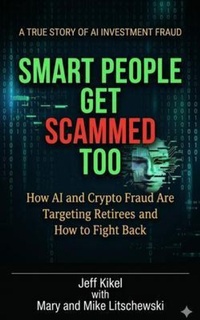
Smart People Get Scammed Too
Description

A retired engineer with fifty years of investing experience and his wife, a former realtor who was skeptical of crypto from the start, lost over $126,000 in five months to an AI-powered investment scam. Their savings, their car, and their camper were gone. The scammers vanished. And Mike and Mary Litschewski decided to fight back.
Smart People Get Scammed Too is the true story of how a sophisticated fraud operation used free trading classes, a fake AI system, encrypted messaging groups, and months of carefully engineered trust to steal a couple's retirement savings. Written by wealth management professional Jeff Kikel, who has spent over thirty years helping retirees build and protect their income, the book traces the scam from first contact to total loss, then equips readers with the tools to make sure it never happens to them.
The book reveals the eight-step blueprint that every AI crypto scam follows, explains why financially literate, experienced investors are the primary targets (not in spite of their intelligence, but because of it), and provides seven red flags that signal fraud before a dollar is lost. Readers will also find a practical retirement income framework designed to reduce vulnerability, digital self-defense tools that can be set up in fifteen minutes, and step-by-step guidance for anyone who has already been victimized.
In 2024, Americans reported losing $12.5 billion to fraud, according to the Federal Trade Commission. Investment scams were the single largest category. Victims over sixty lost more per incident than any other age group. Behind every statistic is a real person who trusted the wrong people.
This book is for retirees who want to protect what they have built. It is for adult children who worry about their parents. It is for financial professionals who want to better serve their clients. And it is for libraries and community organizations looking to provide practical, accessible fraud prevention resources to the populations most at risk.
Includes a printable Red Flags Quick-Reference Card, a Reporting and Recovery Checklist with direct agency links, Family Conversation Starters, Digital Security Checklists, and a companion Living Appendix website with ongoing updates.
More details
Persons
Content
Dedication
Author's Note
Part One: The Story Behind the Screen
- Chapter 1: It Started with a Class
- Chapter 2: The AI Illusion
- Chapter 3: The Contract
- Chapter 4: The Illusion of Wealth
- Chapter 5: When Everything Collapses
Part Two: Why This Works on Smart People
- Chapter 6: The Retirement Bullseye
- Chapter 7: The Psychology of Smart People
Part Three: The Pattern Behind the Promise
- Chapter 8: The Modern Scam Blueprint
- Chapter 9: The Red Flags Every Retiree Must Know
Part Four: Protecting What Took Decades to Build
- Chapter 10: Build a Plan That Reduces Temptation
- Chapter 11: Digital Self-Defense
- Chapter 12: If It's Already Happened
- Conclusion: The Fight
- Appendix A: Red Flags Quick-Reference Card
- Appendix B: Reporting and Recovery Checklist
- Appendix C: The Living Appendix
- Appendix D: Conversation Starters for Families
- Appendix E: Digital Security Checklists
- Sources and Further Reading
- About the Author
