

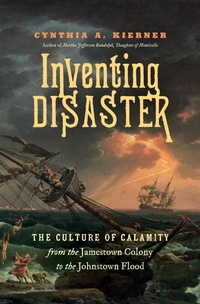
Inventing Disaster
Description

When hurricanes, earthquakes, wildfires, and other disasters strike, we count our losses, search for causes, commiserate with victims, and initiate relief efforts. Amply illustrated and expansively researched, Inventing Disaster explains the origins and development of this predictable, even ritualized, culture of calamity over three centuries, exploring its roots in the revolutions in science, information, and emotion that were part of the Age of Enlightenment in Europe and America.
Beginning with the collapse of the early seventeenth-century Jamestown colony, ending with the deadly Johnstown flood of 1889, and highlighting fires, epidemics, earthquakes, and exploding steamboats along the way, Cynthia A. Kierner tells horrific stories of culturally significant calamities and their victims and charts efforts to explain, prevent, and relieve disaster-related losses. Although how we interpret and respond to disasters has changed in some ways since the nineteenth century, Kierner demonstrates that, for better or worse, the intellectual, economic, and political environments of earlier eras forged our own twenty-first-century approach to disaster, shaping the stories we tell, the precautions we ponder, and the remedies we prescribe for disaster-ravaged communities.
More details
Other editions
Additional editions
Person
Cynthia A. Kierner is professor of history at George Mason University and the author of Martha Jefferson Randolph, Daughter of Monticello.
