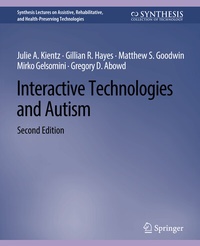
Interactive Technologies and Autism, Second Edition
Description

This book provides an in-depth review of the historical and state-of-the-art use of technology by and for individuals with autism. The design, development, deployment, and evaluation of interactive technologies for use by and with individuals with autism have been rapidly increasing over the last few decades. There is great promise for the use of these technologies to enrich lives, improve the experience of interventions, help with learning, facilitate communication, support data collection, and promote understanding. Emerging technologies in this area also have the potential to enhance assessment and diagnosis of autism, to understand the nature and lived experience of autism, and to help researchers conduct basic and applied research.
The intention of this book is to give readers a comprehensive background for understanding what work has already been completed and its impact as well as what promises and challenges lie ahead. A large majority of existing technologieshave been designed for autistic children, there is increased interest in technology's intersection with the lived experiences of autistic adults. By providing a classification scheme and general review, this book can help technology designers, researchers, autistic people, and their advocates better understand how technologies have been successful or unsuccessful, what problems remain open, and where innovations can further address challenges and opportunities for individuals with autism and the variety of stakeholders connected to them.
More details
Other editions
Additional editions