

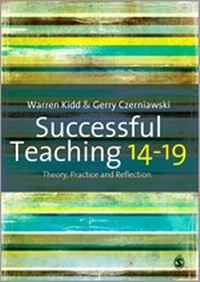
Successful Teaching 14-19
Theory, Practice and Reflection
1st Edition
Published on 18. March 2010
320 pages
978-1-4462-0381-1 (ISBN)
Description

Are you looking for a complete training manual, to get you through your assignments, help you on your teaching practice and support you in your first teaching job?
For trainee teachers studying to teach the 14 to 19 age group in secondary schools and colleges, this book is a practical guide covering the essential skills that must be acquired in order to successfully complete your course.
Five sections cover education policy, professional skills, theory, practice and reflection. The authors provide teaching ideas that work, and that will help trainee teachers to improve their grades and lesson observation profiles. There is a clear explanation of the theoretical underpinning that must be grasped in order to pass written assignments, and Masters level debates are addressed throughout the book, with a dedicated chapter exploring academic themes and issues.
The book is packed with ideas for classroom activities, and popular topics covered include:
- essential educational theory
- behaviour and classroom management
- how to start off lessons
- ideas for group work
- setting homework
- evaluating your own practice, and understanding how you can improve
- revising for exams
- working as part of a team
- using technology
All the chapters contain learning objectives, discussion points, examples from practice, Masters level extensions (for those studying at that level) and suggestions for further reading.
Suitable for all those studying to teach the 14 to 19 age range, this book is ideal for those on Secondary PGCE, PGDE and GTP courses leading to QTS, those studying for the post-compulsory sector PTLLS, DTLLS and CTLLS qualifications and those doing Overseas Teacher Training and Teach First courses.
Warren Kidd and Gerry Czerniawski are former teachers with experience of working in diverse settings; they are both Senior Lecturers in the Cass School of Education, University of East London.
For trainee teachers studying to teach the 14 to 19 age group in secondary schools and colleges, this book is a practical guide covering the essential skills that must be acquired in order to successfully complete your course.
Five sections cover education policy, professional skills, theory, practice and reflection. The authors provide teaching ideas that work, and that will help trainee teachers to improve their grades and lesson observation profiles. There is a clear explanation of the theoretical underpinning that must be grasped in order to pass written assignments, and Masters level debates are addressed throughout the book, with a dedicated chapter exploring academic themes and issues.
The book is packed with ideas for classroom activities, and popular topics covered include:
- essential educational theory
- behaviour and classroom management
- how to start off lessons
- ideas for group work
- setting homework
- evaluating your own practice, and understanding how you can improve
- revising for exams
- working as part of a team
- using technology
All the chapters contain learning objectives, discussion points, examples from practice, Masters level extensions (for those studying at that level) and suggestions for further reading.
Suitable for all those studying to teach the 14 to 19 age range, this book is ideal for those on Secondary PGCE, PGDE and GTP courses leading to QTS, those studying for the post-compulsory sector PTLLS, DTLLS and CTLLS qualifications and those doing Overseas Teacher Training and Teach First courses.
Warren Kidd and Gerry Czerniawski are former teachers with experience of working in diverse settings; they are both Senior Lecturers in the Cass School of Education, University of East London.
Reviews / Votes
'Successful Teaching 14-19 offers a comprehensive introduction to the intricacies of teaching. It covers not only the skills and habits needed by contemporary teachers, but also the theoretical and reflective context within which they operate. While much of what is written will be useful to any teacher, there is a welcome focus on the 14-19 agenda' - Tony Lawson, Senior Lecturer, University of LeicesterAll prices
More details
Language
English
Place of publication
London
United Kingdom
Target group
College/higher education
ISBN-13
978-1-4462-0381-1 (9781446203811)
Copyright in bibliographic data and cover images is held by Nielsen Book Services Limited or by the publishers or by their respective licensors: all rights reserved.
Schweitzer Classification
Other editions
Additional editions
Book
03/2010
1st Edition
SAGE Publications Ltd
€87.30
Shipment within 15-20 days
Book
03/2010
1st Edition
SAGE Publications Ltd
€208.33
Article exhausted; check different version
Persons
Content
PART ONE: EDUCATIONAL POLICY
Why Teach?
Understanding Secondary Education
Understanding Lifelong Learning and Post-Compulsory Education
Understanding the 14 - 19 Agenda
PART TWO: PROFESSIONAL SKILLS
The Habits of a Good Teacher
Starting to Think about Teaching and Learning: What Makes a Good Lesson?
Making a Good Start: Mentoring, Teaching Placement and First Encounters with Learners
How to 'Survive' Teaching Practice
PART THREE: THEORY
Educational Theory: Useful Tools at Your Disposal
Understanding the Role of Assessment in Learning
Behaviour and Classroom Management in Schools and Colleges
Educational Achievement and Underachievement
PART FOUR: PRACTICE
Planning and Preparation
How to Engage Learners
Classroom Ideas That Really Work
Ideas for Organizing Learning: Group Work, Revision and Homework Strategies
Teaching Thinking Skills: Examination, Evaluation and Differentiation
Using Technology to Teach: E-Learning, M-Learning and Blended Learning Strategies
PART FIVE: REFLECTION
Dealing with M-Level Credits: Academic Debates and Issues
Moving on: Professional Formation and Continuing Professional Development
Why Teach?
Understanding Secondary Education
Understanding Lifelong Learning and Post-Compulsory Education
Understanding the 14 - 19 Agenda
PART TWO: PROFESSIONAL SKILLS
The Habits of a Good Teacher
Starting to Think about Teaching and Learning: What Makes a Good Lesson?
Making a Good Start: Mentoring, Teaching Placement and First Encounters with Learners
How to 'Survive' Teaching Practice
PART THREE: THEORY
Educational Theory: Useful Tools at Your Disposal
Understanding the Role of Assessment in Learning
Behaviour and Classroom Management in Schools and Colleges
Educational Achievement and Underachievement
PART FOUR: PRACTICE
Planning and Preparation
How to Engage Learners
Classroom Ideas That Really Work
Ideas for Organizing Learning: Group Work, Revision and Homework Strategies
Teaching Thinking Skills: Examination, Evaluation and Differentiation
Using Technology to Teach: E-Learning, M-Learning and Blended Learning Strategies
PART FIVE: REFLECTION
Dealing with M-Level Credits: Academic Debates and Issues
Moving on: Professional Formation and Continuing Professional Development
