

Discovery DMPK Quick Guide
Description

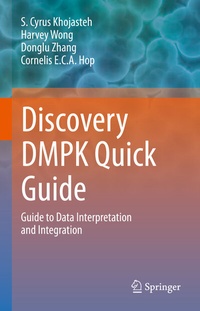
This book is intended for a broad readership, in particular, those working or interested in drug discovery coming from various disciplines such as medicinal chemistry, pharmacology, drug metabolism and pharmacokinetics, bioanalysis, clinical sciences, biochemistry, pharmaceutics, and toxicology. It provides, for the first time, a completely integrated look at multiple aspects of ADME sciences (absorption, distribution, metabolism, and excretion) in a summary format that is clear, concise, and self-explanatory. DMPK in Drug Discovery - Guide to Data Interpretation and integration leverages the prior knowledge from the first book that covers the basics of each concept (Drug Metabolism and Pharmacokinetics Quick Guide). This reference book is meant to be used day to day and provides many useful tables (used for data interpretation), figures, and case studies that can facilitate drug discovery. The case studies are intended to be short and relevant to the topic discussed and present another dimension to the discussions.
More details
Other editions
Additional editions
Persons
Harvey Wong is Associate Professor of Pharmacokinetics in the Faculty of Pharmaceutical Sciences at the University of British Columbia. He obtained his BSc in pharmacy and PhD in pharmacokinetics and biopharmaceutics from the University of British Columbia (Canada). Harvey's expertise is in pharmacokinetics, and modeling and simulation (translational PK/PD analysis, systems pharmacology, and physiologically based pharmacokinetic modeling). He serves on the editorial boards of Biopharmaceutics and Drug Disposition, Xenobiotica, and Clinical and Translational Sciences.
Donglu Zhang is a Senior Fellow in DMPK at Genentech. He is interested in applying drug metabolism studies in drug design and development of both small molecule drugs, protein degraders, and antibody-drug conjugates (ADC). He received the Sir James Black Award for discovery of and original research on Eliquis from the British Pharmacological Society (2018), and the Ondetti and Cushman Award for invention of mass defect filtering method (MDF) from Bristol-Myers Squibb (2007). He serves on editorial boards of Drug Metabolism and Disposition and Xenobiotica.
Cornelis E.C.A. Hop is Vice President at Genentech and supervises the DMPK Department. He leads a team of about 85 scientists involved in acquisition and interpretation of ADME data in support of drug discovery and development ranging from early stage research to NDA and beyond. Before that he was a senior director at Pfizer and a senior research fellow at Merck, and he received his PhD from the University of Utrecht (the Netherlands). He has extensive experience in ADME sciences with a particular focus on PK optimization, human PK prediction, biotransformation, bioanalysis, and the use of in silico approaches in drug discovery.
