


Treating Addiction as a Human Process
1st Edition
Published on 1. May 2007
712 pages
978-1-4616-3221-4 (ISBN)
Description

Innovative and humane treatment of patients with substance use disorders distinguishes this highly esteemed practitioner and major psychodynamic thinker. From his initial contribution of identifying the self-medicating function of abused substances, to the continued elaboration and refinement of his work focusing on the addict's ego deficits of self-regulation and self-care, Edward Khantzian's ideas have become the standard in the field of addictions treatment.
His insights into the dynamics of substance abuse have changed the ways that clinicians understand their addicted patients, significantly raising the likelihood of successful treatment. Shifting the focus from a pleasure-seeking to a pain-relieving approach to their patients' substance use enables clinicians to engage in a more positive, compassionate psychotherapeutic relationship, unhampered by countertransference feelings of contempt and condemnation.
Passionate, professional, and unfailingly astute, Dr. Khantzian examines his patients' internal worlds, revealing vulnerabilities while uncovering resiliency and strength. This book, comprehensive in scope, abundant in clinical material, and written with clarity and intelligence, provides a depth of understanding of substance use disorders and an increased hope for recovery.
A Jason Aronson Book
His insights into the dynamics of substance abuse have changed the ways that clinicians understand their addicted patients, significantly raising the likelihood of successful treatment. Shifting the focus from a pleasure-seeking to a pain-relieving approach to their patients' substance use enables clinicians to engage in a more positive, compassionate psychotherapeutic relationship, unhampered by countertransference feelings of contempt and condemnation.
Passionate, professional, and unfailingly astute, Dr. Khantzian examines his patients' internal worlds, revealing vulnerabilities while uncovering resiliency and strength. This book, comprehensive in scope, abundant in clinical material, and written with clarity and intelligence, provides a depth of understanding of substance use disorders and an increased hope for recovery.
A Jason Aronson Book
More details
Edition
1. Auflage
Language
English
Place of publication
New York
United States
Publishing group
Bloomsbury Publishing Plc
ISBN-13
978-1-4616-3221-4 (9781461632214)
Copyright in bibliographic data and cover images is held by Nielsen Book Services Limited or by the publishers or by their respective licensors: all rights reserved.
Schweitzer Classification
Other editions
Additional editions
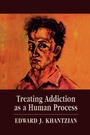
Edward J. Khantzian
Treating Addiction as a Human Process
Book
05/2007
Jason Aronson Publishers
€112.70
Shipment within 10-20 days
Edward J. Khantzian
Treating Addiction as a Human Process
Book
06/1999
Jason Aronson Publishers
€231.60
Shipment within 10-20 days
Person
Edward J. Khantzian is Clinical Professor of Psychiatry, Harvard Medical School, and a founding member of the Department of Psychiatry at The Cambridge Hospital. He has spent more than twenty years studying psychological factors associated with drug and alcohol abuse. Dr. Khantzian is a practicing psychiatrist and psychoanalyst, participant in numerous clinical research studies on substance abuse, and lecturer and writer on psychiatry, psychoanalysis, and substance abuse problems. A former Chairman of Massachusetts' Governor's Drug Rehabilitation Advisory Board and consultant to the National Institute on Drug Abuse, he is currently Associate Chief of Psychiatry, Tewksbury Hospital, Tewksbury, MA. He is a past director of The Cambridge Hospital Drug Treatment Programs and now holds the position of Principal Psychiatrist for Substance Abuse Disorders in The Cambridge Hospital Department of Psychiatry. He is a founding member of the American Academy of Addiction Psychiatry (AAAP) and is a Past-President of this national organization. Dr. Khantzian was a supervising physician for the National Football League Drug Control Program from its inception in 1986 until 1991, and currently serves as senior consultant to the NFL Players Association program for substance abuse.
Content
- Treating Addiction as a Human Process
- Contents
- Foreword
- Acknowledgments
- Collaborators
- PART I: OVERVIEW: POTENTIALS AND LIMITATIONS FOR UNDERSTANDING AND TREATING ADDICTIVE VULNERABILITY
- PART II: THE INTERNAL WORLD OF THE ADDICTED PERSON
- Introduction
- 1 Heroin Use As an Attempt to Cope
- 2 The Ego, the Self, and Opiate Addiction
- 3 Impulse Problems in Addiction
- 4 An Ego/Self Theory of Substance Dependence
- 5 Ego Functions and Psychopathology in Narcotics and Polydrug Users
- 6 Treatment Implications of Ego and Self Disturbances in Alcoholism
- 7 Addiction: Self-Destruction or Self-Repair?
- PART III: THE SELF-MEDICATION HYPOTHESIS OF SUBSTANCE USE DISORDERS
- Introduction
- 8 Opiate Addiction: Theory and Treatment
- 9 Self-Selection and Progression in Drug Dependence
- 10 Psychological (Structural) Vulnerabilities and the Specific Appeal of Narcotics
- 11 The Self-Medication Hypothesis of Addictive Disorders
- 12 Self-Regulation and Self-Medication Factors in Alcoholism and the Addictions
- 13 Self-Regulation Factors in Cocaine Dependence
- 14 Self-Regulation Vulnerabilities in Substance Abusers
- 15 The Self-Medication Hypothesis of Substance Use Disorders: An Update
- PART IV: UNDERSTANDING ADDICTIVE VULNERABILITY-PSYCHODYNAMICS
- Introduction
- 16 A Preliminary Dynamic Formulation of the Psychopharmacological Action of Methadone
- 17 Heroin Addiction: The Diagnostic Dilemma for Psychiatry
- 18 Dependency and Denial Problems of Alcoholics
- 19 Self-Preservation and the Care of the Self
- 20 Alcoholism: The Challenge of Conceptualization and Consensus
- 21 The Cause-Consequence Controversy in Alcoholic and Addictive Suffering
- 22 Cocaine Addiction: Is There a Psychological Predisposition?
- 23 Psychiatric and Psychodynamic Factors in Cocaine Dependence
- 24 Alcoholics Anonymous and Contemporary Psychodynamic Theory
- 25 Alcoholics Anonymous-Cult or Corrective?
- 26 Trauma and Addictive Suffering: A Self-Medication Perspective
- PART V: TREATMENT OF THE ADDICTIONS
- Introduction
- 27 The Self-Help-Psychiatry Controversy in Addiction Treatment
- 28 Group Treatment of Unwilling Addicted Patients
- 29 The Substance-Dependent Physician
- 30 Understanding and Managing Addicted Physicians
- 31 Psychotherapeutic Interventions with Substance Abusers
- 32 A Contemporary Psychodynamic Approach to Drug Abuse Treatment
- 33 The Primary Care Therapist and Patient Needs in Substance Abuse Treatment
- 34 Modified Group Therapy for Substance Abusers: A Psychodynamic Approach to Relapse Prevention
- 35 How AA Works and Why It Is Important for Clinicians to Understand
- 36 Group Therapy for Psychoactive Substance Use Disorders
- 37 Modified Dynamic Group Therapy: Technique and Technical Issues
- 38 Preverbal Origins of Distress: Substance Use Disorders and Psychotherapy
- 39 Psychotherapy of Substance Abusing Patients: Engaging and Treating the Disordered Person
- PART VI: EPILOGUE: FUTURE PROSPECTS FOR UNDERSTANDING AND TREATING THE ADDICTED PERSON
- Credits
- Index
