


Health Research Translation
Making Science Useful for Practicing Evidence-based Medicine
1st Edition
Will be published approx. on 11. August 2026
210 pages
E-Book
978-1-040-61552-2 (ISBN)
Description

Evidence-based medicine (EBM) has emphasised that potential advances in healthcare must be tested and proven to do more good than harm before they are incorporated into medical practice. The E of EBM comes from the underpinning published research that is translated from the laboratory bench to the patient's bedside. Despite this, however, there is little or no training in how to ensure translatability and usefulness of this fundamental ingredient in research for patient benefit.
This book fills the gap by focusing on how research translation can be maximized to make EBM truly achievable. Reflecting the author's considerable experience as both researcher and clinician, the book challenges debate that EBM as currently described is not fit for purpose, provides an analysis of why this is so and offers solutions as to what can be done to change the situation.
Key Features:
Provides objective analysis of why EBM is failing and what the remedies are
Describes how effective patient?researcher collaboration can be built through efforts and methods to engage citizens in the design, conduct and publication of studies
Shows how responsible research publication should seek the input of lay reviewers to make the E of EBM patient-relevant
Demonstrates how knowledge transfer can be underpinned by translatable, comprehensive evidence syntheses
By consolidating related themes in the translation journey, starting with citizen involvement in science all the way through to knowledge transfer, this unique book provides invaluable guidance and will stimulate debate among masters and doctoral students undertaking courses in evidence-based medicine, health research methods, epidemiology and medical statistics and will also be of value to biomedical researchers, medical journal editors and peer reviewers, clinicians including doctors, nurses and allied professionals who recruit patients into health research, patient and public representatives who engage in health research, systematic reviewers, guideline writers, pharmaceutical industry professionals, medical journalists, medical writers, and any individual involved in evidence-based medicine.
This book fills the gap by focusing on how research translation can be maximized to make EBM truly achievable. Reflecting the author's considerable experience as both researcher and clinician, the book challenges debate that EBM as currently described is not fit for purpose, provides an analysis of why this is so and offers solutions as to what can be done to change the situation.
Key Features:
Provides objective analysis of why EBM is failing and what the remedies are
Describes how effective patient?researcher collaboration can be built through efforts and methods to engage citizens in the design, conduct and publication of studies
Shows how responsible research publication should seek the input of lay reviewers to make the E of EBM patient-relevant
Demonstrates how knowledge transfer can be underpinned by translatable, comprehensive evidence syntheses
By consolidating related themes in the translation journey, starting with citizen involvement in science all the way through to knowledge transfer, this unique book provides invaluable guidance and will stimulate debate among masters and doctoral students undertaking courses in evidence-based medicine, health research methods, epidemiology and medical statistics and will also be of value to biomedical researchers, medical journal editors and peer reviewers, clinicians including doctors, nurses and allied professionals who recruit patients into health research, patient and public representatives who engage in health research, systematic reviewers, guideline writers, pharmaceutical industry professionals, medical journalists, medical writers, and any individual involved in evidence-based medicine.
More details
Edition
1. Auflage
Language
English
Place of publication
London
United Kingdom
Publishing group
Taylor & Francis Ltd
Target group
College/higher education
Professional and scholarly
Product notice
Reflowable
Illustrations
23 Line drawings, black and white; 23 Illustrations, black and white
ISBN-13
978-1-040-61552-2 (9781040615522)
Copyright in bibliographic data is held by Nielsen Book Services Limited or its licensors: all rights reserved.
Schweitzer Classification
Other editions
Additional editions
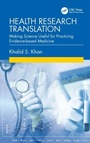
Khalid S. Khan
Health Research Translation
Making Science Useful for Practicing Evidence-based Medicine
Book
approx. 08/2026
1st Edition
CRC Press
€43.50
Not yet published
Khalid S. Khan
Health Research Translation
Making Science Useful for Practicing Evidence-based Medicine
Book
approx. 08/2026
1st Edition
CRC Press
€247.50
Not yet published
Person
Khalid S. Khan is Professor of Public Health and Preventive Medicine and Beatriz Galindo Distinguished Investigator at the University of Granada, Spain.
Content
1. Introduction 2. Research translation and healthcare 3. Pitfalls of evidence in evidence-based medicine 4. Research prioritization 5. Citizen involvement in research 6. Requirements for human research ethics 7. Comprehensive evidence synthesis 8. Responsible research conduct and publication
