

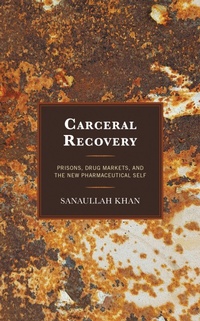
Carceral Recovery
Prisons, Drug Markets, and the New Pharmaceutical Self
1st Edition
Published on 3. October 2023
1 pages
978-1-9787-9054-4 (ISBN)
Description

Care, punishment, and recovery have become deeply entangled in contemporary responses to addiction.
Sanaullah Khan examines the interrelation between carceral conditions and substance use by tracing how drug markets, sidewalks, households, and prisons intersect in Baltimore. Khan argues that housing policy, medicalization, and incarceration fundamentally shape the conditions of substance use, even as individuals are increasingly drawn into a paradoxical regime that combines care and punishment through recovery-oriented interventions. This regime produces new pharmaceuticalized identities while often reproducing the very vulnerabilities it claims to address. By illuminating how addiction, care, and the drive for healing circulate through families and state institutions, Khan reveals the competing forces that structure substance use, recovery, and relapse. Drawing on archival research and ethnography, the book ultimately makes a compelling case for disentangling recovery from punishment-showing why meaningful care requires rethinking the carceral logics that continue to govern drug and addiction policies.
Sanaullah Khan examines the interrelation between carceral conditions and substance use by tracing how drug markets, sidewalks, households, and prisons intersect in Baltimore. Khan argues that housing policy, medicalization, and incarceration fundamentally shape the conditions of substance use, even as individuals are increasingly drawn into a paradoxical regime that combines care and punishment through recovery-oriented interventions. This regime produces new pharmaceuticalized identities while often reproducing the very vulnerabilities it claims to address. By illuminating how addiction, care, and the drive for healing circulate through families and state institutions, Khan reveals the competing forces that structure substance use, recovery, and relapse. Drawing on archival research and ethnography, the book ultimately makes a compelling case for disentangling recovery from punishment-showing why meaningful care requires rethinking the carceral logics that continue to govern drug and addiction policies.
More details
Edition
1. Auflage
Language
English
Place of publication
United States
Publishing group
Bloomsbury Publishing Plc
Target group
Professional and scholarly
ISBN-13
978-1-9787-9054-4 (9781978790544)
Copyright in bibliographic data and cover images is held by Nielsen Book Services Limited or by the publishers or by their respective licensors: all rights reserved.
Schweitzer Classification
Other editions
Additional editions
Book
10/2023
Lexington Books
€104.60
Shipment within 3-4 weeks
Person
Sanaullah Khan is assistant professor in medical anthropology at the City University of New York's Hunter College.
Content
List of Abbreviations
Introduction
Chapter 1: Public Health and Discipline
Chapter 2: Carceral Obligations and The Prison of The Mind
Chapter 3: Courts, Drug Treatment Programs and the Re-making of Family
Chapter 4: Medicalizing Homelessness
Chapter 5: Treatment Centers and the Drug Market
Chapter 6: Substance Use, Discipline and Household Disorders
Conclusion: From Ethnography to Practice
Bibliography
Index
About the Author
Introduction
Chapter 1: Public Health and Discipline
Chapter 2: Carceral Obligations and The Prison of The Mind
Chapter 3: Courts, Drug Treatment Programs and the Re-making of Family
Chapter 4: Medicalizing Homelessness
Chapter 5: Treatment Centers and the Drug Market
Chapter 6: Substance Use, Discipline and Household Disorders
Conclusion: From Ethnography to Practice
Bibliography
Index
About the Author
