

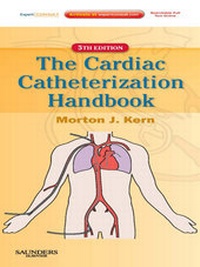
Cardiac Catheterization Handbook E-Book
Expert Consult
5th Edition
Published on 17. February 2011
432 pages
978-0-323-08171-9 (ISBN)
Description

This one-of-a-kind handbook again provides step-by-step instructions on what to expect, what to avoid, and how to manage complications in the cath lab, with valuable updates on safety requirements, new technology, and new techniques. It takes you through a detailed review of equipment, specific laboratory techniques, and lab safety, as well as the limitations, complications, and medical-surgical implications of cardiac catheterization and angiography findings. The book's portable size make it the preferred pocket reference!
- Presents clear instructions on what to expect, what to avoid, and how to manage complications.
- Features a straightforward, easy-to-understand approach and a pocket-sized format that are ideal for reference by practitioners on the go.
- Covers all of the newest interventional techniques, including the use of drug-coated stents, carotid stenting, and renal stenting.
- Presents brand-new coverage of vascular closure devices and radial artery catheterization.
- Features an increased emphasis on congenital heart disease.
- Incorporates new material on patient preparation, laboratory setup, and the digital lab.
More details
Other editions
Additional editions
Book
02/2011
5th Edition
Mosby
€70.30
Article exhausted; check for reprint
Person
Morton J. Kern, MD, FSCAI, FAHA, FACC, Professor de Medicina da Universidade da Califórnia, Irvine, Orange, Califórnia; Chief of Medicine, Health Care System Veterans Long Beach, Long Beach, Califórnia;
Content
1. INTRODUCTION TO THE CATHETERIZATION LABORATORY
- Indications for Cardiac Catheterization
- Contraindications
- Complications and Risks
- Catheterization Laboratory Data
- Preparation of the Patient
- Special Preparations
- The Team Approach to Cardiac Catheterization
- Equipment in the Catheterization Laboratory
- Training Requirements
- Environmental Safety in the Catheterization Laboratory
2. ARTERIAL AND VENOUS ACCESS PERCUTANEOUS FEMORAL
- The Arm Approach
- Use of Heparin during Cardiac Catheterization
- Problems of Vascular Access
- Common Problems in Accessing and Cannulating Coronary Arteries and Grafts
- Arterial and Venous Access: Nurse/Technician Viewpoints
- Equipment and Instruments Used for Access
3. HEMODYNAMIC DATA
- Pressure Waves in the Heart
- Right and Left Heart Catheterization
- Computations for Hemodynamic Measurements
- Computations of Valve Area from Pressure Gradients and Cardiac Output
- Examples of Aortic and Mitral Valve Area Calculations
- Use of Valve Resistance for Aortic Stenosis
- Measurement of Cardiac Output
- Intracardiac Shunts
- Equipment Used for Hemodynamic Study
- Hemodynamic Recording Techniques
- Hemodynamic Examples and Artifacts
- Electrocardiography in the Cardiac Catheterization Laboratory
4. ANGIOGRAPHIC DATA
- Section I: Cardiac Angiography
- Coronary Arteriography
- Problems and Solutions in the Interpretation of Coronary Angiograms
- Ventriculography
- Section II: Other Cardiovascular Angiographic Studies
- Ascending Aortography
- Abdominal Aortography
- Pulmonary Angiography
- Periperal Vascular Angiography
- Section III: The X-Ray Image
- Generation of the X-Ray Image
- Digital Angiography
- Radiation Safety
- Section IV: Angiographic Equipment
- Injectors and Contrast Materials
- Angiographic Catheters
- Medications Used in Coronary Angiography
- Pacemakers
5. ELECTROPHYSIOLOGIC STUDIES AND ABALTION TECHNIQUES
- Technical Aspects
- Procedures
- Utility of EPS of Specific Diagnosis
- Catheter Ablation
6. RESEARCH TECHNIQUES
- Quantitative Coronary Angiography and Ventriculography
- Myocardial Blood Flow
- Myocardial Metabolism
- Coronary Sinus Catheterization
- Doppler Coronary Flow Velocity Techniques
- Combined Hemodynamic and Echocardiographic Methodologies
- High-Fidelity Micromanometer-Tip Pressure Measurements
- Physiologic Maneuvers in the Catheterization Laboratory
7. SPECIAL TECHNIQUES
- Transseptal Heart Catheterization
- Direct Transthoracic LV Puncture
- Endomyocardial Biopsy
- Coronary Sinus (CS) Catheterization
- Intravascular Foreign Body Retrieval
- Transluminal Alcohol Septal Ablation for Hypertrophic Obstructive Cardiomyopathy
- Special Conditions
8. HIGH-RISK CARDIAC CATHETERIZATION
- The High-Risk Patient
- Incidence of Complications in the High-Risk Patient
- Management of Arrhythmias in High-Risk Patients
Cardiac Support Devices
9. INTERVENTIONAL TECHNIQUES
- Percutaneous Coronary Interventions (PCI)
- Valvuloplasty
10. DOCUMENTATION IN THE CARDIAC CATHETERIZATION LABORATORY
- Healthcare Quality Standards to Reduce Medical Malpractice
- The Medical Record: General Points
- Minimum Documentation in the Catheterization Laboratory
- Charting Recommendations for Outpatient Catheterization
- Documentation for Medical Treatment Problems or Complications: Events Requiring an Incident Report
Equipment Failure
- Indications for Cardiac Catheterization
- Contraindications
- Complications and Risks
- Catheterization Laboratory Data
- Preparation of the Patient
- Special Preparations
- The Team Approach to Cardiac Catheterization
- Equipment in the Catheterization Laboratory
- Training Requirements
- Environmental Safety in the Catheterization Laboratory
2. ARTERIAL AND VENOUS ACCESS PERCUTANEOUS FEMORAL
- The Arm Approach
- Use of Heparin during Cardiac Catheterization
- Problems of Vascular Access
- Common Problems in Accessing and Cannulating Coronary Arteries and Grafts
- Arterial and Venous Access: Nurse/Technician Viewpoints
- Equipment and Instruments Used for Access
3. HEMODYNAMIC DATA
- Pressure Waves in the Heart
- Right and Left Heart Catheterization
- Computations for Hemodynamic Measurements
- Computations of Valve Area from Pressure Gradients and Cardiac Output
- Examples of Aortic and Mitral Valve Area Calculations
- Use of Valve Resistance for Aortic Stenosis
- Measurement of Cardiac Output
- Intracardiac Shunts
- Equipment Used for Hemodynamic Study
- Hemodynamic Recording Techniques
- Hemodynamic Examples and Artifacts
- Electrocardiography in the Cardiac Catheterization Laboratory
4. ANGIOGRAPHIC DATA
- Section I: Cardiac Angiography
- Coronary Arteriography
- Problems and Solutions in the Interpretation of Coronary Angiograms
- Ventriculography
- Section II: Other Cardiovascular Angiographic Studies
- Ascending Aortography
- Abdominal Aortography
- Pulmonary Angiography
- Periperal Vascular Angiography
- Section III: The X-Ray Image
- Generation of the X-Ray Image
- Digital Angiography
- Radiation Safety
- Section IV: Angiographic Equipment
- Injectors and Contrast Materials
- Angiographic Catheters
- Medications Used in Coronary Angiography
- Pacemakers
5. ELECTROPHYSIOLOGIC STUDIES AND ABALTION TECHNIQUES
- Technical Aspects
- Procedures
- Utility of EPS of Specific Diagnosis
- Catheter Ablation
6. RESEARCH TECHNIQUES
- Quantitative Coronary Angiography and Ventriculography
- Myocardial Blood Flow
- Myocardial Metabolism
- Coronary Sinus Catheterization
- Doppler Coronary Flow Velocity Techniques
- Combined Hemodynamic and Echocardiographic Methodologies
- High-Fidelity Micromanometer-Tip Pressure Measurements
- Physiologic Maneuvers in the Catheterization Laboratory
7. SPECIAL TECHNIQUES
- Transseptal Heart Catheterization
- Direct Transthoracic LV Puncture
- Endomyocardial Biopsy
- Coronary Sinus (CS) Catheterization
- Intravascular Foreign Body Retrieval
- Transluminal Alcohol Septal Ablation for Hypertrophic Obstructive Cardiomyopathy
- Special Conditions
8. HIGH-RISK CARDIAC CATHETERIZATION
- The High-Risk Patient
- Incidence of Complications in the High-Risk Patient
- Management of Arrhythmias in High-Risk Patients
Cardiac Support Devices
9. INTERVENTIONAL TECHNIQUES
- Percutaneous Coronary Interventions (PCI)
- Valvuloplasty
10. DOCUMENTATION IN THE CARDIAC CATHETERIZATION LABORATORY
- Healthcare Quality Standards to Reduce Medical Malpractice
- The Medical Record: General Points
- Minimum Documentation in the Catheterization Laboratory
- Charting Recommendations for Outpatient Catheterization
- Documentation for Medical Treatment Problems or Complications: Events Requiring an Incident Report
Equipment Failure
