

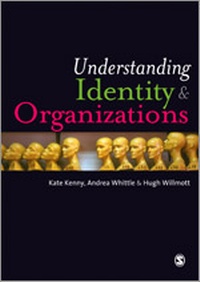
Understanding Identity and Organizations
1st Edition
Published on 1. December 2011
216 pages
978-1-4462-6618-2 (ISBN)
Description

An understanding of identity is fundamental to a complete understanding of organizational life. While conventional management textbooks nod to in-groups, cohesion and discrimination, this text offers instead a deeper, more nuanced understanding of why people, groups and organizations behave the way they do. With conceptions of identity perhaps less stable than they have ever been, the authors make complex theoretical issues accessible to the reader through the use of lively examples from popular culture. The authors present an overview of the key issues, as well as an examination of cutting-edge research and topical forces currently re-defining identity, such as globalisation, the fair trade movement and online identities.
This text is a succinct, relevant and exciting overview of the field of identity studies as it relates to business and management and applied social sciences, an is an invaluable resource to undergraduate and postgraduate students of management on any course that has an identity component.
This text is a succinct, relevant and exciting overview of the field of identity studies as it relates to business and management and applied social sciences, an is an invaluable resource to undergraduate and postgraduate students of management on any course that has an identity component.
Reviews / Votes
'As it elicited many thought provoking moments, before I was halfway through this book I had recommened it to a Masters degree student writing their dissertation (they reported it was fascinating) and used a variety of concepts in sessions (e.g organisational culture / leadership) facilitated in my role as a Staff Development Adviser...I would have no hesitation in endorsing this lively yet solid text to FE and HE students'John Trantom
Action Learning: Research & Practice
'Identity is an extremely popular, but frequently misunderstood and misrepresented, concept in organization studies. This fantastic book is a much needed and timely antidote to this problem. It provides a thoughtful, accessible and thorough treatment of the phenomenon. It is an absolute "must read" for anyone who professes to be interested in studying or researching identity and organization's
Professor Cliff Oswick
Professor in Organization Theory, Head of the Faculty of Management, Cass Business School, City University
'Organizations are not just places we go to make money, but places where we make ourselves too. This helpful book explores the ways in which identities are worked upon, and show how many of our ideas about "who we are" emerge from our lives at work'
Professor Martin Parker
Warwick Business School
'I am impressed by this accessible and thoroughly scholarly text. It introduces students to highly complex theoretical ideas in a way that is immediately relevant to everyday organizational life. I look forward to teaching with this book'
Professor Samantha Warren
University of Essex
'Understanding Identity and Organizations maps the territory laid out by identity research as it applies to organizations and points to new areas of interest and concern. An essential guide for those entering the field of organizational identity studies as well as providing an overview of the field for seasoned identity researchers'
Mary Jo Hatch
Professor Emerita of Banking and Commerce, University of Virginia
'Understanding Identity and Organization gives us for the first time a complete and sophisticated overview of the key topics and debates around identity at work. In a lively, accessible and always scholarly fashion, the authors have captured the fundamental importance of this often neglected aspect of employment. It is essential reading for anyone studying organizations today'
Professor Peter Fleming
Queen Mary College, University of London
All prices
More details
Language
English
Place of publication
London
United Kingdom
Target group
College/higher education
Professional and scholarly
ISBN-13
978-1-4462-6618-2 (9781446266182)
Copyright in bibliographic data and cover images is held by Nielsen Book Services Limited or by the publishers or by their respective licensors: all rights reserved.
Schweitzer Classification
Other editions
Additional editions
Kate Kenny | Andrea Whittle | Hugh Willmott
Understanding Identity and Organizations
Book
12/2011
1st Edition
SAGE Publications Ltd
€66.00
Shipment within 15-20 days
Kate Kenny | Andrea Whittle | Hugh Willmott
Understanding Identity and Organizations
Book
12/2011
1st Edition
SAGE Publications Ltd
€200.40
Shipment within 15-20 days
Persons
Andrea Whittle (BSc(Hons), PhD) is Professor of Management and Organization Studies at Newcastle University Business School. Before joining Newcastle University in 2013, she held a Chair in Organization Studies at Cardiff University. Andrea holds a first class honours degree in Natural Science from Durham University and gained her PhD in Sociology from Brunel University at the Centre for Research into Innovation, Culture and Technology (CRICT). After an ESRC funded post-doctoral research fellowship at Said Business School, University of Oxford, Andrea joined Cardiff University in 2004.
Her research is driven by a passion for understanding the role of language in management settings and is informed by theories and methodologies from the fields of discourse analysis, narrative, discursive psychology, ethnography, ethnomethodology and conversation analysis. She has conducted research on management consultants, identity, branding, organizational change, technology and strategy. Her research has been published in leading journals, including Organization Studies, Human Relations, Management Communication Quarterly and Organization. She has also co-authored a SAGE textbook, with Kate Kenny and Hugh Willmott (2011) Understanding Identity and Organizations.
Her research is driven by a passion for understanding the role of language in management settings and is informed by theories and methodologies from the fields of discourse analysis, narrative, discursive psychology, ethnography, ethnomethodology and conversation analysis. She has conducted research on management consultants, identity, branding, organizational change, technology and strategy. Her research has been published in leading journals, including Organization Studies, Human Relations, Management Communication Quarterly and Organization. She has also co-authored a SAGE textbook, with Kate Kenny and Hugh Willmott (2011) Understanding Identity and Organizations.
Content
Introduction to Understanding Identity
Introduction
Identity vs Personality
Identity on the Management Agenda: A Brief History
How Do Individual and Organizational Identities Interact?
Introducing the Book
Suggested Reading
Theoretical Perspectives on Identity
Introduction
Social Identity Theory (SIT)
Psychoanalysis
Foucauldian Perspective
Symbolic Interactionism
Narrative Approaches
Micro-Interactional Approaches
Application Exercise - The Case of Frances
Conclusion
Suggested Reading
Sample Exam/Assignment Questions
Diversity and Identity
Introduction
Identity as a Social Category
Identity as a Process of Social Construction
Conclusion
Suggested Reading
Sample Exam/Assignment Questions
Occupational Identities
Introduction
The Meaning of Work
Occupational Cultures and Boundaries
Managerial Identities
Professional Identities
The Dirty, the Deviant and the Degrading
Unpaid Work and Unemployment
When I Grow Up I Want To Be ...
Conclusion
Suggested Reading
Sample Exam/Assignment Questions
Identity and Organizational Control
Overview and Introduction
Bringing Identity to Work
Managing Culture
Managing Identities
Identification and Dis-identification
Conclusion
Suggested Reading
Sample Exam/Assignment Questions
Organizational Identity
Introduction
Organizational Identity: What Is It and Why Does It Matter?
Organizational Identity - Properties or Beliefs?
Types of Organizational Identity
Power in (and of) Organizational Identity
Conclusion
Suggested Reading
Sample Exam/Assignment Questions
Virtual Identity
Overview and Introduction
Competing Perspectives: Technological Determinism and Social Constructionism
New Connections and Identity: Online Communities
Virtual Identity, Power and Control
Teleworking and Identity
Conclusion
Suggested Reading
Sample Exam/Assignment Questions
The Future of Identity
Introduction
Strong Attachments and Totalizing Workplaces?
Weak Attachments and the 'Flexible' Firm
New Public Management
Identity and the Global, Virtual Firm
The Future of Diversity
Conclusion
Suggested Reading
Glossary of Terms
Introduction
Identity vs Personality
Identity on the Management Agenda: A Brief History
How Do Individual and Organizational Identities Interact?
Introducing the Book
Suggested Reading
Theoretical Perspectives on Identity
Introduction
Social Identity Theory (SIT)
Psychoanalysis
Foucauldian Perspective
Symbolic Interactionism
Narrative Approaches
Micro-Interactional Approaches
Application Exercise - The Case of Frances
Conclusion
Suggested Reading
Sample Exam/Assignment Questions
Diversity and Identity
Introduction
Identity as a Social Category
Identity as a Process of Social Construction
Conclusion
Suggested Reading
Sample Exam/Assignment Questions
Occupational Identities
Introduction
The Meaning of Work
Occupational Cultures and Boundaries
Managerial Identities
Professional Identities
The Dirty, the Deviant and the Degrading
Unpaid Work and Unemployment
When I Grow Up I Want To Be ...
Conclusion
Suggested Reading
Sample Exam/Assignment Questions
Identity and Organizational Control
Overview and Introduction
Bringing Identity to Work
Managing Culture
Managing Identities
Identification and Dis-identification
Conclusion
Suggested Reading
Sample Exam/Assignment Questions
Organizational Identity
Introduction
Organizational Identity: What Is It and Why Does It Matter?
Organizational Identity - Properties or Beliefs?
Types of Organizational Identity
Power in (and of) Organizational Identity
Conclusion
Suggested Reading
Sample Exam/Assignment Questions
Virtual Identity
Overview and Introduction
Competing Perspectives: Technological Determinism and Social Constructionism
New Connections and Identity: Online Communities
Virtual Identity, Power and Control
Teleworking and Identity
Conclusion
Suggested Reading
Sample Exam/Assignment Questions
The Future of Identity
Introduction
Strong Attachments and Totalizing Workplaces?
Weak Attachments and the 'Flexible' Firm
New Public Management
Identity and the Global, Virtual Firm
The Future of Diversity
Conclusion
Suggested Reading
Glossary of Terms
