

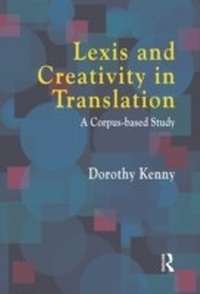
Lexis and Creativity in Translation
A Corpus Based Approach
1st Edition
Published on 8. April 2014
268 pages
978-1-317-64075-2 (ISBN)
Description

Computers offer new perspectives in the study of language, allowing us to see phenomena that previously remained obscure because of the limitations of our vantage points. It is not uncommon for computers to be likened to the telescope, or microscope, in this respect. In this pioneering computer-assisted study of translation, Dorothy Kenny suggests another image, that of the kaleidoscope: playful changes of perspective using corpus-processing software allow textual patterns to come into focus and then recede again as others take their place. And against the background of repeated patterns in a corpus, creative uses of language gain a particular prominence.
In Lexis and Creativity in Translation, Kenny monitors the translation of creative source-text word forms and collocations uncovered in a specially constructed German-English parallel corpus of literary texts. Using an abundance of examples, she reveals evidence of both normalization and ingenious creativity in translation. Her discussion of lexical creativity draws on insights from traditional morphology, structural semantics and, most notably, neo-Firthian corpus linguistics, suggesting that rumours of the demise of linguistics in translation studies are greatly exaggerated.
Lexis and Creativity in Translation is essential reading for anyone interested in corpus linguistics and its impact so far on translation studies. The book also offers theoretical and practical guidance for researchers who wish to conduct their own corpus-based investigations of translation. No previous knowledge of German, corpus linguistics or computing is assumed.
In Lexis and Creativity in Translation, Kenny monitors the translation of creative source-text word forms and collocations uncovered in a specially constructed German-English parallel corpus of literary texts. Using an abundance of examples, she reveals evidence of both normalization and ingenious creativity in translation. Her discussion of lexical creativity draws on insights from traditional morphology, structural semantics and, most notably, neo-Firthian corpus linguistics, suggesting that rumours of the demise of linguistics in translation studies are greatly exaggerated.
Lexis and Creativity in Translation is essential reading for anyone interested in corpus linguistics and its impact so far on translation studies. The book also offers theoretical and practical guidance for researchers who wish to conduct their own corpus-based investigations of translation. No previous knowledge of German, corpus linguistics or computing is assumed.
More details
Language
English
Place of publication
London
United Kingdom
Publishing group
Taylor & Francis Ltd
Target group
College/higher education
File size
1,39 MB
ISBN-13
978-1-317-64075-2 (9781317640752)
Copyright in bibliographic data and cover images is held by Nielsen Book Services Limited or by the publishers or by their respective licensors: all rights reserved.
Schweitzer Classification
Other editions
Additional editions
Book
01/2001
1st Edition
St Jerome Publishing
€215.41
Shipment within 3-4 weeks
Book
01/2001
1st Edition
St Jerome Publishing
€63.80
Shipment within 3-4 weeks
Person
Authored by Kenny, Dorothy
Content
Lexis and Creativity in Translation: Contents
Acknowledgements
Introduction
1. Is 'linguistics' singular or plural?
Introduction
Chomskyan linguistics
Chomsky and translation theory
Firthian linguistics
Firth and translation theory
The postmodern critique of linguistics in translation studies
Conclusion
2. The soft option: corpus linguistics
Introduction
Corpus linguistics
Corpora: a brief history
Corpora: users and uses
Corpora and neo-Firthian linguistics
Corpus processing
Global statistics
Word lists
Keyword lists
Clusters
Concordancing
Conclusion
3. Turning corpus linguistics on its head:corpus-based translation studies
Introduction
Descriptive translation studies
Norms, universals, and laws of translation
Corpora in translation studies
Monolingual single and comparable corpora
Parallel corpora
Bilingual and multilingual comparable corpora
Normalization in translation
Advantages and limitations of corpora in translation studies
Conclusion
4. A word about words
Introduction
The word 'word'
Word formation
Compounding
Derivation
Structural semantics
Collocation
Conflicting definitions of collocation
Beginning the study of lexis: the groundwork
Nodes and collocates
Spans
Frequency
German ad hoc compounds
Lexis and linguistic theory
The interaction of lexis and grammar
The idiom principle and the open-choice principle
Semantic preference and semantic prosody
Semantic reversal
Conclusion
5. The how of it: creating and using a parallel corpus
Introduction
Issues in corpus compilation
Representativeness
Sampling strategies
Random sampling vs stratified approaches
Internal vs external criteria
Text selection
Full texts vs texts extracts
The German-English Parallel Corpus of Literary Texts (GEPCOLT)
Sampling frame and text selection
Data capture, editing and mark-up
Corpus alignment and bilingual concordancing
Multiconcord
Comparative data
The Mannheim Corpora
The British National Corpus
Extracting instances of lexical creativity from GEPCOLT
Hapax legomena
Writer-specific forms
Unusual collocations
The node AUGE
Clusters
Evaluating the creativity of translations in GEPCOLT 140
Conclusion
6. Lonely words: creative hapax legomena and writer-specific forms
Introduction
Hapax Legomena
Creative orthography
Creative derivation
Complex verbal nouns
Compounds
Wordplay
Anaphoric relations
Semantic preference
Semantic prosody
Creative imagery
Co-ordinating and copulative compounds
Summary statistics and discussion
Writer-specific forms
Conclusion
7. Two left eyes: creative collocations in GEPCOLT
Introduction
Exploitations of collocational norms
Decomposed compounds
Lexical cohesion
Other unusual collocations
Repeated idiosyncrasies
Summary statistics and discussion
Conclusion
Appendix 1: Works included in the German-English Parallel Corpus of Literary Texts (GEPCOLT)
Appendix 2: Sample Header
Appendix 3: Creative Hapax Forms in the German Subcorpus
of GEPCOLT and their Translations into English
References
Index
Acknowledgements
Introduction
1. Is 'linguistics' singular or plural?
Introduction
Chomskyan linguistics
Chomsky and translation theory
Firthian linguistics
Firth and translation theory
The postmodern critique of linguistics in translation studies
Conclusion
2. The soft option: corpus linguistics
Introduction
Corpus linguistics
Corpora: a brief history
Corpora: users and uses
Corpora and neo-Firthian linguistics
Corpus processing
Global statistics
Word lists
Keyword lists
Clusters
Concordancing
Conclusion
3. Turning corpus linguistics on its head:corpus-based translation studies
Introduction
Descriptive translation studies
Norms, universals, and laws of translation
Corpora in translation studies
Monolingual single and comparable corpora
Parallel corpora
Bilingual and multilingual comparable corpora
Normalization in translation
Advantages and limitations of corpora in translation studies
Conclusion
4. A word about words
Introduction
The word 'word'
Word formation
Compounding
Derivation
Structural semantics
Collocation
Conflicting definitions of collocation
Beginning the study of lexis: the groundwork
Nodes and collocates
Spans
Frequency
German ad hoc compounds
Lexis and linguistic theory
The interaction of lexis and grammar
The idiom principle and the open-choice principle
Semantic preference and semantic prosody
Semantic reversal
Conclusion
5. The how of it: creating and using a parallel corpus
Introduction
Issues in corpus compilation
Representativeness
Sampling strategies
Random sampling vs stratified approaches
Internal vs external criteria
Text selection
Full texts vs texts extracts
The German-English Parallel Corpus of Literary Texts (GEPCOLT)
Sampling frame and text selection
Data capture, editing and mark-up
Corpus alignment and bilingual concordancing
Multiconcord
Comparative data
The Mannheim Corpora
The British National Corpus
Extracting instances of lexical creativity from GEPCOLT
Hapax legomena
Writer-specific forms
Unusual collocations
The node AUGE
Clusters
Evaluating the creativity of translations in GEPCOLT 140
Conclusion
6. Lonely words: creative hapax legomena and writer-specific forms
Introduction
Hapax Legomena
Creative orthography
Creative derivation
Complex verbal nouns
Compounds
Wordplay
Anaphoric relations
Semantic preference
Semantic prosody
Creative imagery
Co-ordinating and copulative compounds
Summary statistics and discussion
Writer-specific forms
Conclusion
7. Two left eyes: creative collocations in GEPCOLT
Introduction
Exploitations of collocational norms
Decomposed compounds
Lexical cohesion
Other unusual collocations
Repeated idiosyncrasies
Summary statistics and discussion
Conclusion
Appendix 1: Works included in the German-English Parallel Corpus of Literary Texts (GEPCOLT)
Appendix 2: Sample Header
Appendix 3: Creative Hapax Forms in the German Subcorpus
of GEPCOLT and their Translations into English
References
Index
