

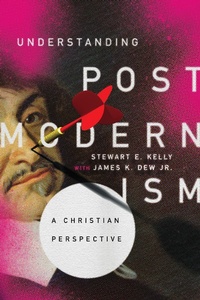
Understanding Postmodernism
Description

Postmodernity has matured. But the challenge of navigating our contemporary culture remains. In order for Christians to make wise decisions, we first need to understand the many facets of our postmodern context.If René Descartes is often identified as the first truly modern philosopher in light of his confidence in human reason, then postmodernism has taken Descartes to the woodshed. Stewart Kelly and James Dew detail the litany of concerns that postmodernism has raised: overconfidence in human reason, the limitations of language, the relativity of truth, the lack of a truly objective view, the inherently oppressive nature of metanarratives, the instability of the human self, and the absence any moral superiority.With wisdom and care, Kelly and Dew compare these postmodern principles with the gospel of Jesus Christ and the Christian faith. What emerges is neither a rejection of everything postmodernism is concerned with nor a wholesale embrace of all that it affirms. Instead, we areencouraged to understand the postmodern world as we seek to mature spiritually in Christ.
More details
Other editions
Additional editions
Person
Stewart E. Kelly (PhD, Notre Dame) is professor of philosophy at Minot State University. He is the author of Truth Considered and Applied and Thinking Well: An Introduction to Critical Thinking.
James K. Dew Jr. (PhD, Southeastern Baptist) is associate professor of the history of ideas and philosophy and dean of the College at Southeastern Baptist Theological Seminary. He is the coauthor (with Mark W. Foreman) of How Do We Know? An Introduction to Epistemology and coeditor (with Chad Meister) of God and Evil: The Case for God in a World Filled with Pain and God and the Problem of Evil: Five Views.
Content
1 Introduction and Background 2. Criteria for Evaluating Postmodernism 3. The Demise of Enlightenment Modernism 4. The Observer as Situated 5. Philosophy of Language 6. Truth and Social Construction 7. Postmodernism and the Self 8. Realism and Antirealism, Objectivity and Subjectivity 9. On Metanarratives and Oppression 10. Doubts About Metanarratives 11. Truth, Faith, and Postmodernism 12. Postmodernism and the Critique of EnlightenmentReason 13. The Hope of the Gospel 14. Where Do We Go from Here? Appendix: Chart on Modernism and Postmodernism Author Index Subject Index Scripture Index
