

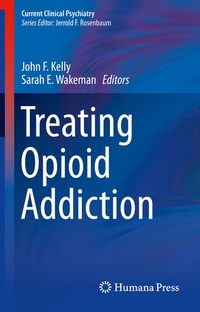
Treating Opioid Addiction
Description

This book addresses opioids and opioid use disorders from epidemiological, clinical, and public health perspectives. It covers detailed information on the nature of opioids, their effects on the human body and brain, prevention, and treatment of opioid addiction. Unlike other texts, the first section of this volume builds a strong historical, neurobiological, and phenomenological foundation for a deep understanding of the topic and the patient. The second section addresses the most challenging issues clinicians face, including pharmacological and psychosocial treatments, harm reduction approaches, alternative approaches to pain management for the non-specialist, and prescribing guidelines.
Treating Opioid Addiction is a valuable resource for psychiatrists, psychologists, addiction medicine physicians, primary care physicians, drug addiction counselors, students, trainees, scholars, and public health officials interested in the effects and impactof opioids in the clinical and epidemiological context.
More details
Other editions
Additional editions
Persons
John F. Kelly, PhD, ABPP
Associate Professor of Psychiatry in the Field of Addiction Medicine
Harvard Medical School; Director Massachusetts General Hospital (MGH) Recovery Research Institute
Program Director MGH Addiction Recovery Management Service
Associate Director MGH Center for Addiction Medicine
Department of Psychiatry
Massachusetts General Hospital
Boston, MA, USA
Sarah E. Wakeman, MD
Medical Director, Massachusetts General Hospital Substance Use Disorder Initiative
Assistant Professor of Medicine, Harvard Medical School
Program Director, Massachusetts General Hospital Addiction Medicine Fellowship
Boston, MA, USA
Content
Killing More Than Pain: Etiology and Remedy for an Opioid Crisis.- Epidemiology: Opioid Use and Related Disorders.- Neurobiology of Addiction: A Disorder of Choice.- Terminology and Conceptualization of Opioid Use Disorder and Implications for Treatment.- Medication for the Treatment of Opioid Use Disorder.- Psychosocial Approaches in the Treatment of Opioid Use Disorders.- Mutual-Help and Peer Support Models for Opioid Use Disorder Recovery.- Harm Reduction Approaches for Opioid Use Disorder.- The Natural History, Clinical Course, and Long-Term Recovery From Opioid Use Disorders.- Enhancing Treatment Access and Effectiveness: Toward Patient-Centered Models of Care.- Prescribing, Prescription Monitoring, and Health Policy.- Effective Opioid Analgesic Alternatives and Approaches to Pain Management.
