

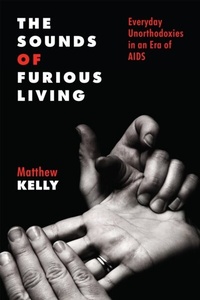
The Sounds of Furious Living
Everyday Unorthodoxies in an Era of AIDS
1st Edition
Published on 13. October 2023
268 pages
978-1-9788-3511-5 (ISBN)
Description

Four decades have passed since reports of a mysterious "gay cancer" first appeared in US newspapers. In the ensuing years, the pandemic that would come to be called AIDS changed the world in innumerable ways. It also gave rise to one of the late twentieth century's largest health-based empowerment movements. Scholars across diverse traditions have documented the rise of the AIDS activist movement, chronicling the impassioned echoes of protestors who took to the streets to demand "drugs into bodies."
And yet not all activism creates echoes. Included among the ranks of 1980s and 1990s-era AIDS activists were individuals whose expressions of empowerment differed markedly from those demanding open access to mainstream pharmaceutical agents. Largely forgotten today, this activist tradition was comprised of individuals who embraced unorthodox approaches for conceptualizing and treating their condition. Rejecting biomedical expertise, they shared alternative clinical paradigms, created underground networks for distributing unorthodox nostrums, and endorsed etiological models that challenged the association between HIV and AIDS. The theatre of their protests was not the streets of New York City's Greenwich Village but rather their bodies. And their language was not the riotous chants of public demonstration but the often-invisible embrace of contrarian systems for defining and treating their disease.
The Sounds of Furious Living seeks to understand the AIDS activist tradition, identifying the historical currents out of which it arose. Embracing a patient-centered, social historical lens, it traces historic shifts in popular understanding of health and perceptions of biomedicine through the nineteenth and twentieth centuries to explain the lasting appeal of unorthodox health activism into the modern era. In asking how unorthodox health activism flourished during the twentieth century's last major pandemic, Kelly also seeks to inform our understanding of resistance to biomedical authority in the setting of the twenty-first century's first major pandemic: COVID-19. As a deeply researched portrait of distrust and disenchantment, The Sounds of Furious Living helps explain the persistence of movements that challenge biomedicine's authority well into a century marked by biomedical innovation, while simultaneously posing important questions regarding the meaning and metrics of patient empowerment in clinical practice.
And yet not all activism creates echoes. Included among the ranks of 1980s and 1990s-era AIDS activists were individuals whose expressions of empowerment differed markedly from those demanding open access to mainstream pharmaceutical agents. Largely forgotten today, this activist tradition was comprised of individuals who embraced unorthodox approaches for conceptualizing and treating their condition. Rejecting biomedical expertise, they shared alternative clinical paradigms, created underground networks for distributing unorthodox nostrums, and endorsed etiological models that challenged the association between HIV and AIDS. The theatre of their protests was not the streets of New York City's Greenwich Village but rather their bodies. And their language was not the riotous chants of public demonstration but the often-invisible embrace of contrarian systems for defining and treating their disease.
The Sounds of Furious Living seeks to understand the AIDS activist tradition, identifying the historical currents out of which it arose. Embracing a patient-centered, social historical lens, it traces historic shifts in popular understanding of health and perceptions of biomedicine through the nineteenth and twentieth centuries to explain the lasting appeal of unorthodox health activism into the modern era. In asking how unorthodox health activism flourished during the twentieth century's last major pandemic, Kelly also seeks to inform our understanding of resistance to biomedical authority in the setting of the twenty-first century's first major pandemic: COVID-19. As a deeply researched portrait of distrust and disenchantment, The Sounds of Furious Living helps explain the persistence of movements that challenge biomedicine's authority well into a century marked by biomedical innovation, while simultaneously posing important questions regarding the meaning and metrics of patient empowerment in clinical practice.
Reviews / Votes
"The Sounds of Furious Living fits within the history of 'unorthodox' medicine, but in a more nuanced and theoretical way, providing new insight into this tradition that never really went away-there is nothing like this out there now. Matthew Kelly has done an impressive job." - Susan Reverby (author of Co-Conspirator for Justice: The Revolutionary Life of Dr. Alan Berkman) "The Sounds of Furious Living fits within the history of 'unorthodox' medicine, but in a more nuanced and theoretical way, providing new insight into this tradition that never really went away-there is nothing like this out there now. Matthew Kelly has done an impressive job." - Susan Reverby (author of Co-Conspirator for Justice: The Revolutionary Life of Dr. Alan Berkman) "The Sounds of Furious Living fits within the history of 'unorthodox' medicine, but in a more nuanced and theoretical way, providing new insight into this tradition that never really went away-there is nothing like this out there now. Matthew Kelly has done an impressive job." - Susan Reverby (author of Co-Conspirator for Justice: The Revolutionary Life of Dr. Alan Berkman)More details
Series
Language
English
Place of publication
New Brunswick NJ
United States
Target group
College/higher education
Professional and scholarly
Illustrations
0 illustrations
ISBN-13
978-1-9788-3511-5 (9781978835115)
Copyright in bibliographic data and cover images is held by Nielsen Book Services Limited or by the publishers or by their respective licensors: all rights reserved.
Schweitzer Classification
Other editions
Additional editions
Book
10/2023
Rutgers University Press
€37.00
Shipment within 3-4 weeks
Person
MATTHEW KELLY earned a PhD in sociomedical sciences and an MPH from Columbia University, where he was honored with the Marisa de Castro Benton Award. Prior to that, he graduated from Brown University. He currently is pursuing a medical degree at the Johns Hopkins University School of Medicine.
Content
List of Acronyms
Introduction: Acknowledging the Everyday
Part I: The Soils of Unorthodoxy: Irregular and Alternative Medicine in U.S. History
1 Situating Unorthodox AIDS Activism within the History of Medicine in the United States
2 A Broken Model: Twentieth-Century Transformations in the Social Constructions of Health and Disease
3 A Broken Trust: The Changing Character of Health Care
Part II: The Seeds of Unorthodoxy: The Emergence of Unorthodox AIDS Activism
4 Everyday Unorthodoxies and the People with AIDS Coalition (PWAC)
5 Patient, Heal Thyself: The History of Health Education AIDS Liaison (HEAL)
Conclusion: Listening to and Learning from the Sounds of Furious Living
Acknowledgments
Notes
Bibliography
Index
Introduction: Acknowledging the Everyday
Part I: The Soils of Unorthodoxy: Irregular and Alternative Medicine in U.S. History
1 Situating Unorthodox AIDS Activism within the History of Medicine in the United States
2 A Broken Model: Twentieth-Century Transformations in the Social Constructions of Health and Disease
3 A Broken Trust: The Changing Character of Health Care
Part II: The Seeds of Unorthodoxy: The Emergence of Unorthodox AIDS Activism
4 Everyday Unorthodoxies and the People with AIDS Coalition (PWAC)
5 Patient, Heal Thyself: The History of Health Education AIDS Liaison (HEAL)
Conclusion: Listening to and Learning from the Sounds of Furious Living
Acknowledgments
Notes
Bibliography
Index
