

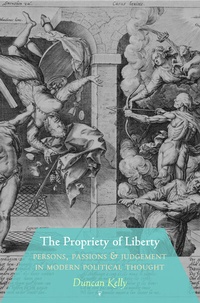
The Propriety of Liberty
Persons, Passions, and Judgement in Modern Political Thought
1st Edition
Published on 18. October 2010
368 pages
978-1-4008-3684-0 (ISBN)
Description

In this book, Duncan Kelly excavates, from the history of modern political thought, a largely forgotten claim about liberty as a form of propriety. By rethinking the intellectual and historical foundations of modern accounts of freedom, he brings into focus how this major vision of liberty developed between the seventeenth and the nineteenth centuries.
In his framework, celebrated political writers, including John Locke, Montesquieu, Adam Smith, John Stuart Mill, and Thomas Hill Green pursue the claim that freedom is best understood as a form of responsible agency or propriety, and they do so by reconciling key moral and philosophical claims with classical and contemporary political theory. Their approach broadly assumes that only those persons who appropriately regulate their conduct can be thought of as free and responsible. At the same time, however, they recognize that such internal forms of self-propriety must be judged within the wider context of social and political life. Kelly shows how the intellectual and practical demands of such a synthesis require these great writers to consider freedom as part of a broader set of arguments about the nature of personhood, the potentially irrational impact of the passions, and the obstinate problems of individual and political judgement. By exploring these relationships, The Propriety of Liberty not only revises the intellectual history of modern political thought, but also sheds light on contemporary debates about freedom and agency.
In his framework, celebrated political writers, including John Locke, Montesquieu, Adam Smith, John Stuart Mill, and Thomas Hill Green pursue the claim that freedom is best understood as a form of responsible agency or propriety, and they do so by reconciling key moral and philosophical claims with classical and contemporary political theory. Their approach broadly assumes that only those persons who appropriately regulate their conduct can be thought of as free and responsible. At the same time, however, they recognize that such internal forms of self-propriety must be judged within the wider context of social and political life. Kelly shows how the intellectual and practical demands of such a synthesis require these great writers to consider freedom as part of a broader set of arguments about the nature of personhood, the potentially irrational impact of the passions, and the obstinate problems of individual and political judgement. By exploring these relationships, The Propriety of Liberty not only revises the intellectual history of modern political thought, but also sheds light on contemporary debates about freedom and agency.
All prices
More details
Other editions
Additional editions
Book
11/2010
Princeton University Press
€71.80
Shipment within 10-20 days
Person
Duncan Kelly is university senior lecturer in political theory in the Department of Politics and International Studies, University of Cambridge, and fellow of Jesus College, Cambridge. He is the author of The State of the Political.
Content
Acknowledgements ix
Abbreviations xiii
Introduction: The Propriety of Liberty 1
The Self at Liberty 6
Liberty and Political Theory 9
Structure 12
Chapter One: "That glorious fabrick of liberty": John Locke, the Propriety of Liberty and the Quality of Responsible Agency 20
Propriety, Prudence and Interpretation 21
John Locke and Pierre Nicole: Language, Prudence and
the Propriety of the Passions 24
Liberty and the Will 41
Persons, Passions and Judgement 46
Liberty and Personal Identity 53
Chapter Two: Passionate Liberty and Commercial Selfhood: Montesquieu's Political Theory of Moderation 59
Justice 61
Lessons in Classics: Politics, Friendship and Despotism 68
The Passions of the Soul and the Actions of the Machine 82
Moderation and Soulcraft: The Action of Passionate
Selfhood 88
Legislative Passions and Civil Religion 94
Commercial Society and Political Liberty 105
Chapter Three:"The True Propriety of Language": Persuasive Mediocrity, Imaginative Delusion and Adam Smith's Political Theory 117
Persuasive Agency 119
Sympathy and Propriety 128
A Passion for Justice: Smith's Political Theory 141
The Origins of Government and the Paradoxes
of Political Liberty 159
Conclusions 167
Chapter Four: Taking Things as They Are: John Stuart Mill on the Judgement of Character and the Cultivation of Civilization 173
Liberty by Example 175
Greek Legacies 186
Civilization, Civility, Cooperation 194
Excursus: Republicanism, Radicalism and Representation 204
The Politics of Civilization 210
Propriety in Time 218
Chapter Five: Idealism and the Historical Judgement of Freedom: T. H. Green and the Legacy of the English Revolution 223
Character and Action 226
Reformation and Revolution 234
Enthusiasm and Reform 241
Real Freedom 244
Political Theology 249
The Revolutionary Inheritance 255
Chapter Six: Coda: Liberty as Propriety 259
Problems of Self-Ownership 261
Responsible Agency 269
State Propriety 273
Bibliography 277
Index 341
Abbreviations xiii
Introduction: The Propriety of Liberty 1
The Self at Liberty 6
Liberty and Political Theory 9
Structure 12
Chapter One: "That glorious fabrick of liberty": John Locke, the Propriety of Liberty and the Quality of Responsible Agency 20
Propriety, Prudence and Interpretation 21
John Locke and Pierre Nicole: Language, Prudence and
the Propriety of the Passions 24
Liberty and the Will 41
Persons, Passions and Judgement 46
Liberty and Personal Identity 53
Chapter Two: Passionate Liberty and Commercial Selfhood: Montesquieu's Political Theory of Moderation 59
Justice 61
Lessons in Classics: Politics, Friendship and Despotism 68
The Passions of the Soul and the Actions of the Machine 82
Moderation and Soulcraft: The Action of Passionate
Selfhood 88
Legislative Passions and Civil Religion 94
Commercial Society and Political Liberty 105
Chapter Three:"The True Propriety of Language": Persuasive Mediocrity, Imaginative Delusion and Adam Smith's Political Theory 117
Persuasive Agency 119
Sympathy and Propriety 128
A Passion for Justice: Smith's Political Theory 141
The Origins of Government and the Paradoxes
of Political Liberty 159
Conclusions 167
Chapter Four: Taking Things as They Are: John Stuart Mill on the Judgement of Character and the Cultivation of Civilization 173
Liberty by Example 175
Greek Legacies 186
Civilization, Civility, Cooperation 194
Excursus: Republicanism, Radicalism and Representation 204
The Politics of Civilization 210
Propriety in Time 218
Chapter Five: Idealism and the Historical Judgement of Freedom: T. H. Green and the Legacy of the English Revolution 223
Character and Action 226
Reformation and Revolution 234
Enthusiasm and Reform 241
Real Freedom 244
Political Theology 249
The Revolutionary Inheritance 255
Chapter Six: Coda: Liberty as Propriety 259
Problems of Self-Ownership 261
Responsible Agency 269
State Propriety 273
Bibliography 277
Index 341

