

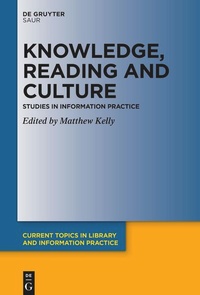
Knowledge, Reading and Culture
Description

Knowledge, Reading and Culture: Studies in Information Practice is an interdisciplinary inquiry focusing on four decades of work by the South African information scientist, Emeritus Professor Archie Dick. The edited volume brings together library, information and history specialists to engage with a number of Professor Dick's areas of research focus: the culture and philosophy of information (especially with regard to questions of epistemology); information freedom (how censorship and media concentration affects political agency); reading and publishing cultures (especially in colonial and postcolonial contexts) and focuses on how these affect information education for diverse, multicultural and cosmopolitan communities. How our understanding of true belief is justified at the level of classification, indexation, curation and publishing have become significant issues in the transition to digital environments. This work seeks to harness a range of insights relating to the modes of knowledge representation in information spaces and to uncover how these impact globally significant repertoires of agency, with a special focus on how the mediation of reading and access to public knowledge is both a site of resistance and appropriation.
More details
Other editions
Additional editions
Person
Matthew Kelly , Library Management Australia, Sydney, Australia.
Content
- Intro
- Contents
- Introduction
- Knowledge, Reading, and Culture: A Festschrift in Honor of Archie Dick
- References
- Epistemology, Reading, and the Cultural Politics of Knowledge
- Where Epistemology Matters: The Influence of the Work of Archie Dick
- Introduction
- Holistic Perspectivism
- Zones of Influence
- Information Circuit
- Conclusion
- References
- What Do They Know Anyway?: Epistemology and Library Practice in the Age of AI
- Introduction
- Background
- AI and Library Practice
- Information Assistance and Reference
- Collection Management
- Cataloging
- Discussion
- Conclusion
- References
- Conformity or Complicity? An Analysis of the Discourse Around Knowledge, Reading, and Culture by Information Professionals in South Africa
- Aim of Chapter and Research Question
- Addressing the Problem
- Knowledge, Reading, and Culture
- Knowledge
- Reading
- Culture
- Theoretical Framework
- Methodology
- Data Analysis Method
- Data Analysis Procedure
- Findings and Discussion
- On Knowledge
- On Reading
- Culture
- Conclusion and Recommendations
- References
- Users, Non-users, and the Community: Implications in the Institutional Context of Information Mediation
- Introduction
- Alterity and Reflexivity in the Study of the Information User
- User or, in Addition, Reader and Appropriator of Information?
- User and Non-user of Information and Social Classes
- Mediation Institutions Accommodating and/or Accommodated by and in the Community: The Catando Palavras Library
- Final Considerations
- References
- "How Beautiful the World Is/How Beautiful the World Would Be": Conceptions of the Library in Eco's The Name of the Rose
- From Subliminal Perception to The Library Quarterly
- The Fortress and the Labyrinth Revisited
- "How Beautiful the World Is ."
- "How Beautiful the World Would Be ."
- From Eco to Foucault
- Conclusion
- References
- Reading Beyond Boundaries: Texts as Catalysts for Orientation, Agency, and Cultural Renewal
- Always Present While Never Being There: Post-Postmodern Perceptions of the Book
- Undoing Demise by Doing
- Presentism and the Book
- Remixing Reading
- Retrofutures
- Non-linearity
- Contemporary Antiquaries
- Digital Beingness
- Always Here
- References
- Thinking Globally, Acting Nationally: Texts and Paratexts in Translation
- Arrangement of the Contents
- Additions and Deletions
- Cataloging as Epitext
- References
- Fiction and Film as Both Record and Distortion: Kingsley Amis's Novel That Uncertain Feeling (1955), the Feature Film Only Two Can Play (1962), and the Post-war Public Library in Britain
- Introduction
- The Storyline: Origins and Summary
- Methodological Matters
- New Sources for the New History
- Literature, Libraries, and History
- Film, Libraries, and History
- Record or Distortion of Reality?
- The Physical Environment and Service Modernization
- Bureaucratic Practices
- The Library Committee Interview Panel
- Popular Versus High Culture
- The Image of the Librarian: Sex, Politics, and Class
- Conclusion
- References
- Bibliotherapy, Well-being, and Empowerment: The Emancipatory Possibilities of Self-help Reading, and How Libraries Can Help
- Introduction: Getting a Read on Therapeutic Reading Cultures
- Key Concepts
- Bibliotherapy and Libraries in a Changing World: Micro and Macro Considerations
- Crossing the Threshold, with a Good Book: Bibliotherapy Across the Life Course
- Good Advice is Beyond Price: The Economic Case for Library-based Bibliotherapy
- Collection Building and Bibliotherapy: Enduring and Emerging Foci
- Conclusion
- References
- Reading Our Way In: Black Women's Book Clubs as Third Spaces for Access and Inclusion in Reading Culture
- Introduction
- Introducing the Case Studies
- The Third Space
- Membership
- Motivations for Joining
- Conclusion
- References
- A People's Librarian. The Legacy of H.I.E. Dhlomo in South Africa's Literary Landscape
- Libraries
- The Durban Period
- Conclusion
- References
- Reading Against the Grain: Herbert Dhlomo's The Reader's Companion
- Introduction
- Liberals, Libraries, and Librarians
- The Reader's Companion
- "Hands Off Our Reading Material!"
- Conclusion
- References
- "Concerning the Irretrievable Loss of All My Books": One German Woman's Books in Africa, 1936-1940
- Introduction
- Books Amongst Objects
- Books Amongst Themselves: An Attempt at Organizing Dörfer's Book List
- Inspirational Biographies
- Theological Handbooks
- Religio-political Polemics
- Books About the Mission and Colonialism
- Leisurely Reading
- Medical Literature
- Conclusion
- References
- Common Readers and Writers in Colonial Otago
- References
- Arundel del Re and the Chelsea Book Club: A Modernist Experiment
- References
- Shaping Knowledge: Access, Education, and Struggle
- Information Heroism
- Introduction
- Towards Informational Heroism Science
- Information Ecologies
- To Inform is to Liberate
- Teaching Intuition
- Conclusion
- References
- Access to Information and the Ideals of Democracy in a Digital Age
- Introduction
- Background
- Freedom of Information Law
- Literature Review
- Access to Information through the FOIA
- Freedom of Expression and Social Media
- Digital Democracy
- The FOIA and International Standards
- Summary
- Methods and Procedure
- Data Presentation and Analysis
- Demographic information
- Discussion of Findings
- How has the FOIA Promoted Public Access to Information and Press Freedom in Nigeria?
- How has the Level of Compliance to the FOIA by Government Ministries, Agencies, and Departments Encouraged Participatory Democracy in Nigeria?
- In What Ways can Access to Digital Information Encourage Transparency and Accountability in Governance Through the FOIA?
- How can the Implementation of the FOIA in Nigeria be Used as a Framework for Institutionalizing Democratic Principles in Line with International Standards?
- Conclusion
- References
- Academic Training in Information Science: An Integrated and Transdisciplinary Model for a Diversity of Professions in the Digital Age
- Introduction
- Information Science: A Socio-humanistic Vision with a Strong Technological Component
- Theoretical-methodological Foundations of the Training Model
- Curriculum Design and Graduates' Professional Performance
- Final Remarks
- Appendix
- References
- Rebuilding Knowledge: Epistemology and Knowledge Organization for Information Practice
- Part 1: Transformations in Knowledge Organization: Epistemic, Social, and Technological Perspectives in Information Practice
- Knowledge Organization: Beyond Technical Systems
- Theoretical Foundations of Knowledge Organization
- Cultural and Ethical Dimensions
- The Impact of Digital Transformation
- Methodological Developments in Knowledge Organization
- Moving Toward a More Inclusive and Adaptable Knowledge System
- Part 2: Knowledge Organization in Digital Environments: From Epistemology to Practice
- The Digital Impact on Knowledge
- Knowledge Networks and Collaborative Systems
- Validating Knowledge in Digital Environments
- Theoretical Foundations
- Critical Perspectives on Knowledge Organization
- Phenomenology and User Experience
- Object-Oriented Approaches to Knowledge
- Social Epistemology in Knowledge Organization
- Digital Transformation and Epistemological Shifts
- Ethics and Social Justice
- Cultural Frameworks
- Professional Practice and Knowledge Stewardship
- Building Inclusive Knowledge Systems
- Part 3: Knowledge and Society: Dialectics and Dynamics in Information Practice
- Epistemological Foundations of Information Practice
- The Role of Epistemological Assumptions in Information Practices
- Epistemological Dilemmas in Digital Environments
- Applications of Epistemological Frameworks in Library and Information Science (LIS)
- Ethical and Epistemological Implications of Information Practices
- Information Literacy and Epistemic Resilience
- Data Sovereignty and Information Practice
- Knowledge Organization: From Structure to Social Practice
- Part 4: A Holistic Framework for Integrating Knowledge: Philosophical Foundations Across Epistemology, Ethics, and Identity
- The Significance of Integration
- Epistemological Foundations
- The Nature of Language and Meaning
- Subjectivity and Consciousness
- Ethics and Moral Philosophy
- Political Philosophy
- The Impact of Technology on Knowledge and Philosophy
- Intersectionality and Identity in Philosophy
- Beyond Western Philosophical Frameworks
- Philosophy Beyond Eurocentrism
- Structural Biases and Epistemic Violence
- The Philosophical Roots of Exclusion
- Relational Ontologies: Challenging Individualism
- Methodological Challenges: Between Inclusion and Decolonization
- Toward a Truly Global Philosophy (and Knowledge Organization)
- Returning to Reading
- Conclusion
- References
- Notes on Contributors
- Persons and Subjects Index
