

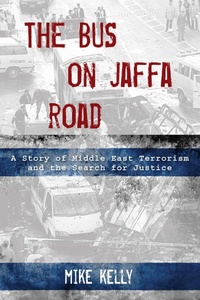
The Bus on Jaffa Road
A Story of Middle East Terrorism and the Search for Justice
Published on 7. October 2014
320 pages
978-1-4930-1539-9 (ISBN)
Description

As the morning sunlight crept over the limestone walls of Jerusalem's old city, two young Americans flagged down a bus and got on. It was 6:45 a.m., February 25, 1996 -- an otherwise ordinary Sunday in Israel. Two US citizens who were studying in Israel, Sara Duker and Matthew Eisenfeld, settled into their seats as the door closed on Jerusalem's Number 18 bus which would take them across the spine of this ancient city of hills. On this day, they had risen earlier than normal in the hope of spending the day touring an archeological site. After a few more stops, their bus turned on Jerusalem's Jaffa Road and rolled up a slight hill and stopped again. A young man, dressed as a student and carrying a duffle bag, got on. No one paid much attention to him, witnesses said later. Young men with duffle bags or backpacks are a common sight in Jerusalem, especially early on Sundays, as many students and soldiers, who had gone home for the weekend, returned to their college campuses or military bases.
But this man was not a student. As the bus door closed, he reached into his duffle bag and pressed a button ? and set off a huge bomb. Sara and Matthew died instantly. So did 22 others, including the bomber. Their grieving families discovered that Iran had financed the bombing that killed their children as well as others that preceded it. The families eventually filed a lawsuit in U.S. courts against Iran, asking for money from Iranian assets that had been frozen in the U.S. since the late 1970s. They won a judgment of $327 million against the Iranian assets. However, the U.S. government blocked their efforts to collect damages.
"The Bus on Jaffa Road" is the story of one act of terror and what happened afterwards. It offers many lessons -- and warnings -- about the current war on terrorism that has dominated US politics.
But this man was not a student. As the bus door closed, he reached into his duffle bag and pressed a button ? and set off a huge bomb. Sara and Matthew died instantly. So did 22 others, including the bomber. Their grieving families discovered that Iran had financed the bombing that killed their children as well as others that preceded it. The families eventually filed a lawsuit in U.S. courts against Iran, asking for money from Iranian assets that had been frozen in the U.S. since the late 1970s. They won a judgment of $327 million against the Iranian assets. However, the U.S. government blocked their efforts to collect damages.
"The Bus on Jaffa Road" is the story of one act of terror and what happened afterwards. It offers many lessons -- and warnings -- about the current war on terrorism that has dominated US politics.
More details
Language
English
Place of publication
New York
United States
File size
3,57 MB
ISBN-13
978-1-4930-1539-9 (9781493015399)
Copyright in bibliographic data and cover images is held by Nielsen Book Services Limited or by the publishers or by their respective licensors: all rights reserved.
Schweitzer Classification
Other editions
Additional editions
Book
12/2014
The Lyons Press
€25.50
Shipment within 10-20 days
Person
Mike Kelly has been a journalist for more than three decades. He is the author of two books as well as numerous prize-winning newspaper projects and columns for The Bergen Record, a daily newspaper in northern New Jersey.
His assignments have taken him to Africa, Northern Ireland, Israel (including the West Bank and the Gaza Strip), and Iraq. He has covered the 9/11 attacks and the clean-up of Ground Zero, the ?Good Friday Peace Accords? in Belfast, the Iraq War in which he followed a National Guard unit from training to the combat zone, Hurricane Katrina (in New Orleans), the impeachment of President Clinton, and the 9/11 Commission hearings in Washington, D.C.
Since the 9/11 attacks, he has devoted much of his time to covering terrorism, from Ground Zero to Washington, D.C. (with the 9-11 Commission) to Guantanamo Bay, Cuba (to write about the terrorist detention prisons) and to Malaysia. In traveling to Malaysia, Kelly traced the recycling journey of a single steel beam from the World Trade Center. He then tracked down the people on the trade center floor supported by that steel beam and traced how they were rebuilding their lives. While in Malaysia, he also found the apartment where the 9-11 plot was first planned. Later, in New Jersey, he found the tiny motel room where two of the hijackers at that Malaysia meeting ended up staying before carrying out the plot. In 2011, for the tenth anniversary of the 9/11 attacks, Kelly found the survivors form the 70th floor that he had profiled a decade earlier and updated their lives.
Kelly was named the top columnist in America in 2004 and in 2011 by the National Association of Newspaper Columnists. In 2001, the New Jersey Press Association named him ?Journalist of the Year? for his reporting from the Middle East and from Ground Zero. Other major honors include New York Deadline Club prize for column writing, the Meyer Berger Award from Columbia University, and a national Clarion Award for feature writing. He was also among 25 New York area journalists singled out by the New York City Fire Department for a special honor for his coverage from the site of the World Trade Center.
Kelly is a regular guest on television as well as numerous radio programs. He has appeared on National Public Radio's "Morning Edition" as a guest commentator and was a guest host for the WNYC radio show, ?On The Line.? He has also been featured on MSNBC's ?Hardball with Chris Matthews,? on the ?CBS Evening News,? and on the award-winning PBS program, ?Bill Moyers Journal.?
Kelly's 1995 non-fiction book about racial turmoil, "Color Lines: The Troubled Dreams of Racial Harmony In an American Town,"was called "American journalism at its best" by The Washington Post and a "stunning piece of American social history" by Pulitzer-prize winning author J. Anthony Lukas.
In 2000, Camino Press of Philadelphia published a collection of his columns, "Fresh Jersey: Stories from an Altered State." Kelly graduated from Syracuse University with degrees in American studies and journalism, and is currently working on a masters degree in historical theology at Fordham University in New York. He is married and the father of two adult daughters. He lives in Teaneck, N.J.
His assignments have taken him to Africa, Northern Ireland, Israel (including the West Bank and the Gaza Strip), and Iraq. He has covered the 9/11 attacks and the clean-up of Ground Zero, the ?Good Friday Peace Accords? in Belfast, the Iraq War in which he followed a National Guard unit from training to the combat zone, Hurricane Katrina (in New Orleans), the impeachment of President Clinton, and the 9/11 Commission hearings in Washington, D.C.
Since the 9/11 attacks, he has devoted much of his time to covering terrorism, from Ground Zero to Washington, D.C. (with the 9-11 Commission) to Guantanamo Bay, Cuba (to write about the terrorist detention prisons) and to Malaysia. In traveling to Malaysia, Kelly traced the recycling journey of a single steel beam from the World Trade Center. He then tracked down the people on the trade center floor supported by that steel beam and traced how they were rebuilding their lives. While in Malaysia, he also found the apartment where the 9-11 plot was first planned. Later, in New Jersey, he found the tiny motel room where two of the hijackers at that Malaysia meeting ended up staying before carrying out the plot. In 2011, for the tenth anniversary of the 9/11 attacks, Kelly found the survivors form the 70th floor that he had profiled a decade earlier and updated their lives.
Kelly was named the top columnist in America in 2004 and in 2011 by the National Association of Newspaper Columnists. In 2001, the New Jersey Press Association named him ?Journalist of the Year? for his reporting from the Middle East and from Ground Zero. Other major honors include New York Deadline Club prize for column writing, the Meyer Berger Award from Columbia University, and a national Clarion Award for feature writing. He was also among 25 New York area journalists singled out by the New York City Fire Department for a special honor for his coverage from the site of the World Trade Center.
Kelly is a regular guest on television as well as numerous radio programs. He has appeared on National Public Radio's "Morning Edition" as a guest commentator and was a guest host for the WNYC radio show, ?On The Line.? He has also been featured on MSNBC's ?Hardball with Chris Matthews,? on the ?CBS Evening News,? and on the award-winning PBS program, ?Bill Moyers Journal.?
Kelly's 1995 non-fiction book about racial turmoil, "Color Lines: The Troubled Dreams of Racial Harmony In an American Town,"was called "American journalism at its best" by The Washington Post and a "stunning piece of American social history" by Pulitzer-prize winning author J. Anthony Lukas.
In 2000, Camino Press of Philadelphia published a collection of his columns, "Fresh Jersey: Stories from an Altered State." Kelly graduated from Syracuse University with degrees in American studies and journalism, and is currently working on a masters degree in historical theology at Fordham University in New York. He is married and the father of two adult daughters. He lives in Teaneck, N.J.
Content
Prologue: Author meets with the bombmaker, Hassan Salameh, 10 years after and his admission that he built the bomb and basically has no regrets
Part I: The bombing and its immediate aftermath
Part II: The battle in Congress and the courts by parents to hold Iran accountable, with the Clinton White House first supporting the parents in their court efforts and later opposing those efforts.
Part III: The battle -- and eventual -- compromise with the Clintons that allowed the families to collect some money.
Epilogue: The bittersweet victory, with the families thinking that the were getting money from Iran but discovering that the money came from a US govt account, and also knowing that some victims of terror got paid and others did not. With regrets by the judge and others.
Part I: The bombing and its immediate aftermath
Part II: The battle in Congress and the courts by parents to hold Iran accountable, with the Clinton White House first supporting the parents in their court efforts and later opposing those efforts.
Part III: The battle -- and eventual -- compromise with the Clintons that allowed the families to collect some money.
Epilogue: The bittersweet victory, with the families thinking that the were getting money from Iran but discovering that the money came from a US govt account, and also knowing that some victims of terror got paid and others did not. With regrets by the judge and others.
