

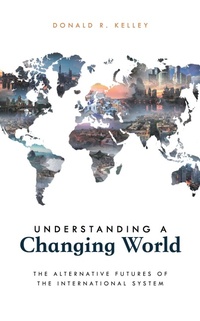
Understanding a Changing World
The Alternative Futures of the International System
1st Edition
Published on 14. January 2021
226 pages
979-8-8818-7831-3 (ISBN)
Description

The world is becoming more complex, fraught with increasing possibilities for conflict over national rivalries, economic competition, and cultural and ideological fault lines. This clear-eyed text offers a structured and theoretically grounded way to think about the forces that animate change and the alternative futures they may create. Donald Kelley views both contemporary reality and the future we face through the perspective of four different paradigms that shape our way of thinking about the world:
The nation-state paradigm, built on the assumption that the traditional Westphalian nation-state remains the key building block of the present and the future, which leads us to predict the future in terms of the nature and alignment of nation-statesThe economic paradigm, built on the assumption that economic factors are increasingly important, which leads us to see the future in terms of factors such as interdependence, globalization, and trade as well as the growing opposition to these developments and the prioritization of national economic needsThe identity and culture paradigm, built on the distinct identities and cultures of nations and regions, which leads us to view the future in terms of conflicting culture-based communities transcending formal national or economic interestsThe ideology paradigm, based on a post-cold war reemergence of ideological conflict within and among nations, which leads us to view a world based on ideology-based conflictFrom these paradigms and their interactions, Kelley builds a series of possible alternative futures of the international system. His framework provides a unique way of looking at how and why the world is changing and the many different "futures"-some peaceful and productive, some warlike and destructive, and others simply dysfunctional-in which we might live.
The nation-state paradigm, built on the assumption that the traditional Westphalian nation-state remains the key building block of the present and the future, which leads us to predict the future in terms of the nature and alignment of nation-statesThe economic paradigm, built on the assumption that economic factors are increasingly important, which leads us to see the future in terms of factors such as interdependence, globalization, and trade as well as the growing opposition to these developments and the prioritization of national economic needsThe identity and culture paradigm, built on the distinct identities and cultures of nations and regions, which leads us to view the future in terms of conflicting culture-based communities transcending formal national or economic interestsThe ideology paradigm, based on a post-cold war reemergence of ideological conflict within and among nations, which leads us to view a world based on ideology-based conflictFrom these paradigms and their interactions, Kelley builds a series of possible alternative futures of the international system. His framework provides a unique way of looking at how and why the world is changing and the many different "futures"-some peaceful and productive, some warlike and destructive, and others simply dysfunctional-in which we might live.
More details
Other editions
Additional editions
Book
01/2021
Rowman & Littlefield
€74.50
Article exhausted; check different version
Person
Donald R. Kelley is professor of political science at the University of Arkansas, where he has taught international relations and comparative politics since 1980. He also served as a senior research fellow and then as director of the Fulbright Institute of International Relations.
Content
1: Understanding a Changing World: The Future(s) of the International System
Why Future(s)?
What Is an International System?
What Is a Paradigm?
Building Analytic Paradigms and Alternative Futures
Paradigms in the Social Sciences
Realism, Liberalism, and Constructivism
The Four Paradigms
What Comes Next?
2: The Nation-State
Paradigm
The Paradigm
The Possible Futures
A Hegemonic World
A New Balance of Power in a Bipolar or Limited Multipolar World
A Stable Multipolar World
An Unstable Multipolar World
3: The Economic Paradigm
The Paradigm
The Possible Futures
Globalization Advances
Globalization Amended and Reconfigured
Mercantilism 2.0
Toward Autarky, with a Touch of Anarchy
4: The Identity and Culture Paradigm
The Paradigm
The Possible Futures
The Gradual Emergence of a Global Identity and Culture
The Identity and Culture Paradigm Merges with the Nation-State Paradigm
The Creation of an International System Based on the "Clash of Civilizations"
5: The Ideology Paradigm
The Paradigm
The Possible Futures
A Universalistic and Humanistic Ideology Emerges
Ideological Conflict Reemerges
"National Ideology" Becomes the Dominant Fusion of National Identity and Ideology
Populism Becomes the Dominant Paradigm
Sources of Stability and Instability
What Would a Populist World Look Like?
6: Where Do You Go from Here?
What Have You Learned?
How Many Alternative Futures Have We Created?
How Can You Use This Framework?
Index
About the Author
Why Future(s)?
What Is an International System?
What Is a Paradigm?
Building Analytic Paradigms and Alternative Futures
Paradigms in the Social Sciences
Realism, Liberalism, and Constructivism
The Four Paradigms
What Comes Next?
2: The Nation-State
Paradigm
The Paradigm
The Possible Futures
A Hegemonic World
A New Balance of Power in a Bipolar or Limited Multipolar World
A Stable Multipolar World
An Unstable Multipolar World
3: The Economic Paradigm
The Paradigm
The Possible Futures
Globalization Advances
Globalization Amended and Reconfigured
Mercantilism 2.0
Toward Autarky, with a Touch of Anarchy
4: The Identity and Culture Paradigm
The Paradigm
The Possible Futures
The Gradual Emergence of a Global Identity and Culture
The Identity and Culture Paradigm Merges with the Nation-State Paradigm
The Creation of an International System Based on the "Clash of Civilizations"
5: The Ideology Paradigm
The Paradigm
The Possible Futures
A Universalistic and Humanistic Ideology Emerges
Ideological Conflict Reemerges
"National Ideology" Becomes the Dominant Fusion of National Identity and Ideology
Populism Becomes the Dominant Paradigm
Sources of Stability and Instability
What Would a Populist World Look Like?
6: Where Do You Go from Here?
What Have You Learned?
How Many Alternative Futures Have We Created?
How Can You Use This Framework?
Index
About the Author
