

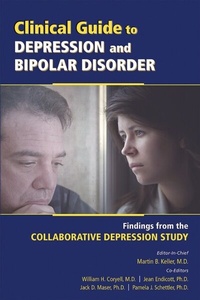
Clinical Guide to Depression and Bipolar Disorder
Description

Conceived in the early 1970s to study the phenomenology, diagnosis, genetics, and clinical course of depression, the NIMH Collaborative Depression Study (CDS) has influenced research and practice since its inception. Clinical Guide to Depression and Bipolar Disorder: Findings From the Collaborative Depression Study summarizes key findings from the study and the related literature to provide comprehensive and up-to-date knowledge on the course and outcome of illness in mood disorders. Nowhere else can clinicians find such detailed longitudinal data, combined with astute clinical analysis of the current research. The volume offers:
¿ Historical background on how psychodynamic psychiatry was overtaken by psychobiological perspectives, and the challenges and controversies that gave rise to the CDS, providing the context necessary to understand the profession's development to the present day.¿ A wealth of information on nosology, natural history, phenomenology, and treatment response in depressive and bipolar disorders.¿ Detailed descriptions of the study methods employed, providing information and insights that will assist researchers in the longitudinal design of prospective cohort studies.¿ Comprehensive review of outcomes in mood disorder, including delineation of the long-term course of bipolar I, bipolar II, and unipolar major depressive disorders, the implications of which will continue to be instrumental in the development of psychiatric nosology and indispensable to clinicians engaged in assessment and treatment.¿ Critical information clinicians need in order to read the clinical signs in their patients and predict the "switch" from unipolar to bipolar disorder.¿ A fascinating review of the evolution of diagnostic thinking about the role of anxiety in mood disorders, and the contributions of the CDS to the newly published DSM-5®.
Each chapter is accompanied by a time-saving summary, as well as a section on clinical implications that translates the findings into practical points and key recommendations clinicians need to know to provide optimal care. Psychiatrists, clinical psychologists, residents, and fellows will turn to Clinical Guide to Depression and Bipolar Disorder: Findings From the Collaborative Depression Study to better understand the course and outcome of their patients' mood disorders and, ultimately, to improve their clinical skills.
More details
Other editions
Additional editions
Persons
Content
ContributorsDedicationChapter 1. IntroductionChapter 2. Collaborative Depression Study Procedures and Study DesignChapter 3. Dimensional Symptomatic Structure of the Long-Term Course of Unipolar Major Depressive DisorderChapter 4. Dimensional Symptomatic Structure of the Long-Term Course of Bipolar I and Bipolar II DisordersChapter 5. Risk Factors for Suicide Attempts and CompletionsChapter 6. Psychotic Features in Major Depressive and Manic EpisodesChapter 7. Development of Mania or Hypomania in the Course of Unipolar Major DepressionChapter 8. Comorbidity of Affective and Substance Use DisordersChapter 9. Treatment Effectiveness and Safety in the Longitudinal Course of Mood DisordersChapter 10. Personality and Mood DisordersChapter 11. Family History and Genetic Studies in Mood DisordersChapter 12. Clinical Course and Outcome of Unipolar Major DepressionChapter 13. Predictors of Course and Outcome of Bipolar DisorderChapter 14. Undertreatment of Major DepressionChapter 15. Impact of Anxiety Severity on Mood DisordersChapter 16. Contributions of the NIMH Collaborative Depression Study to DSM-5Index
