

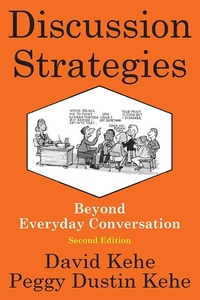
Discussion Strategies
Beyond Everyday Conversation
Published on 27. April 2022
233 pages
978-0-86647-577-8 (ISBN)
Description

The activities in this book follow and build upon the strategic conversation skills of the Kehes' book, Conversation Strategies. Discussion Strategies develops discussion skills at high levels of communicative interaction, especially communication in academic settings. Students, in step-by-step procedures, are given extensive practice in a variety of strategies for leading and participating in a discussion. Discussion Strategies provides focused practice with the following discussion techniques: using rejoinders, asking follow-up questions, seeking and giving clarification, using comprehension checks, answering with details, soliciting more details from others, interrupting others during a discussion, recounting something they have heard, volunteering an answer, helping the leader of a discussion, expressing an opinion, referring to a source when giving an opinion, and leading a discussion. Each unit builds on and recycles the previous units. The first twenty-eight units provide controlled practice of the discussion and are for pair groups or triads. Units 29-38 give the students an opportunity to use their new strategies in less structured discussions; they involve large groups or the whole class in open discussion of the articles provided.
More details
Other editions
Additional editions
Book
03/2012
2nd Edition
Pro Lingua Learning
€30.00
Shipment within 3-4 weeks
Content
- Front Cover
- Title Page
- Copyright
- Dedication
- Contents
- Half Title
- Introduction
- General Structure of the Book
- First Section, for Student A
- Second Section, for Student B
- Third Section, for Students C, D, and E
- Fourth Section, Whole-Class Discussions
- Discussion Strategies by Unit
- Unit 1. Rejoinders and Follow-up Questions
- Format: Triads
- Unit 2. Clarification Expressions
- Format: Pairs
- Unit 3. Clarification Questions, and Comprehension Checks I
- Format: Pairs
- Topics: Flight Attendant Hero
- Lost in a Jungle
- Unit 4. Clarification Questions, II
- Format: Pairs
- Topics: Giant Baby
- Music, Reading and Math
- Unit 5. Answering with Details
- Format: Triads
- Unit 6. Discussion
- Format: Triads
- Topic: Your High School Days
- Unit 7. Paragraph Clarifications, I
- Format: Triads
- Topic: Animals in Movies
- Unit 8. Paragraph Clarifications, II
- Format: Triads
- Topic: Sleep
- Unit 9. Asking for More Details
- Format: Triads
- Unit 10. Discussion
- Format: Triads
- Topic: Stress
- Unit 11. Discussion
- Format: Triads
- Topic: Your Hometown and Childhood Home
- Unit 12. Interrupting Someone
- Format: Triads
- Topic: Telling Lies
- Unit 13. Words That Describe
- Format: Triads
- Unit 14. Discussion
- Format: Triads
- Topic: Superstitions
- Unit 15. Telling What You've Heard
- Format: Triads
- Topics: Short People Live Longer
- Gossiping
- Why the French Have Fewer Heart Attacks
- Unit 16. Volunteering an Answer
- Format: Small Groups
- Unit 17. Discussion
- Format: Triads
- Topic: Divorce
- Unit 18. Clarifying by Summarizing, I
- Format: Pairs
- Topics: Getting Fat
- Wrong Stadium
- Bugs in Manila
- Naked in the Laundromat
- Unit 19. Clarifying by Summarizing, II
- Format: Triads
- Topic: Catching Colds
- Unit 20. Telling Other People's Opinions and Experiences
- Format: Small Groups
- Unit 21. Discussion
- Format: Triads
- Topic: Driving
- Unit 22. Helping the Leader Explain, I
- Format: Triads
- Unit 23. Helping the Leader Explain, II
- Format: Triads
- Topics: Fathers Who Live Longer
- Smoking and Aging
- Tasting Food
- Unit 24. Discussion
- Format: Triads
- Topic: Gambling
- Unit 25. Expressing Opinions, I
- Format: Pairs
- Topic: Information from a Survey
- Unit 26. Expressing Opinions, II
- Format: Small Groups
- Topics: The Rights of Mothers and Fathers
- Death Caused by Cigarettes
- De-barking Dogs
- 63-Year-Old Woman Has a Baby
- Unit 27. Referring to a Source
- Format: Triads
- Topic: Bullying
- Unit 28. Summary Discussion
- Format: Triads
- Topics: Best Friends
- The Effects of Watching TV
- Spanking
- Unit 29. Leading a Discussion
- Format: A Model, Teacher-led Whole-Class Discussion
- Topic: Cheating in School
- Instructions for Students on Leading a Discussion
- Unit 30. Leading a Discussion
- Format: Large Groups/Whole Class
- Topic: Animal Empathy
- Unit 31. Leading a Discussion
- Format: Large Groups/Whole Class
- Topic: Cafeteria Trays
- Unit 32. Leading a Discussion
- Format: Large Groups/Whole Class
- Topic: TV in the Bedroom
- Unit 33. Leading a Discussion
- Format: Large Groups/Whole Class
- Topic: Culture and Alcoholism
- Unit 34. Leading a Discussion
- Format: Large Groups/Whole Class
- Topic: Boredom
- Unit 35. Leading a Discussion
- Format: Large Groups/Whole Class
- Topic: Keys to Happiness
- Unit 36. Leading a Discussion
- Format: Large Groups/Whole Class
- Topic: The Clown and the Cell Phones
- Unit 37. Leading a Discussion
- Format: Large Groups/Whole Class
- Topic: Family Meals
- Unit 38. Leading a Discussion
- Format: Large Groups/Whole Class
- Topic: International Students in the U.S.
- Unit 39. Designing and Leading Discussions
- Instructions for Students
- Format: Large Groups/Whole Class
- Topic: Students' Choice
- Suggestions to the Teacher
- General
- Why these activities were developed
- The approach and sequence
- Setting up discussion groups
- Getting started
- Extending the activities
- Evaluating
- Dealing with early finishers
- Special Notes on Specific Units
- The Teacher's Role
- Discussion Evaluation form
