

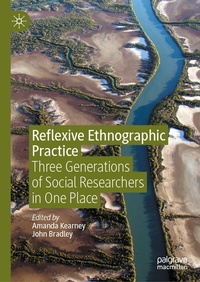
Reflexive Ethnographic Practice
Description

Putting the anthropological imagination under the spotlight, this book represents the experience of three generations of researchers, each of whom have long collaborated with the same Indigenous community over the course of their careers. In the context of a remote Indigenous Australian community in northern Australia, these researchers-anthropologists, an archeologist, a literary scholar, and an artist-encounter reflexivity and ethnographic practice through deeply personal and professionally revealing accounts of anthropological consciousness, relational encounters, and knowledge sharing. In six discrete chapters, the authors reveal the complexities that run through these relationships, considering how any one of us builds knowledge, shares knowledge, how we encounter different and new knowledge, and how well we are positioned to understand the lived experiences of others, whilst making ourselves fully available to personal change. At its core, this anthology is a meditation on learning and friendship across cultures.
More details
Other editions
Additional editions
Persons
Amanda Kearney is Matthew Flinders Fellow and Professor of Indigenous and Australian Studies at Flinders University, Australia.
John Bradley is Associate Professor and Deputy Director of the Monash Indigenous Centre at Monash University, Australia.
Content
Foreword.- Chapter 1: Introduction - The Scene for a Reflexive Practice.- Chapter 2: Writing From the Edge: Writing What Was Never Meant to be Written.- Chapter 3: Mobility of Mind: Can We Change our Epistemic Habit Through Sustained Ethnograpic Encounters?.- Chapter 4: Mapping the Route to the Yanyuwa Atlas.- Chapter 5: "Invisible Things in Nature": A Reflexive Reading of Alexis Wright's Carpentaria .- Chapter 6: Encounters with Yanyuwa Rock Art: Reflexivity, Multivocality, and the 'Archaeological Record' in Northern Australia's Southwest Gulf Country.- Chapter 7: So Did You Find Any Culture Up Here Mate?: Young Men, 'Deficit' and Change.
