

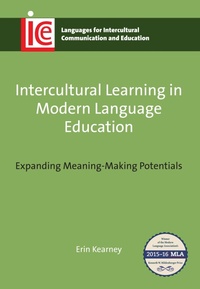
Intercultural Learning in Modern Language Education
Expanding Meaning-Making Potentials
Published on 3. December 2015
206 pages
978-1-78309-469-1 (ISBN)
Description

Winner of the 2015-16 Kenneth W. Mildenberger Prize awarded by the Modern Language Association
Many educators aim to engage students in deeply meaningful learning in the language classroom, often facing challenges to connect the students with the culture of the language they are learning. This book aims to demonstrate that substantial intercultural learning can and does occur in the modern language classroom, and explores the features of the classroom that support meaningful culture-in-language-learning. The author argues that transformative modern language education is intimately tied to a view of language learning as an engagement in meaning-making activity, or semiotic practice. The empirical evidence presented is analyzed and then linked to both the theorizing of culture-in-language-teaching and to practical concerns of teaching.
Many educators aim to engage students in deeply meaningful learning in the language classroom, often facing challenges to connect the students with the culture of the language they are learning. This book aims to demonstrate that substantial intercultural learning can and does occur in the modern language classroom, and explores the features of the classroom that support meaningful culture-in-language-learning. The author argues that transformative modern language education is intimately tied to a view of language learning as an engagement in meaning-making activity, or semiotic practice. The empirical evidence presented is analyzed and then linked to both the theorizing of culture-in-language-teaching and to practical concerns of teaching.
Reviews / Votes
Erin Kearney's book is theoretically engaging and deeply insightful in the argument it foregrounds for a social semiotic approach in modern languages teaching and learning. Truly a 'must read' for graduate students and scholars interested in contemporary debates on ML education, this book could not have been more timely. -- Beatrice Dupuy, University of Arizona, USA This book addresses, in a superb and comprehensive manner, the question of how students and teachers actually realise the practice of interpreting, creating and exchanging meaning in language learning, recognising that these processes are cultural and indeed, intercultural. Its distinctive feature is that it addresses seamlessly and authoritatively both the conceptualisation and the enactment in practice of intercultural language teaching and learning. A real pleasure to read. -- Angela Scarino, University of South Australia, Australia This exciting publication masterfully weaves together two critical components in modern language education-intercultural learning and meaning making-and illustrates the features of classroom culture-in-language-learning. Given its focus on culture in language education, it will resonate with several audiences, including researchers of intercultural learning, those learning how to conduct qualitative research, and language educators seeking to broaden their pedagogical knowledge related to teaching culture. -- Heather Willis Allen, University of Wisconsin-Madison, USA This book raises some very important questions concerning the objectives of ML education in the United States and offers different avenues of exploring the related issues. Kearney convincingly argues the benefits and relevance of a semiotic approach to intercultural learning in ML education via a textually rich classroom and clearly outlines the role of meaning-making potentials. -- Stephanie J. Lerat, University of Lorraine, France * LINGUIST List 27.4163 *More details
Series
Language
English
Place of publication
Bristol
United Kingdom
Publishing group
Channel View Publications Ltd
Target group
Professional and scholarly
Product notice
Reflowable
ISBN-13
978-1-78309-469-1 (9781783094691)
Copyright in bibliographic data and cover images is held by Nielsen Book Services Limited or by the publishers or by their respective licensors: all rights reserved.
Schweitzer Classification
Other editions
Additional editions
Book
12/2015
Multilingual Matters
€47.30
Shipment within 10-20 days
Person
Erin Kearney is Assistant Professor of Foreign and Second Language Education at the State University of New York at Buffalo. She is interested in cultural dimensions of foreign and second language teaching and learning, as well as language teacher development and education, early foreign language learning and language awareness, and classroom discourse and interaction in L2 settings.
Content
1. The Challenges of Addressing Culture in Modern Language Education
2. The Culture Learning Target: Engagement with Meaning Potentials
3. Creating and Investigating Intercultural Worlds in a Modern Language Classroom
4. Understanding Signification and Interpretive Acts through Engagement with Cultural Representations
5. Realizing Meaning Potentials through Narrative Writing
6. Sense-Making in a Web of Meanings: Implications for Theory, Research and Practice
References
2. The Culture Learning Target: Engagement with Meaning Potentials
3. Creating and Investigating Intercultural Worlds in a Modern Language Classroom
4. Understanding Signification and Interpretive Acts through Engagement with Cultural Representations
5. Realizing Meaning Potentials through Narrative Writing
6. Sense-Making in a Web of Meanings: Implications for Theory, Research and Practice
References
