

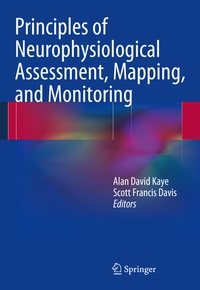
Principles of Neurophysiological Assessment, Mapping, and Monitoring
Description

Reviews / Votes
From the book reviews:
"This is an overview of the principles of neuromonitoring and the role it plays intraoperatively in different surgical procedures. . The audience includes surgeons, neurologists, technicians, anesthesiologists, and even students, since it is easy to understand. . It is brief and to the point, a real pleasure to read. This is a must-read for anesthesiologists, although other physicians may find it helpful if they want to make a meaningful contribution to the care of their patients during surgery." (Tariq M. Malik, Doody's Book Reviews, August, 2014)
More details
Other editions
Additional editions
Content
1. Introduction to the Operating Room.- 2. Anatomy of Intraoperative Monitoring.- 3. Cellular Neurophysiology.- 4. Electrophysiology and Bioinstrumentation.- 5. Anesthesiology and Intraoperative Electrophysiological Monitoring.- 6. Somatosensory Evoked Potential Monitoring.- 7. Motor Evoked Potentials.- 8. Electromyography (EMG).- 9. Brainstem Auditory Evoked Potentials.- 10. Electroencephalography.- 11. The H-Reflex and F-Response.- 12. Monitoring Procedures of the Spine.- 13. Intraoperative Monitoring for Surgery of the Spinal Cord and Cauda Equina.- 14. Monitoring Posterior Fossa Craniotomies.- 15. Intraoperative Monitoring for Carotid Endarterectomy.- 16. Monitoring for ENT Procedures.- 17. Peripheral Nerve Monitoring.- 18. Intraoperative Cortical Mapping: Basic Concepts, Indications, and Anesthesia Considerations.- 19. Neurological Assessment and Correlation in Spinal Cord Nerve Root Pathology.- 20. Electrophysiological Assessment of Spinal Cord Pathology in Pain Medicine.- 21. Spinal Cord Stimulation: Principles and Applications.- 22. New Vistas: Small-Pain-Fibers Method of Testing for Spinal Cord Assessment in Pain States.
