

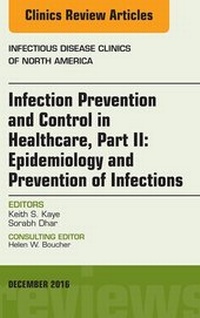
Infection Prevention and Control in Healthcare, Part II: Epidemiology and Prevention of Infections, An Issue of Infectious Disease Clinics of North America, E-Book
Infection Prevention and Control in Healthcare, Part II: Epidemiology and Prevention of Infections, an Issue of Infectious Disease Clinics of North America, E-Book
1st Edition
Published on 7. November 2016
100 pages
978-0-323-47763-5 (ISBN)
Description

Dr. Kaye and Dr. Dhor have assembled top experts to write about clinical management of infections in Part II of their two issues devoted to Infection Prevention and Control in Healthcare. Articles in this issue are devoted to: CLABSI; UTI; Tuberculosis; Ventilator-Assisted Pneumonia; Surgical Site Infection; MRSA; VRE; Gram-Negative Bacilli; Fungal Infections; C. Difficile, and Emerging Infections including Ebola. Infectious Disease physicians and anyone in the hospital setting will find this issue very useful, as state-of-the-art clinical reviews provide clinical management on these common and emerging infections.
More details
Other editions
Additional editions
Keith S. Kaye | Sorabh Dhar
Infection Prevention and Control in Healthcare, Part II: Epidemiology and Prevention of Infections, An Issue of Infectious Disease Clinics of North America: Volume 30-4
Volume 30-4
Book
01/2017
Elsevier
€120.50
Shipment within 15-20 days
Content
- Intro
- Title page
- Table of Contents
- Copyright
- Contributors
- Forthcoming Issues
- Preface
- Prevention of Vascular Catheter-Related Bloodstream Infections
- Key points
- Introduction and clinical significance
- Definitions and surveillance
- Pathogenesis
- Urinary Tract Infections
- Key points
- Introduction
- Pathogenesis
- Epidemiology of catheter-associated urinary tract infection
- Surveillance for catheter-associated urinary tract infections
- Preventing catheter-associated urinary tract infection
- Summary
- Ventilator-Associated Events and Their Prevention
- Key points
- Introduction
- Epidemiology and outcomes
- Clinical triggers and risk factors for ventilator-associated events
- Prevention and interventions
- Pediatric ventilator-associated conditions
- Disagreement in the field
- Summary
- Surgical Site Infections: An Update
- Key points
- Introduction
- Epidemiology and outcomes
- Diagnosis
- Pathogenesis of infection
- Risk factors
- Prevention
- Unresolved issues in prevention of surgical site infections
- Treatment
- Summary
- Prevention and Control of Methicillin-Resistant Staphylococcus aureus in Acute Care Settings
- Key points
- Introduction
- Declining methicillin-resistant Staphylococcus aureus rates in many regions
- Emerging data and controversies regarding methicillin-resistant Staphylococcus aureus control strategies
- Summary
- Vancomycin-Resistant Enterococci: Epidemiology, Infection Prevention, and Control
- Key points
- Introduction
- Issues and strategies in prevention and control of vancomycin-resistant enterococci infections
- Multidrug-Resistant Gram-Negative Bacilli: Infection Control Implications
- Key points
- Gram-negative pathogens that are the focus of specific preventive measures
- Microbiological definitions and methodologic considerations
- Modes of acquisition of multidrug-resistant Gram-negative bacilli
- Multidrug-resistant Gram-negative bacilli in various clinical settings
- Food and livestock as a source of multidrug-resistant Gram-negative bacilli
- The 'iceberg phenomenon': the role of colonization in the epidemiology and prevention of multidrug-resistant Gram-negative bacilli
- The role of surveillance
- Containment of multidrug-resistant Gram-negative bacilli
- The role of the environment and shared equipment
- The role of antimicrobial stewardship
- The role of decolonization
- Summary
- Prevention of Infection Due to Clostridium difficile
- Key points
- Introduction
- Pathogenesis
- Epidemiology
- Prevention
- Infection control and prevention
- Risk factor reduction
- Summary
- Preventing Transmission of Mycobacterium tuberculosis in Health Care Settings
- Key points
- Epidemiology
- Transmission of tuberculosis
- Components of a tuberculosis infection control program
- Administrative measures
- Environmental controls
- Respiratory protection
- Summary
- Nosocomial Fungal Infections: Epidemiology, Infection Control, and Prevention
- Key points
- Impact of nosocomial fungal infections
- Common nosocomial infections caused by yeasts
- Nosocomial infections caused by molds
- Strategies for prevention of nosocomial candidiasis
- Strategies for prevention of nosocomial aspergillosis and mold infections
- Strategies for prevention of fungal infection in hematopoietic stem cell transplantation recipients
- Summary
- Health Care-Acquired Viral Respiratory Diseases
- Key points
- Introduction
- Respiratory syncytial virus
- Seasonal influenza
- Novel pandemic influenza
- Novel human coronaviruses
- Adenovirus
- Parainfluenza virus
- Summary
- Special Articles
- Quick Evidence Synopsis: Effectiveness of Neuraminidase Inhibitors for Hospitalized Children with H1N1 Influenza A
- What do clinical guidelines say?
- Author commentary
- Glossary
- Quick Evidence Synopsis: Effectiveness of Neuraminidase Inhibitors in Hospitalized Adults with H1N1 Influenza A
- What do clinical guidelines say?
- Author commentary
- Glossary
- Index
