

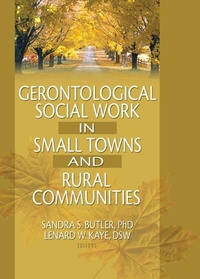
Gerontological Social Work in Small Towns and Rural Communities
1st Edition
Published on 12. October 2012
365 pages
978-1-136-40308-8 (ISBN)
Description

Learn the skills you need to work with geriatric populations in rural areas!
Gerontological Social Work in Rural Towns and Communities provides a range of intervention and community skills aimed precisely at the needs of rural elders. This book fills a gap in the literature by focusing on the specific practice concerns for social workers assisting older adults in rural areas, including the aging experience, social worker skills, professional functions, working with special populations, and health and long-term care concerns. This valuable resource will benefit social workers, gerontologists, allied health professionals in rural areas, health and human services administrators and managers.
Gerontological Social Work in Rural Towns and Communities explores the challenges social workers need to overcome when working with the elder community in rural areas. This book's significance to social workers will only increase as more adults choose to live and grow old away from the cities. Experts in the field suggest strategies to overcome barriers in planning and providing services such as:
a longer distance for the elderly to travel to use social service centers
a narrower range of available services in the local area
increased poverty levels for the elderly
a stronger dependency by elderly on family rather than public assistance
This book is divided into five sections:
Rurality and Agingintroduces the concept of rurality and examines the demographics of aging from a rural perspective
Practice Dimensions of Social Work with Rural Eldersincludes clinical practice models, intervention and advocacy techniques, program planning, and marketing approaches
Special Populationsgives attention to four special population groups: indigenous elders, African-American older adults, elderly Latinos, and disabled elders
Special Issues Pertaining to Rural Elderscovers five essential issues for rural gerontological social workers: health promotion, older workers and retirement preparation, aging in place, specialized housing, and ethical practice
Training and Policy Recommendationsfuture training and education recommendations for social workers are explored, as well as service capacity building, the aging network, and the future of long-term care
While a variety of theoretical perspectives are explored in Gerontological Social Work in Rural Towns and Communities, the book's empowerment orientation and strengths-based approach will enhance your abilities to improve quality of life for elderly individuals in rural communities. Each chapter contains a comprehensive review of the literature on the subject it addresses, and several chapters include tables and graphs to further establish their revealing empirical findings. An appendix provides additional sources to turn to for more information.
Gerontological Social Work in Rural Towns and Communities provides a range of intervention and community skills aimed precisely at the needs of rural elders. This book fills a gap in the literature by focusing on the specific practice concerns for social workers assisting older adults in rural areas, including the aging experience, social worker skills, professional functions, working with special populations, and health and long-term care concerns. This valuable resource will benefit social workers, gerontologists, allied health professionals in rural areas, health and human services administrators and managers.
Gerontological Social Work in Rural Towns and Communities explores the challenges social workers need to overcome when working with the elder community in rural areas. This book's significance to social workers will only increase as more adults choose to live and grow old away from the cities. Experts in the field suggest strategies to overcome barriers in planning and providing services such as:
a longer distance for the elderly to travel to use social service centers
a narrower range of available services in the local area
increased poverty levels for the elderly
a stronger dependency by elderly on family rather than public assistance
This book is divided into five sections:
Rurality and Agingintroduces the concept of rurality and examines the demographics of aging from a rural perspective
Practice Dimensions of Social Work with Rural Eldersincludes clinical practice models, intervention and advocacy techniques, program planning, and marketing approaches
Special Populationsgives attention to four special population groups: indigenous elders, African-American older adults, elderly Latinos, and disabled elders
Special Issues Pertaining to Rural Elderscovers five essential issues for rural gerontological social workers: health promotion, older workers and retirement preparation, aging in place, specialized housing, and ethical practice
Training and Policy Recommendationsfuture training and education recommendations for social workers are explored, as well as service capacity building, the aging network, and the future of long-term care
While a variety of theoretical perspectives are explored in Gerontological Social Work in Rural Towns and Communities, the book's empowerment orientation and strengths-based approach will enhance your abilities to improve quality of life for elderly individuals in rural communities. Each chapter contains a comprehensive review of the literature on the subject it addresses, and several chapters include tables and graphs to further establish their revealing empirical findings. An appendix provides additional sources to turn to for more information.
More details
Language
English
Place of publication
London
United Kingdom
Publishing group
Taylor & Francis Ltd
Target group
College/higher education
File size
2,26 MB
ISBN-13
978-1-136-40308-8 (9781136403088)
Copyright in bibliographic data and cover images is held by Nielsen Book Services Limited or by the publishers or by their respective licensors: all rights reserved.
Schweitzer Classification
Other editions
Additional editions
Lenard W. Kaye | Sandra Butler
Gerontological Social Work in Small Towns and Rural Communities
Book
09/2004
1st Edition
Routledge
€267.41
Shipment within 10-20 days
Lenard W. Kaye | Sandra Butler
Gerontological Social Work in Small Towns and Rural Communities
Book
08/2004
1st Edition
Routledge
€99.50
Shipment within 10-20 days
Content
About the Contributors
Acknowledgments
Preface
PART I
SECTION I. INTRODUCTORY CONCEPTS OF RURALALITY AND AGING
Chapter 1. Rurality, Aging and Social Work: Setting the Context (Sandra S. Butler and Lenard W. Kaye)
Chapter 2. The Demographics of Aging in Rural Perspective (Lucinda L. Roff and David L. Klemmack)
SECTION II. PRACTICE DIMENSIONS OF SOCIAL WORK WITH RURAL ELDERS
Chapter 3. Rural Aging: Social Work Practice Models and Intervention Dynamics (Cynthia D. Bisman)
Chapter 4. Advocacy Techniques with Older Adults in Rural Environments (Sandra S. Butler and Nancy M. Webster)
Chapter 5. Rural Program Planning and Development for Older Adults (Hong Li and C. Jean Blaser)
Chapter 6. A Rural Perspective on Marketing Services to Older Adults (Kim K. R. McKeage and Lenard W. Kaye)
SECTION III. SPECIAL POPULATIONS
Chapter 7. Indigenous Elders in Rural America (Amanda Barusch and Christine TenBarge)
Chapter 8. Rural African American Older Adults and the Black Helping Tradition (Mikal N. Rasheed and Janice Matthews Rasheed)
Chapter 9. Rural Elderly Latinos (Steven Lozano Applewhite and Cruz Torres)
Chapter 10. Rural Disabled Elders (Elizabeth DePoy and Stephen French Gilson)
PART II
SECTION IV. SPECIAL ISSUES AND PROGRAMS
Chapter 11. Older Adult Health Promotion in Rural Settings (Stephanie J. FallCreek)
Chapter 12. Older Rural Workers and Retirement Preparation (Lorraine T. Dorfman)
Chapter 13. Rural Older Adults at Home (Whitney Cassity-Caywood and Ruth Huber)
Chapter 14. Specialized Housing and Rural Elders (Sandra S. Butler and Donald W. Sharland)
Chapter 15. Ethical Practice Issues in Rural Perspective (Tara C. Healy)
SECTION V. LOOKING AHEAD: TRAINING AND POLICY RECOMMENDATIONS
Chapter 16. Future Training and Education Recommendations for Rural Gerontological Social Workers (Nancy P. Kropf)
Chapter 17. Rural Mental Health: A Discussion of Service Capacity Building for Rural Elders (Eloise Rathbone-McCuan and Share Bane)
Chapter 18. The Aging Network and the Future of Long-Term Care (Josefina Carbonell and Larry Polivka)
Appendix: Sources for More Information on Social Work with Rural Older Adults (Elizabeth Johns and Jane Harris-Bartley)
Index
Reference Notes Included
Acknowledgments
Preface
PART I
SECTION I. INTRODUCTORY CONCEPTS OF RURALALITY AND AGING
Chapter 1. Rurality, Aging and Social Work: Setting the Context (Sandra S. Butler and Lenard W. Kaye)
Chapter 2. The Demographics of Aging in Rural Perspective (Lucinda L. Roff and David L. Klemmack)
SECTION II. PRACTICE DIMENSIONS OF SOCIAL WORK WITH RURAL ELDERS
Chapter 3. Rural Aging: Social Work Practice Models and Intervention Dynamics (Cynthia D. Bisman)
Chapter 4. Advocacy Techniques with Older Adults in Rural Environments (Sandra S. Butler and Nancy M. Webster)
Chapter 5. Rural Program Planning and Development for Older Adults (Hong Li and C. Jean Blaser)
Chapter 6. A Rural Perspective on Marketing Services to Older Adults (Kim K. R. McKeage and Lenard W. Kaye)
SECTION III. SPECIAL POPULATIONS
Chapter 7. Indigenous Elders in Rural America (Amanda Barusch and Christine TenBarge)
Chapter 8. Rural African American Older Adults and the Black Helping Tradition (Mikal N. Rasheed and Janice Matthews Rasheed)
Chapter 9. Rural Elderly Latinos (Steven Lozano Applewhite and Cruz Torres)
Chapter 10. Rural Disabled Elders (Elizabeth DePoy and Stephen French Gilson)
PART II
SECTION IV. SPECIAL ISSUES AND PROGRAMS
Chapter 11. Older Adult Health Promotion in Rural Settings (Stephanie J. FallCreek)
Chapter 12. Older Rural Workers and Retirement Preparation (Lorraine T. Dorfman)
Chapter 13. Rural Older Adults at Home (Whitney Cassity-Caywood and Ruth Huber)
Chapter 14. Specialized Housing and Rural Elders (Sandra S. Butler and Donald W. Sharland)
Chapter 15. Ethical Practice Issues in Rural Perspective (Tara C. Healy)
SECTION V. LOOKING AHEAD: TRAINING AND POLICY RECOMMENDATIONS
Chapter 16. Future Training and Education Recommendations for Rural Gerontological Social Workers (Nancy P. Kropf)
Chapter 17. Rural Mental Health: A Discussion of Service Capacity Building for Rural Elders (Eloise Rathbone-McCuan and Share Bane)
Chapter 18. The Aging Network and the Future of Long-Term Care (Josefina Carbonell and Larry Polivka)
Appendix: Sources for More Information on Social Work with Rural Older Adults (Elizabeth Johns and Jane Harris-Bartley)
Index
Reference Notes Included
