

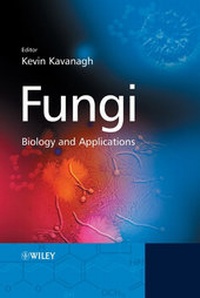
Fungi
Biology and Applications
Published on 13. December 2005
280 pages
978-0-470-86703-7 (ISBN)
Description

Fungi: Biology and Applications is a comprehensive, balancedintroduction of the biology, biotechnological applications andmedical significance of fungi. With no prior knowledge of thesubject assumed, the opening chapters offer a broad overview of thebasics of fungal biology, in particular the physiology and geneticsof fungi. Later chapters move on to include more detailed coverageof topics such as proteomics, bioinformatics, heterologous proteinexpression, medical mycology, anti-fungal drug development andfunction, fungal biotechnology and fungal pathogens of economicallyimportant plants.
Carefully structured, each chapter contains self-assessmentexercises with answers included at the end of the book to enhancestudent understanding.
* A comprehensive treatment of the medical and economic importanceof fungi to everyday life
* Chapters include revision sections and problems to reinforce keyconcepts
* Invaluable for undergraduates taking a first course on fungalbiology or mycology.
* also of interest to those working within the field looking for anup-to-date introduction.
Carefully structured, each chapter contains self-assessmentexercises with answers included at the end of the book to enhancestudent understanding.
* A comprehensive treatment of the medical and economic importanceof fungi to everyday life
* Chapters include revision sections and problems to reinforce keyconcepts
* Invaluable for undergraduates taking a first course on fungalbiology or mycology.
* also of interest to those working within the field looking for anup-to-date introduction.
More details
Other editions
New editions
E-Book
08/2011
2nd Edition
Wiley
€48.99
Available for download
Person
Kevin Kavanagh BSc, PhD, is with the Department of Biology at the National University of Ireland in Maynooth, Co. Kildare, Ireland.
Content
List of Contributors.
Preface.
1. Introduction to Fungal Physiology (Graeme M. Walker and Nia A. White).
1.1 Introduction.
1.2 Morphology of yeasts and fungi.
1.3 Ultrastructure and function of fungal cells.
1.4 Fungal nutrition and cellular biosyntheses.
1.5 Fungal metabolism.
1.6 Fungal growth and reproduction.
1.7 Conclusions.
1.8 Further reading.
1.9 Revision questions.
2. Fungal Genetics (Malcolm Whiteway and Catherine Bachewich).
2.1 Introduction.
2.2 Life cycles.
2.3 Sexual analysis: Regulation of mating.
2.4 Unique characteristics of filamentous fungi that are advantageous for genetic analysis.
2.5 Genetics as a tool.
2.6 Conclusions.
2.7 Further reading.
2.8 Revision questions.
3. Fungal Genetics: A Post-Genomic Perspective (Brendan Curran and Virginia Bugeja).
3.1 Introduction.
3.2 Genomics.
3.3 Transcriptomics and proteomics.
3.4 Proteomics.
3.5 Systems biology.
3.6 Conclusions.
3.7 Further reading.
3.8 Revision questions.
4. Fungal Fermentation Systems and Products (Kevin Kavanagh).
4.1 Introduction.
4.2 Fungal fermentation systems.
4.3 Ethanol production.
4.4 Commercial fungal products.
4.5 Genetic manipulation of fungi.
4.6 Conclusion.
4.7 Further reading.
4.8 Revision questions.
5. Antibiotics, Enzymes and Chemical Commodities from Fungi (Richard A. Murphy and Karina A. Horgan).
5.1 Introduction.
5.2 Fungal metabolism.
5.3 Antibiotic production.
5.4 Pharmacologically active products.
5.5 Enzymes.
5.6 Chemical commodities.
5.7 Yeast extracts.
5.8 Enriched yeast.
5.9 Further reading.
5.10 Revision questions.
6. The Biotechnological Exploitation of Heterologous Protein Production in Fungi (Brendan Curran and Virginia Bugeja).
6.1 Fungal biotechnology.
6.2 Heterologous protein expression in fungi.
6.3 Budding stars.
6.4 Methylotrophic yeast species.
6.5 Case study - hepatitis B vaccine - a billion dollar heterologous protein from yeast.
6.6 Further biotechnological applications of expression technology.
6.7 Conclusion.
6.8 Further reading.
6.9 Revision questions.
7. Fungal Diseases of Humans (Derek Sullivan, Gary Moran and David Coleman).
7.1 Introduction.
7.2 Fungal diseases.
7.3 Superficial mycoses.
7.4 Opportunistic mycoses.
7.5 Endemic systemic mycoses.
7.6 Concluding remarks.
7.7 Further reading.
7.8 Revision questions.
8. Antifungal Agents for Use in Human Therapy (Khaled H. Abu-Elteen and Mawieh Hamad).
8.1 Introduction.
8.2 Polyene antifungal agents.
8.3 The azole antifungal agents.
8.4 Flucytosine.
8.5 Novel antifungal agents.
8.6 Miscellaneous antifungal agents.
8.7 New strategies and future prospects.
8.8 Conclusion.
8.9 Further reading.
8.10 Revision questions.
9. Fungal Pathogens of Plants (Fiona Doohan).
9.1 Fungal pathogens of plants.
9.2 Disease symptoms.
9.3 Factors influencing disease development.
9.4 The disease cycle.
9.5 Genetics of the plant-fungal pathogen interaction.
9.6 Mechanisms of fungal plant parasitism.
9.7 Mechanisms of host defence.
9.8 Disease control.
9.9 Disease detection and diagnosis.
9.10 Vascular wilt diseases.
9.11 Blights.
9.12 Rots and damping-off diseases.
9.13 Leaf and stem spots, anthracnose and scabs.
9.14 Rusts, smuts and powdery mildew diseases.
9.15 Global repercussions of fungal diseases of plants.
9.16 Conclusion.
9.17 Acknowledgements.
9.18 Further reading.
9.19 Revision questions.
Answers to Revision Questions.
Chapter 1.
Chapter 2.
Chapter 3.
Chapter 4.
Chapter 5.
Chapter 6.
Chapter 7.
Chapter 8.
Chapter 9.
Index.
Preface.
1. Introduction to Fungal Physiology (Graeme M. Walker and Nia A. White).
1.1 Introduction.
1.2 Morphology of yeasts and fungi.
1.3 Ultrastructure and function of fungal cells.
1.4 Fungal nutrition and cellular biosyntheses.
1.5 Fungal metabolism.
1.6 Fungal growth and reproduction.
1.7 Conclusions.
1.8 Further reading.
1.9 Revision questions.
2. Fungal Genetics (Malcolm Whiteway and Catherine Bachewich).
2.1 Introduction.
2.2 Life cycles.
2.3 Sexual analysis: Regulation of mating.
2.4 Unique characteristics of filamentous fungi that are advantageous for genetic analysis.
2.5 Genetics as a tool.
2.6 Conclusions.
2.7 Further reading.
2.8 Revision questions.
3. Fungal Genetics: A Post-Genomic Perspective (Brendan Curran and Virginia Bugeja).
3.1 Introduction.
3.2 Genomics.
3.3 Transcriptomics and proteomics.
3.4 Proteomics.
3.5 Systems biology.
3.6 Conclusions.
3.7 Further reading.
3.8 Revision questions.
4. Fungal Fermentation Systems and Products (Kevin Kavanagh).
4.1 Introduction.
4.2 Fungal fermentation systems.
4.3 Ethanol production.
4.4 Commercial fungal products.
4.5 Genetic manipulation of fungi.
4.6 Conclusion.
4.7 Further reading.
4.8 Revision questions.
5. Antibiotics, Enzymes and Chemical Commodities from Fungi (Richard A. Murphy and Karina A. Horgan).
5.1 Introduction.
5.2 Fungal metabolism.
5.3 Antibiotic production.
5.4 Pharmacologically active products.
5.5 Enzymes.
5.6 Chemical commodities.
5.7 Yeast extracts.
5.8 Enriched yeast.
5.9 Further reading.
5.10 Revision questions.
6. The Biotechnological Exploitation of Heterologous Protein Production in Fungi (Brendan Curran and Virginia Bugeja).
6.1 Fungal biotechnology.
6.2 Heterologous protein expression in fungi.
6.3 Budding stars.
6.4 Methylotrophic yeast species.
6.5 Case study - hepatitis B vaccine - a billion dollar heterologous protein from yeast.
6.6 Further biotechnological applications of expression technology.
6.7 Conclusion.
6.8 Further reading.
6.9 Revision questions.
7. Fungal Diseases of Humans (Derek Sullivan, Gary Moran and David Coleman).
7.1 Introduction.
7.2 Fungal diseases.
7.3 Superficial mycoses.
7.4 Opportunistic mycoses.
7.5 Endemic systemic mycoses.
7.6 Concluding remarks.
7.7 Further reading.
7.8 Revision questions.
8. Antifungal Agents for Use in Human Therapy (Khaled H. Abu-Elteen and Mawieh Hamad).
8.1 Introduction.
8.2 Polyene antifungal agents.
8.3 The azole antifungal agents.
8.4 Flucytosine.
8.5 Novel antifungal agents.
8.6 Miscellaneous antifungal agents.
8.7 New strategies and future prospects.
8.8 Conclusion.
8.9 Further reading.
8.10 Revision questions.
9. Fungal Pathogens of Plants (Fiona Doohan).
9.1 Fungal pathogens of plants.
9.2 Disease symptoms.
9.3 Factors influencing disease development.
9.4 The disease cycle.
9.5 Genetics of the plant-fungal pathogen interaction.
9.6 Mechanisms of fungal plant parasitism.
9.7 Mechanisms of host defence.
9.8 Disease control.
9.9 Disease detection and diagnosis.
9.10 Vascular wilt diseases.
9.11 Blights.
9.12 Rots and damping-off diseases.
9.13 Leaf and stem spots, anthracnose and scabs.
9.14 Rusts, smuts and powdery mildew diseases.
9.15 Global repercussions of fungal diseases of plants.
9.16 Conclusion.
9.17 Acknowledgements.
9.18 Further reading.
9.19 Revision questions.
Answers to Revision Questions.
Chapter 1.
Chapter 2.
Chapter 3.
Chapter 4.
Chapter 5.
Chapter 6.
Chapter 7.
Chapter 8.
Chapter 9.
Index.
