

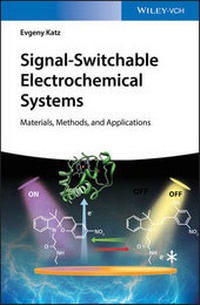
Signal-Switchable Electrochemical Systems
Materials, Methods, and Applications
1st Edition
Published on 11. June 2018
320 pages
978-3-527-81875-4 (ISBN)
Description

A guide to the biological control over electronic systems that lead the way to wearable electronics and improved drug delivery
In recent years, this area of electrochemical systems has developed rapidly and achieved significant progress. Signal-Switchable Electrochemical Systems offers an overview to the wide-variety of switchable electrochemical systems and modified electrodes. The author?a noted researcher and expert on the topic?summarizes research efforts of many groups in a range of universities and countries. The book explores various types of external signals that are able to modify electrode interfaces, for example electrical potential, magnetic field, light, as well as chemical and biochemical inputs.
Multifunctional properties of the modified interfaces allow their responses to complex combinations of external signals. These are integrated with unconventional biomolecular computing systems logically processing multiple biochemical signals. This approach allows the biological control over electronic systems. The text explores the applications in different areas, including unconventional computing, biofuel cells and signal-triggered molecular release in electrochemical systems. This important guide:
-Provides an overview to the biological control over electronic systems and examines the key applications in biomedicine, electrochemical energy conversion and signal-processing
-Offers an important text written by a highly cited researcher and pioneer in the field
-Contains a summary of research efforts of an international panel of scholars representing various universities and countries
-Presents a groundbreaking book that provides an introduction to this interdisciplinary field
Written for scientists working with electrochemical systems and applications with signal-responsive materials, Signal-Switchable Electrochemical Systems presents an overview of the multidisciplinary field of adaptable signal-controlled electrochemical systems and processes and highlights their key aspects and future perspectives.
In recent years, this area of electrochemical systems has developed rapidly and achieved significant progress. Signal-Switchable Electrochemical Systems offers an overview to the wide-variety of switchable electrochemical systems and modified electrodes. The author?a noted researcher and expert on the topic?summarizes research efforts of many groups in a range of universities and countries. The book explores various types of external signals that are able to modify electrode interfaces, for example electrical potential, magnetic field, light, as well as chemical and biochemical inputs.
Multifunctional properties of the modified interfaces allow their responses to complex combinations of external signals. These are integrated with unconventional biomolecular computing systems logically processing multiple biochemical signals. This approach allows the biological control over electronic systems. The text explores the applications in different areas, including unconventional computing, biofuel cells and signal-triggered molecular release in electrochemical systems. This important guide:
-Provides an overview to the biological control over electronic systems and examines the key applications in biomedicine, electrochemical energy conversion and signal-processing
-Offers an important text written by a highly cited researcher and pioneer in the field
-Contains a summary of research efforts of an international panel of scholars representing various universities and countries
-Presents a groundbreaking book that provides an introduction to this interdisciplinary field
Written for scientists working with electrochemical systems and applications with signal-responsive materials, Signal-Switchable Electrochemical Systems presents an overview of the multidisciplinary field of adaptable signal-controlled electrochemical systems and processes and highlights their key aspects and future perspectives.
More details
Other editions
Additional editions
Book
08/2018
1st Edition
Wiley-VCH
€149.00
Article exhausted; check different version
Person
Evgeny Katz, PhD, is Milton Kerker Chaired Professor at the Department of Chemistry and Biomolecular Science, Clarkson University, New York. His scientific interests are in the broad areas of bioelectronics, biosensors, biofuel cells, biomolecular information processing and recently in forensic science.
Content
Introduction
Magneto-Switchable Electrodes and Electrochemical Systems
Modified Electrodes and Electrochemical Systems Switchable by Temperature Changes
Modified Electrodes and Electrochemical Systems Switchable by Light Signals
Modified Electrodes Switchable by Applied Potentials Resulting in Electrochemical Transformations at Functional Interfaces
Electrochemical Systems Switchable by pH Changes
Coupling of Switchable Electrodes and Electrochemical Processes with Biomolecular Computing Systems
Biofuel Cells with Switchable/Tunable Power Output as an Example of Implantable Bioelectronic Devices
Signal-Triggered Release of Biomolecules from Alginate-Modified Electrodes
What is Next? Molecular Biology Brings New Ideas
Summary and Outlook: Scaling-Up the Complexity of Signal-Processing Systems and Foreseeing New Applications
Index
Magneto-Switchable Electrodes and Electrochemical Systems
Modified Electrodes and Electrochemical Systems Switchable by Temperature Changes
Modified Electrodes and Electrochemical Systems Switchable by Light Signals
Modified Electrodes Switchable by Applied Potentials Resulting in Electrochemical Transformations at Functional Interfaces
Electrochemical Systems Switchable by pH Changes
Coupling of Switchable Electrodes and Electrochemical Processes with Biomolecular Computing Systems
Biofuel Cells with Switchable/Tunable Power Output as an Example of Implantable Bioelectronic Devices
Signal-Triggered Release of Biomolecules from Alginate-Modified Electrodes
What is Next? Molecular Biology Brings New Ideas
Summary and Outlook: Scaling-Up the Complexity of Signal-Processing Systems and Foreseeing New Applications
Index
