

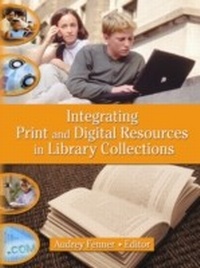
Integrating Print and Digital Resources in Library Collections
1st Edition
Published on 13. May 2013
220 pages
978-1-135-79924-3 (ISBN)
Description

Get informed answers to your questions and concerns about integrating the materials in your library's collection
Library collections have always included materials in many formatshandling a mix of material types is an accepted part of library work. And in recent years, the very concept of collection has been significantly redefined by the addition of electronic resources. But are print and digital materials really merged in library collections or are they treated and maintained as separate entities? Integrating Print and Digital Resources in Library Collections examines a variety of collection management issues, combining practical theory, research findings, how-to articles, and opinion pieces to encourage efforts in establishing fully integrated and accessible collections.
While achieving a truly integrated collection can be difficult, the failure to do so can lead to duplication of access, effort, and expense. Integrating Print and Digital Resources in Library Collections can help guide you through the difficult aspects of keeping your collection up-to-date, including the Big Deal and consortial purchasing, shifting the emphasis from purchasing print to procuring online resources for library reference work, analyzing use patterns of electronic versus hard copy resources, serials workflow studies, and review projects.
Integrating Print and Digital Resources in Library Collections examines:
the implications of electronic resource licenses
future directions of academic reference collections
technologies that can help integrate electronic resources into reference collections
the Big Dealthe purchase of access to large aggregations of materials in electronic formats
integrating electronic resources into the collections of ARL libraries
a corporate library's progression to an all-digital collection
how to decide what canand can'tbe digitized
how large e-book collections affect the circulation of comparable print collections
and much more!
Integrating Print and Digital Resources in Library Collections is an invaluable resource for librariansexperts and beginnersseeking to develop the best collections for their patrons.
Library collections have always included materials in many formatshandling a mix of material types is an accepted part of library work. And in recent years, the very concept of collection has been significantly redefined by the addition of electronic resources. But are print and digital materials really merged in library collections or are they treated and maintained as separate entities? Integrating Print and Digital Resources in Library Collections examines a variety of collection management issues, combining practical theory, research findings, how-to articles, and opinion pieces to encourage efforts in establishing fully integrated and accessible collections.
While achieving a truly integrated collection can be difficult, the failure to do so can lead to duplication of access, effort, and expense. Integrating Print and Digital Resources in Library Collections can help guide you through the difficult aspects of keeping your collection up-to-date, including the Big Deal and consortial purchasing, shifting the emphasis from purchasing print to procuring online resources for library reference work, analyzing use patterns of electronic versus hard copy resources, serials workflow studies, and review projects.
Integrating Print and Digital Resources in Library Collections examines:
the implications of electronic resource licenses
future directions of academic reference collections
technologies that can help integrate electronic resources into reference collections
the Big Dealthe purchase of access to large aggregations of materials in electronic formats
integrating electronic resources into the collections of ARL libraries
a corporate library's progression to an all-digital collection
how to decide what canand can'tbe digitized
how large e-book collections affect the circulation of comparable print collections
and much more!
Integrating Print and Digital Resources in Library Collections is an invaluable resource for librariansexperts and beginnersseeking to develop the best collections for their patrons.
More details
Language
English
Place of publication
London
United Kingdom
Publishing group
Taylor & Francis Ltd
Target group
Professional and scholarly
File size
3,30 MB
ISBN-13
978-1-135-79924-3 (9781135799243)
Copyright in bibliographic data and cover images is held by Nielsen Book Services Limited or by the publishers or by their respective licensors: all rights reserved.
Schweitzer Classification
Other editions
Additional editions
Book
11/2005
1st Edition
Routledge
€141.12
Shipment within 10-20 days
Book
11/2005
1st Edition
Routledge
€53.41
Shipment within 10-20 days
Person
Katz, Linda S
Content
Introduction: Integrating Print and Digital Resources in Library Collections (Audrey Fenner)
ISSUES AND OPINIONS
Signing Away Our Freedom: The Implications of Electronic Resource Licences (David Ball)
Integration in Academic Reference Departments: From Print to Digital Resources (Bethany R. Levrault)
RESEARCH AND ANALYSIS
Debunking the Computer Science Digital Library: Lessons Learned in Collection Development at Seneca College of Applied Arts & Technology (James Andrew Buczynski)
What Do Libraries Really Do With Electronic Resources?: The Practice in 2003 (Jay Shorten)
The Changing Format of Reference Collections: Are Research Libraries Favoring Electronic Access over Print? (Sarah Robbins, Cheryl McCain, and Laurie Scrivener)
Revolution or Revelation? Acquisitions for the Digital Library (Kathleen Morris and Betsy Larson)
The Decline of Print: Ten Years of Print Serial Use in a Small Academic Medical Library (Karen Thompson Rosati)
HISTORIES AND PROJECTS
The Integrated Library System: From Innovation to Relegation to Innovation Again (Tracy Primich and Caroline Richardson)
Shifting Priorities: Print and Electronic Serials at The University of Montana (Michelle S. Millet and Susan Mueller)
The Library and the Faculty Senate: Legitimizing the Serials Evaluation Process Using the Department of Biology Subscriptions (Sandhya D. Srivastava and Pamela Harpel-Burke)
21st Century Shell Game: Cutting Serials in the Electronic Age (Richard P. Jasper)
The Ames Library: A Model for Collection Integration (Julia B. Dickinson and Sarah E. George)
Integrating Resources in the Education Library: Trends, Issues, and Reality (Justina O. Osa)
Index
Reference Notes Included
ISSUES AND OPINIONS
Signing Away Our Freedom: The Implications of Electronic Resource Licences (David Ball)
Integration in Academic Reference Departments: From Print to Digital Resources (Bethany R. Levrault)
RESEARCH AND ANALYSIS
Debunking the Computer Science Digital Library: Lessons Learned in Collection Development at Seneca College of Applied Arts & Technology (James Andrew Buczynski)
What Do Libraries Really Do With Electronic Resources?: The Practice in 2003 (Jay Shorten)
The Changing Format of Reference Collections: Are Research Libraries Favoring Electronic Access over Print? (Sarah Robbins, Cheryl McCain, and Laurie Scrivener)
Revolution or Revelation? Acquisitions for the Digital Library (Kathleen Morris and Betsy Larson)
The Decline of Print: Ten Years of Print Serial Use in a Small Academic Medical Library (Karen Thompson Rosati)
HISTORIES AND PROJECTS
The Integrated Library System: From Innovation to Relegation to Innovation Again (Tracy Primich and Caroline Richardson)
Shifting Priorities: Print and Electronic Serials at The University of Montana (Michelle S. Millet and Susan Mueller)
The Library and the Faculty Senate: Legitimizing the Serials Evaluation Process Using the Department of Biology Subscriptions (Sandhya D. Srivastava and Pamela Harpel-Burke)
21st Century Shell Game: Cutting Serials in the Electronic Age (Richard P. Jasper)
The Ames Library: A Model for Collection Integration (Julia B. Dickinson and Sarah E. George)
Integrating Resources in the Education Library: Trends, Issues, and Reality (Justina O. Osa)
Index
Reference Notes Included
