

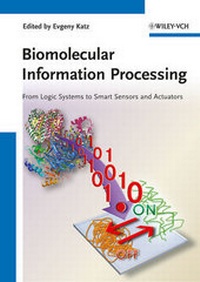
Biomolecular Information Processing
From Logic Systems to Smart Sensors and Actuators
1st Edition
Published on 25. June 2012
XX, 358 pages
978-3-527-64550-3 (ISBN)
Description

Edited by a renowned and much cited chemist, this book covers the whole span of molecular computers that are based on biomolecules. The contributions by all the major scientists in the field provide an excellent overview of the latest developments in this rapidly expanding area.
A must-have for all researchers working on this very hot topic.
Perfectly complements Molecular and Supramolecular Information Processing, also by Prof. Katz, and available as a two-volume set.
A must-have for all researchers working on this very hot topic.
Perfectly complements Molecular and Supramolecular Information Processing, also by Prof. Katz, and available as a two-volume set.
More details
Other editions
Additional editions
Software
12/2012
Wiley-VCH
€206.52
No shipping information available
Evgeny Katz
Information Processing / Biomolecular Information Processing
From Logic Systems to Smart Sensors and Actuators
Book
07/2012
1st Edition
Wiley-VCH
€162.00
Article exhausted; check different version
Person
Evgeny Katz received his Ph.D. in Chemistry from the Frumkin Institute of Electrochemistry (Moscow) in 1983. He was a senior researcher at the Institute of Photosynthesis (Pushchino), Russian Academy of Sciences (1983-1991), a Humboldt fellow at the Technische Universität München (Germany) (1992-1993), and a research associate professor at the Hebrew University of Jerusalem (1993-2006). Since 2006 he is Milton Kerker Chaired Professor at the Department of Chemistry and Biomolecular Science, Clarkson University, NY (USA). He has (co)authored over 360 papers in the areas of biocomputing, bioelectronics, biosensors and biofuel cells. Thomson Reuters included him in the list of the world?s top 100 chemists over the past 10 years as ranked by the impact of their published research. Professor Katz was also included in the list of top cited chemists prepared by the Royal Society of Chemistry with the worldwide rank 378 based on his Hirsch-index, which is currently 71.
Content
Preface
BIOMOLECULAR COMPUTING: FROM UNCONVENTIONAL COMPUTING TO "SMART" BIOSENSORS AND ACTUATORS-EDITORIAL INTRODUCTION
PEPTIDE-BASED COMPUTATION: SWITCHES, GATES, AND SIMPLE ARITHMETIC
Introduction
Peptide-Based Replication Networks
Logic Gates within Ternary Networks Symmetry and Order Requirements for Constructing the Logic Gates
Taking the Steps toward More Complex Arithmetic
Experimental Logic Gates
Adaptive Networks
Peptide-Based Switches and Gates for Molecular Electronics
Summary and Conclusion
BIOMOLECULAR ELECTRONICS AND PROTEIN-BASED OPTICAL COMPUTING
Introduction
Biomolecular and Semiconductor Electronics
Bacteriorhodopsin as a Photonic and Holographic Material for Bioelectronics
Fourier Transform Holographic Associative Processors
Three-Dimensional Optical Memories
Genetic Engineering of Bacteriorhodopsin for Device Applications
Future Directions
BIOELECTRONIC DEVICES CONTROLLED BY ENZYME-BASED INFORMATION PROCESSING SYSTEMS
Introduction
Enzyme-Based Logic Systems Producing pH Changes as Output Signals
Interfacing of the Enzyme Logic Systems with Electrodes Modified with Signal-Responsive Polymers
Switchable Biofuel Cells Controlled by the Enzyme Logic Systems
Biomolecular Logic Systems Composed of Biocatalytic and Biorecognition Units and Their Integration with Biofuel Cells
Processing of Injury Biomarkers by Enzyme Logic Systems Associated with Switchable Electrodes
Summary and Outlook
ENZYME LOGIC DIGITAL BIOSENSORS FOR BIOMEDICAL APPLICATIONS
Introduction
Enzyme-Based Logic Systems for Identification of Injury Conditions
Multiplexing of Injury Codes for the Parallel Operation of Enzyme Logic Gates
Scaling Up the Complexity of the Biocomputing Systems for Biomedical Applications - Mimicking Biochemical Pathways
Application of Filter Systems for Improving Digitalization of the Output Signals Generated by Enzyme Logic Systems for Injury Analysis
Conclusions and Perspectives
INFORMATION SECURITY APPLICATIONS BASED ON BIOMOLECULAR SYSTEMS
Introduction
Molecular and Bio-molecular Keypad Locks
Antibody Encryption and Steganography
Bio-barcode
Conclusion
BIOCOMPUTING: EXPLORE ITS REALIZATION AND INTELLIGENT LOGIC DETECTION
Introduction
DNA Biocomputing
Aptamer Biocomputing
Enzyme Biocomputing
Conclusions and Perspectives
SOME EXPERIMENTS AND MODELS IN MOLECULAR COMPUTING AND ROBOTICS
Introduction
From Gates to Programmable Automata
From Random Walker to Molecular Robotics
Conclusions
BIOMOLECULAR FINITE AUTOMATA
Introduction
Biomolecular Finite Automata Biomolecular Finite Transducer
Applications in Developmental Biology
Outlook
IN VIVO INFORMATION PROCESSING USING RNA INTERFERENCE
Introduction
RNA Interference-Based Logic
Building the Sensory Module
Outlook
BIOMOLECULAR COMPUTING SYSTEMS
Introduction
DNA as a Tool for Molecular Programming
Birth of DNA Computing: Adleman's Experiment and Extensions
Computation Using DNA Tiles
Experimental Advances in Purely Hybridization-Based Computation
Experimental Advances in Enzyme-Based DNA Computing
Biochemical DNA Reaction Networks
Conclusion: Challenges in DNA-Based Biomolecular Computation
ENUMERATION APPROACH TO THE ANALYSIS OF INTERACTING NUCLEIC ACID STRANDS
Introduction
Definitions and Notations for Set and Multiset
Chemical Equilibrium and Hybridization Reaction System
Symmetric Enumeration Method
Applying SEM to Nucleic Acid Strands Interaction
Conclusions
RESTRICTION ENZYMES IN LANGUAGE GENERATION AND PLASMID COMPUTING
Introduction
Wet Splicing Systems
Dry Splicing Systems
Splicing Theory: Its Original Motivation and Its Extensive Unforeseen Developments
Computing with Plasmids
Fluid Memory
Examples of Aqueous Computations
Final Comments about Computing with Biomolecules
DEVELOPMENT OF BACTERIA-BASED CELLULAR COMPUTING CIRCUITS FOR SENSING AND CONTROL IN BIOLOGICAL SYSTEMS
Introduction
Cellular Computing Circuits
Conclusion
THE LOGIC OF DECISION MAKING IN ENVIRONMENTAL
BIOMOLECULAR COMPUTING: FROM UNCONVENTIONAL COMPUTING TO "SMART" BIOSENSORS AND ACTUATORS-EDITORIAL INTRODUCTION
PEPTIDE-BASED COMPUTATION: SWITCHES, GATES, AND SIMPLE ARITHMETIC
Introduction
Peptide-Based Replication Networks
Logic Gates within Ternary Networks Symmetry and Order Requirements for Constructing the Logic Gates
Taking the Steps toward More Complex Arithmetic
Experimental Logic Gates
Adaptive Networks
Peptide-Based Switches and Gates for Molecular Electronics
Summary and Conclusion
BIOMOLECULAR ELECTRONICS AND PROTEIN-BASED OPTICAL COMPUTING
Introduction
Biomolecular and Semiconductor Electronics
Bacteriorhodopsin as a Photonic and Holographic Material for Bioelectronics
Fourier Transform Holographic Associative Processors
Three-Dimensional Optical Memories
Genetic Engineering of Bacteriorhodopsin for Device Applications
Future Directions
BIOELECTRONIC DEVICES CONTROLLED BY ENZYME-BASED INFORMATION PROCESSING SYSTEMS
Introduction
Enzyme-Based Logic Systems Producing pH Changes as Output Signals
Interfacing of the Enzyme Logic Systems with Electrodes Modified with Signal-Responsive Polymers
Switchable Biofuel Cells Controlled by the Enzyme Logic Systems
Biomolecular Logic Systems Composed of Biocatalytic and Biorecognition Units and Their Integration with Biofuel Cells
Processing of Injury Biomarkers by Enzyme Logic Systems Associated with Switchable Electrodes
Summary and Outlook
ENZYME LOGIC DIGITAL BIOSENSORS FOR BIOMEDICAL APPLICATIONS
Introduction
Enzyme-Based Logic Systems for Identification of Injury Conditions
Multiplexing of Injury Codes for the Parallel Operation of Enzyme Logic Gates
Scaling Up the Complexity of the Biocomputing Systems for Biomedical Applications - Mimicking Biochemical Pathways
Application of Filter Systems for Improving Digitalization of the Output Signals Generated by Enzyme Logic Systems for Injury Analysis
Conclusions and Perspectives
INFORMATION SECURITY APPLICATIONS BASED ON BIOMOLECULAR SYSTEMS
Introduction
Molecular and Bio-molecular Keypad Locks
Antibody Encryption and Steganography
Bio-barcode
Conclusion
BIOCOMPUTING: EXPLORE ITS REALIZATION AND INTELLIGENT LOGIC DETECTION
Introduction
DNA Biocomputing
Aptamer Biocomputing
Enzyme Biocomputing
Conclusions and Perspectives
SOME EXPERIMENTS AND MODELS IN MOLECULAR COMPUTING AND ROBOTICS
Introduction
From Gates to Programmable Automata
From Random Walker to Molecular Robotics
Conclusions
BIOMOLECULAR FINITE AUTOMATA
Introduction
Biomolecular Finite Automata Biomolecular Finite Transducer
Applications in Developmental Biology
Outlook
IN VIVO INFORMATION PROCESSING USING RNA INTERFERENCE
Introduction
RNA Interference-Based Logic
Building the Sensory Module
Outlook
BIOMOLECULAR COMPUTING SYSTEMS
Introduction
DNA as a Tool for Molecular Programming
Birth of DNA Computing: Adleman's Experiment and Extensions
Computation Using DNA Tiles
Experimental Advances in Purely Hybridization-Based Computation
Experimental Advances in Enzyme-Based DNA Computing
Biochemical DNA Reaction Networks
Conclusion: Challenges in DNA-Based Biomolecular Computation
ENUMERATION APPROACH TO THE ANALYSIS OF INTERACTING NUCLEIC ACID STRANDS
Introduction
Definitions and Notations for Set and Multiset
Chemical Equilibrium and Hybridization Reaction System
Symmetric Enumeration Method
Applying SEM to Nucleic Acid Strands Interaction
Conclusions
RESTRICTION ENZYMES IN LANGUAGE GENERATION AND PLASMID COMPUTING
Introduction
Wet Splicing Systems
Dry Splicing Systems
Splicing Theory: Its Original Motivation and Its Extensive Unforeseen Developments
Computing with Plasmids
Fluid Memory
Examples of Aqueous Computations
Final Comments about Computing with Biomolecules
DEVELOPMENT OF BACTERIA-BASED CELLULAR COMPUTING CIRCUITS FOR SENSING AND CONTROL IN BIOLOGICAL SYSTEMS
Introduction
Cellular Computing Circuits
Conclusion
THE LOGIC OF DECISION MAKING IN ENVIRONMENTAL
