


Smart, Inclusive, and Sustainable Digital Societies
AI and Human-Centred Innovation
Will be published approx. on 20. November 2026
338 pages
E-Book
978-1-040-99271-5 (ISBN)
Description

This book serves as a comprehensive, interdisciplinary exploration of how emerging technologies intersect with human-centric design. The editors have developed five thematic sections that guide the reader from foundational normative principles to the practical application of innovations within education, societal resilience, and governance.
Looking beyond the technical scope, this book emphasises that digital transformation must be conceptualised through inclusive and ethical lenses to remain sustainable. Through a blend of diverse methodologies, including empirical studies and systematic reviews, the text provides a unified narrative on embedding AI and digital tools into institutional and individual contexts to foster long-term trust and accessibility. The primary distinction of this book lies in its sophisticated interdisciplinary synthesis, which successfully bridges the gap between technical computing and the social sciences. This book prioritises a human-centred framework, ensuring that discussions on AI and data analytics are grounded in human values and social equity. Furthermore, the book is characterised by its methodological breadth, offering readers a robust toolkit that includes design-based research, mixed-method studies, and system evaluations. This diversity makes the content accessible to both theorists and practitioners. A final key differentiator is the volume's focus on applied resilience and governance. By addressing the nuances of trust and decision support, the book serves as more than just a scholarly reference; it is an actionable guide for implementing digital transformation initiatives that are both ethically sound and practically viable in real-world settings.
The primary audience consists of researchers and academics in fields such as Human-Computer Interaction (HCI), Artificial Intelligence, and the social sciences who require rigorous frameworks for their work. The secondary audience includes policymakers and practitioners who are tasked with the governance and implementation of digital initiatives. These professionals will benefit from the book's evidence-based insights into inclusive design and ethical AI. This book is part of the book series, Technology for Smart Environments and Sustainable Futures
Looking beyond the technical scope, this book emphasises that digital transformation must be conceptualised through inclusive and ethical lenses to remain sustainable. Through a blend of diverse methodologies, including empirical studies and systematic reviews, the text provides a unified narrative on embedding AI and digital tools into institutional and individual contexts to foster long-term trust and accessibility. The primary distinction of this book lies in its sophisticated interdisciplinary synthesis, which successfully bridges the gap between technical computing and the social sciences. This book prioritises a human-centred framework, ensuring that discussions on AI and data analytics are grounded in human values and social equity. Furthermore, the book is characterised by its methodological breadth, offering readers a robust toolkit that includes design-based research, mixed-method studies, and system evaluations. This diversity makes the content accessible to both theorists and practitioners. A final key differentiator is the volume's focus on applied resilience and governance. By addressing the nuances of trust and decision support, the book serves as more than just a scholarly reference; it is an actionable guide for implementing digital transformation initiatives that are both ethically sound and practically viable in real-world settings.
The primary audience consists of researchers and academics in fields such as Human-Computer Interaction (HCI), Artificial Intelligence, and the social sciences who require rigorous frameworks for their work. The secondary audience includes policymakers and practitioners who are tasked with the governance and implementation of digital initiatives. These professionals will benefit from the book's evidence-based insights into inclusive design and ethical AI. This book is part of the book series, Technology for Smart Environments and Sustainable Futures
More details
Series
Language
English
Place of publication
London
United Kingdom
Publishing group
Taylor & Francis Ltd
Target group
College/higher education
Professional and scholarly
Product notice
Reflowable
Illustrations
48 Tables, black and white; 86 Line drawings, black and white; 86 Illustrations, black and white
ISBN-13
978-1-040-99271-5 (9781040992715)
Copyright in bibliographic data is held by Nielsen Book Services Limited or its licensors: all rights reserved.
Schweitzer Classification
Other editions
Additional editions
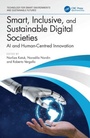
Norliza Katuk | Noradila Nordin | Roberto Vergallo
Smart, Inclusive, and Sustainable Digital Societies
AI and Human-Centred Innovation
Book
approx. 11/2026
1st Edition
CRC Press
€107.50
Not yet published
Persons
Norliza Katuk, the primary editor, is an associate professor of cybersecurity at the School of Computing, Universiti Utara Malaysia (UUM). Her research interests include information security and privacy, and cybersecurity awareness, and she has published widely in international journals and serves as a reviewer for several esteemed publications.
Noradila Nordin is a lecturer in Computer Programming at the School of Games & Creative Technology at the University for the Creative Arts in the United Kingdom. Her research interests include augmented reality, artificial intelligence applications, and wireless sensor networks.
Roberto Vergallo is a tenured assistant professor of Software Engineering and Green Computing at Pegaso University (Italy). His research interests include fintech, sustainable software engineering, green AI, and digital ethics. He is co-founder of Vidyasoft srl, a spin-off company of Salento University (Italy).
Noradila Nordin is a lecturer in Computer Programming at the School of Games & Creative Technology at the University for the Creative Arts in the United Kingdom. Her research interests include augmented reality, artificial intelligence applications, and wireless sensor networks.
Roberto Vergallo is a tenured assistant professor of Software Engineering and Green Computing at Pegaso University (Italy). His research interests include fintech, sustainable software engineering, green AI, and digital ethics. He is co-founder of Vidyasoft srl, a spin-off company of Salento University (Italy).
Content
Section I: Foundations of Inclusive and Human-Centred Digital Societies. 1.Artificial Intelligence for Inclusion and Human-Centred Sustainability: Foundations and Directions
Norliza Katuk, Roberto Vergallo and Noradila Nordin Section II: AI-Enabled Learning and Educational Transformation 2. Claude AI in Education: Opportunities and Challenges for Smart and Inclusive Learning, Zhamri Che Ani, Nur Nazifa Zhamri and Zauridah Abdul Hamid
3. Building Digital Competencies for Distance Learning: Evaluating a Training Program in Higher Education, Muhammad Abqari Zulkifli, Suwannit Chareen Chit, Jefri Marzal and Ahmad Hanis Mohd Shabli 4. Sentiment Analysis in Education: Mapping Trends, Challenges, and Opportunities, Ruziana Mohamad Rasli, Sobihatun Nur Abdul Salam, Juhaida Abu Bakar, Fauziah Baharom and Roznim Mohamad Rasli Section III: Human-Centred Educational Systems and Academic Support 5. AI in Education Platforms: A Systematic Review of Trends, Challenges, and Future Directions, Nurfakhriah Firdaus Azmi, Savita K. Sugathan, Mohd Fadzil Hassan and Manoranjitham Muniandy 6. AI-Powered Chatbots for Student Feedback: Enhancing Engagement and Quality in Higher Education, Noor Ashitah Abu Othman, Nur Athirah Noor Mohamad and Anis Shobirin Abdullah Sani 7. Smart Mentoring Systems for Educators: Design, Usability, and Future Potential, Zymul Zafar, Hafizan Mat Som, Mohd Fadzil Hassan, Savita K. Sugathan, Amzari Ghazali and Mujeeb Ur Rehman Shaikh Section IV: Societal Resilience and Human-Centred Innovation in Digital Societies 8. Explainable AI for Mental Health: Comparing LSTM Approaches to Depression Detection, Nurul Shakirah Otsman, Norliza Katuk, Rakhmat Kurniawan, Mhd Furqan and Muhammad Ali Fauzi 9. Digital Colonialism and Social Media: Insights from Sentiment Analysis with DistilBERT, Samudra Prasetio and Gunawan Wibisono 10. Cyber Independence and Indigenous Technologies: Perspectives from Malaysian Higher Education, Parteeban M. Varatharajoo, Nur Haryani Zakaria, Juhaida Abu Bakar and Aniza Md. Din 11. Smartphone Use, Study Habits, and Academic Outcomes: Machine Learning Approaches to GPA Prediction, Nurul Syafidah Jamil, Chew Chun Pang, Ooi Joo On, Anusha Annathurai, Selvamalar Nasaratnam and Ana Nabilah Sa'uadi 12. Haptic Technologies for Motor Rehabilitation: An HCI-Based Approach, Afif Badawi, Syahril Efendi, Tulus and Herman Mawengkang 13. Smart Event Experiences: Understanding Visitor Decision-Making through Contextual Inquiry, Jefri Marzal, Suwannit Chareen Chit, A. Zarkasi and Niken Rarasati Section V: Inclusive Governance, Trust, and Accessible Smart Environments14. Personal Data Protection in Higher Education: Evaluating Awareness Programs, Arnold Kanang Anak Daud, Mohd Helmy Abd Wahab, Norhafizah Ismail, Radzi Ambar, Muhammad Mahadi Abdul Jamil, Mohd Fauzi Abu Hassan and Mohamad Farhan Mohamad Mohsin 15. User Experience in E-Procurement: A SUPR-Q Framework Evaluation, 1Zulfikar Sembiring, Khairul Najmy Abdul Rani, Amiza Amir, Siti Julia Rosli, Marni Azira Markom and Ruzelita Ngadiran 16. Wi-Locate: Designing Inclusive Indoor Navigation for the Visually Impaired, Huda Ibrahim, Sariana Salleh, Fadzliana Razak, Nurihan Ariffin, Mazni Omar, Mazida Ahmad, Nur Suhaili Mansor, Amirulikhsan Zolkafli, Azman Yasin, Shah Fathin Syahirah Kamil, Muhamad Mahazi Hj. Ibrahim and Zairil Anuar Zulmuji 17. Forecasting Student Intake, Enrollment, and Output (IEO): Exponential Smoothing for Smart University Analytics Dashboards, Massudi Mahmuddin and Asma Mat 18. Designing Inclusive Mobile Learning for Sign Language: A Human-Centred Approach To Accessible Digital Societies, Zhongjing Jiang, Jean Wainwright, Noradila Nordin and John Zhang
Norliza Katuk, Roberto Vergallo and Noradila Nordin Section II: AI-Enabled Learning and Educational Transformation 2. Claude AI in Education: Opportunities and Challenges for Smart and Inclusive Learning, Zhamri Che Ani, Nur Nazifa Zhamri and Zauridah Abdul Hamid
3. Building Digital Competencies for Distance Learning: Evaluating a Training Program in Higher Education, Muhammad Abqari Zulkifli, Suwannit Chareen Chit, Jefri Marzal and Ahmad Hanis Mohd Shabli 4. Sentiment Analysis in Education: Mapping Trends, Challenges, and Opportunities, Ruziana Mohamad Rasli, Sobihatun Nur Abdul Salam, Juhaida Abu Bakar, Fauziah Baharom and Roznim Mohamad Rasli Section III: Human-Centred Educational Systems and Academic Support 5. AI in Education Platforms: A Systematic Review of Trends, Challenges, and Future Directions, Nurfakhriah Firdaus Azmi, Savita K. Sugathan, Mohd Fadzil Hassan and Manoranjitham Muniandy 6. AI-Powered Chatbots for Student Feedback: Enhancing Engagement and Quality in Higher Education, Noor Ashitah Abu Othman, Nur Athirah Noor Mohamad and Anis Shobirin Abdullah Sani 7. Smart Mentoring Systems for Educators: Design, Usability, and Future Potential, Zymul Zafar, Hafizan Mat Som, Mohd Fadzil Hassan, Savita K. Sugathan, Amzari Ghazali and Mujeeb Ur Rehman Shaikh Section IV: Societal Resilience and Human-Centred Innovation in Digital Societies 8. Explainable AI for Mental Health: Comparing LSTM Approaches to Depression Detection, Nurul Shakirah Otsman, Norliza Katuk, Rakhmat Kurniawan, Mhd Furqan and Muhammad Ali Fauzi 9. Digital Colonialism and Social Media: Insights from Sentiment Analysis with DistilBERT, Samudra Prasetio and Gunawan Wibisono 10. Cyber Independence and Indigenous Technologies: Perspectives from Malaysian Higher Education, Parteeban M. Varatharajoo, Nur Haryani Zakaria, Juhaida Abu Bakar and Aniza Md. Din 11. Smartphone Use, Study Habits, and Academic Outcomes: Machine Learning Approaches to GPA Prediction, Nurul Syafidah Jamil, Chew Chun Pang, Ooi Joo On, Anusha Annathurai, Selvamalar Nasaratnam and Ana Nabilah Sa'uadi 12. Haptic Technologies for Motor Rehabilitation: An HCI-Based Approach, Afif Badawi, Syahril Efendi, Tulus and Herman Mawengkang 13. Smart Event Experiences: Understanding Visitor Decision-Making through Contextual Inquiry, Jefri Marzal, Suwannit Chareen Chit, A. Zarkasi and Niken Rarasati Section V: Inclusive Governance, Trust, and Accessible Smart Environments14. Personal Data Protection in Higher Education: Evaluating Awareness Programs, Arnold Kanang Anak Daud, Mohd Helmy Abd Wahab, Norhafizah Ismail, Radzi Ambar, Muhammad Mahadi Abdul Jamil, Mohd Fauzi Abu Hassan and Mohamad Farhan Mohamad Mohsin 15. User Experience in E-Procurement: A SUPR-Q Framework Evaluation, 1Zulfikar Sembiring, Khairul Najmy Abdul Rani, Amiza Amir, Siti Julia Rosli, Marni Azira Markom and Ruzelita Ngadiran 16. Wi-Locate: Designing Inclusive Indoor Navigation for the Visually Impaired, Huda Ibrahim, Sariana Salleh, Fadzliana Razak, Nurihan Ariffin, Mazni Omar, Mazida Ahmad, Nur Suhaili Mansor, Amirulikhsan Zolkafli, Azman Yasin, Shah Fathin Syahirah Kamil, Muhamad Mahazi Hj. Ibrahim and Zairil Anuar Zulmuji 17. Forecasting Student Intake, Enrollment, and Output (IEO): Exponential Smoothing for Smart University Analytics Dashboards, Massudi Mahmuddin and Asma Mat 18. Designing Inclusive Mobile Learning for Sign Language: A Human-Centred Approach To Accessible Digital Societies, Zhongjing Jiang, Jean Wainwright, Noradila Nordin and John Zhang
