

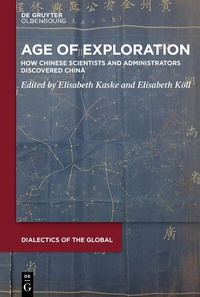
Age of Exploration
Description

In the early twentieth century, Chinese intellectuals came to realize that Westerners surpassed them not only in knowledge of the world, but also in knowledge of China itself. A rising generation of Chinese scientists, engineers, and administrators was eager to address this state of affairs and began to retrace the footsteps of Western explorers who had crisscrossed China during the preceding century. The nine case studies assembled in this book show how a new cohort of professional Chinese explorers traveled, studied, appropriated, and reshaped national space from the 1920s to the 1950s. In some instances, the explorers drew directly from the fieldwork practices of their Western predecessors. In others, they trained compilers to collect and systematize local knowledge that could be passed up the administrative hierarchy to government and national institutions.
Their projects helped to claim natural resources, prepare for infrastructural development, and create new institutionalized knowledge and public engagement with textual representations of China's geobody. This book elucidates the ways in which knowledge production in early twentieth-century China centered on space and contributed to China's transformation into a modern nation-state.
More details
Other editions
Additional editions
Persons
Elisabeth Kaske , Universität Leipzig, Deutschland; Elisabeth Köll , University of Notre Dame, Indiana, United States of America.
