

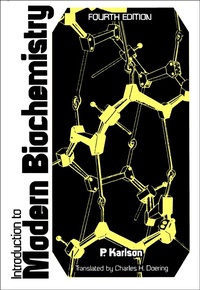
Introduction to Modern Biochemistry 4e
4th Edition
Published on 2. December 2012
560 pages
978-0-323-16217-3 (ISBN)
Description

Introduction to Modern Biochemistry, Fourth Edition provides an understanding of the chemical background of biological phenomena. This book discusses the concepts of generation and utilization of free energy. Organized into 23 chapters, this edition starts with an overview of the important role of amides in biochemistry. This text then explores the chemical structure of proteins and describes the methods of determining the amino acids sequence of proteins. Other chapters consider the role of genes in protein and enzyme synthesis. This book discusses as well the significance of the submicroscopic structure of the cell in biochemical reactions. The reader is also introduced to the chemistry of the carbohydrates. The final chapter deals with biochemical functions of various organs, including the digestive tract, liver, kidney, nervous system, muscles, and connective tissues. This book is a valuable resource for biologists, biochemists, scientists, researchers, and readers who are interested in the field of biochemistry.
More details
Other editions
Additional editions
P. Karlson
Introduction to Modern Biochemistry 4e
Book
08/1975
4th Edition
Academic Press
€54.46
Article exhausted; check different version
Content
PrefaceChapter I Organic Chemistry and Biochemistry 1. Hydrocarbons as Parent Substances 2. Functional Groups 3. Polymeric Compounds 4. Isomerisms 5. Reactions with Biochemical Significance BibliographyChapter II Amino Acids 1. Chemical Properties 2. Individual Amino Acids 3. Separation of Amino Acids BibliographyChapter III Peptides 1. Structure and Nomenclature 2. Determination of Amino Acid Sequence in Peptides 3. Naturally Occurring Peptides BibliographyChapter IV Proteins 1. Structure of Proteins 2. The Sequence of Amino Acids 3. Principles of Chain Conformation 4. Conformation of Scleroproteins 5. Conformation of Globular Proteins 6. Molecular Weights of Proteins 7. Colloidal Nature of Proteins 8. Purification and Check of Purity of Proteins 9. Classification of Globular Proteins 10. Plasma Proteins BibliographyChapter V Enzymes and Biocatalysis 1. Chemical Nature of Enzymes 2. Chemical Equilibria and Chemical Energetics 3. Catalysts and Enzymes 4. Dynamic Equilibria and the Steady State 5. Energetic Coupling and Energy-Rich Compounds 6. Specificity of Enzyme Catalysis 7. Enzyme Kinetics 8. Conditions for Enzyme Activity 9. The Mechanism of Enzyme Catalysis 10. Classification and Nomenclature of Enzymes BibliographyChapter VI Coenzymes 1. Coenzymes and Prosthetic Groups 2. Coenzymes and Vitamins 3. Structure and Classification of Coenzymes 4. Coenzymes of the Oxidoreductascs 5. Adenosine Triphosphate as Coenzyme 6. Coenzymes of C1 Metabolism 7. Coenzymes of C2 Metabolism 8. Further Group-Transferring Coenzymes 9. Coenzymes of Lyases, Isomerases, and Ligases BibliographyChapter VII Nucleic Acids and Protein Biosynthesis 1. Bases, Nucleosides, and Nucleotides 2. Biosynthesis and Degradation of Nucleotides 3. Structure of Nucleic Acids 4. Deoxyribonucleic Acid as Carrier of Genetic Information 5. The Transfer of Information: Biosynthesis of DNA and RNA 6. Protein Biosynthesis 7. Mode of Action of Genes 8. Biochemical Evolution 9. Biochemistry of Viruses 10. Nucleic Acid-Cleaving Enzymes and Phosphatases BibliographyChapter VIII Metabolism of Proteins 1. Proteolytic Enzymes 2. Endopeptidases 3. Exopeptidases and Dipeptidases 4. Outline of the Metabolism of Amino Acids 5. Decarboxylation of Amino Acids 6. Transamination 7. Deamination 8. Urea Cycle 9. Fate of the Carbon Skeleton of Amino Acids 10. Degradation to Activated Fatty Acids: Oxidative Decarboxylation 11. Metabolism of Aromatic Amino Acids 12. Amino Acids Supplying Ci Fragments 13. Ketoglutaric Acid or C4-Dicarboxylic Acid-Supplying Amino Acids BibliographyChapter IX Porphyrins and Hemins 1. Biosynthesis of the Porphyrin System 2. Chemical Constitution of Heme 3. Multiplicity of Porphyrin Catalysis 4. Significance and Reactions of the Blood Pigment 5. Degradation of Blood Pigment 6. Cytochromes, Catalases, and Peroxidases. Chlorophyll BibliographyChapter X Biological Oxidation - Metabolism of Oxygen 1. Combustion and Biological Oxidation 2. Oxidation as Loss of Electrons 3. The Redox Potential 4. The Respiratory Chain 5. Oxidative Phosphorylation (Respiratory Chain Phosphorylation) 6. Other Oxygen-Activating Enzymes BibliographyChapter XI Carbon Dioxide Formation in the Citrate Cycle 1. Significance of the Citrate Cycle 2. The Individual Steps 3. Energy Yield of the Citrate Cycle 4. Relations to Synthetic Tasks. Glyoxylate Cycle BibliographyChapter XII Fats and Fat Metabolism 1. Chemical Composition of Fats 2. Fats as Depot Material 3. ß-Oxidation of Fatty Acids 4. Metabolism of Unsaturated and Branched-Chain Fatty Acids 5. Formation of Acetoacetate - "Ketogenesis" 6.
