

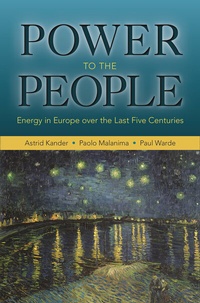
Power to the People
Energy in Europe over the Last Five Centuries
1st Edition
Published on 16. June 2015
472 pages
978-1-4008-4888-1 (ISBN)
Description

Power to the People examines the varied but interconnected relationships between energy consumption and economic development in Europe over the last five centuries. It describes how the traditional energy economy of medieval and early modern Europe was marked by stable or falling per capita energy consumption, and how the First Industrial Revolution in the eighteenth century--fueled by coal and steam engines--redrew the economic, social, and geopolitical map of Europe and the world. The Second Industrial Revolution continued this energy expansion and social transformation through the use of oil and electricity, but after 1970 Europe entered a new stage in which energy consumption has stabilized. This book challenges the view that the outsourcing of heavy industry overseas is the cause, arguing that a Third Industrial Revolution driven by new information and communication technologies has played a major stabilizing role.
Power to the People offers new perspectives on the challenges posed today by climate change and peak oil, demonstrating that although the path of modern economic development has vastly increased our energy use, it has not been a story of ever-rising and continuous consumption. The book sheds light on the often lengthy and complex changes needed for new energy systems to emerge, the role of energy resources in economic growth, and the importance of energy efficiency in promoting growth and reducing future energy demand.
Power to the People offers new perspectives on the challenges posed today by climate change and peak oil, demonstrating that although the path of modern economic development has vastly increased our energy use, it has not been a story of ever-rising and continuous consumption. The book sheds light on the often lengthy and complex changes needed for new energy systems to emerge, the role of energy resources in economic growth, and the importance of energy efficiency in promoting growth and reducing future energy demand.
All prices
More details
Other editions
Additional editions
Astrid Kander | Paolo Malanima | Paul Warde
Power to the People
Energy in Europe over the Last Five Centuries
Book
12/2015
Princeton University Press
€36.80
Shipment within 10-20 days

Astrid Kander | Paolo Malanima | Paul Warde
Power to the People
Energy in Europe over the Last Five Centuries
Book
01/2014
Princeton University Press
€55.80
Shipment within 10-20 days
Persons
Astrid Kander is professor of economic history at Lund University. Paolo Malanima is director of the Institute of Studies on Mediterranean Societies at the National Research Council in Italy. Paul Warde is reader in early modern history at the University of East Anglia and research associate at the Centre for History and Economics, Magdalene College, University of Cambridge.
Content
Preface ix
CHAPTER ONE
Introduction 1
CHAPTER TWO Definitions and Concepts 17
PART I Pre-Industrial Economies Paolo Malanima 35
CHAPTER THREE Traditional Sources 37
1. Energy in Premodern Societies
2. Organic Sources and Agricultures
3. Non-organic Sources
4. Seven Long-run Propositions
5. Conclusion
CHAPTER FOUR Constraints and Dynamics 81
1. Population and Climate
2. Energy Scarcity
3. Saving Land
4. Saving Labor
5. Conclusion
PART II The First Industrial Revolution Paul Warde 129
CHAPTER FIVE A Modern Energy Regime 131
1. The Take-off of Coal
2. Traditional Sources: Rise but Relative Decline
3. Conclusion
CHAPTER SIX The Coal Development Block 159
1. The Core Innovations
2. The Growth Dynamics of the Coal Development Block
3. The Transport Revolution
CHAPTER SEVEN Energy and Industrial Growth 209
1. Coal and Growth
2. Seven Long-run Propositions
3. Energy Intensity and Economic Structure
4. Conclusion
PART III The Second and Third Industrial Revolutions Astrid Kander 249
CHAPTER EIGHT Energy Transitions in the Twentieth Century 251
1. The Rise of Oil and Electricity
2. Old and New in Energy Regimes
3. Conclusion
CHAPTER NINE Major Development Blocks in the Twentieth Century and Their Impacts on Energy 287
1. The ICE-Oil Block
2. The Electricity Block
3. The ICT Development Block
4. Conclusion
CHAPTER TEN The Role of Energy in Twentieth-Century Economic Growth 333
1. Development Blocks and GDP
2. Seven Long-run Propositions
3. Energy Intensity and Economic Structure
4. Conclusion
CHAPTER ELEVEN Summary and Implications for the Future 366
1. Summing Up the Book
2.Thinking about the Future
3. Some Remarks about the Future
APPENDIXES
A. The Role of Energy in Growth Accounting 387
B. Decomposing Energy Intensity 1870-1970 395
C. The Impact from the Service Transition on Energy Intensity 402
D. Biased Technical Development 411
References 415
Index 451
CHAPTER ONE
Introduction 1
CHAPTER TWO Definitions and Concepts 17
PART I Pre-Industrial Economies Paolo Malanima 35
CHAPTER THREE Traditional Sources 37
1. Energy in Premodern Societies
2. Organic Sources and Agricultures
3. Non-organic Sources
4. Seven Long-run Propositions
5. Conclusion
CHAPTER FOUR Constraints and Dynamics 81
1. Population and Climate
2. Energy Scarcity
3. Saving Land
4. Saving Labor
5. Conclusion
PART II The First Industrial Revolution Paul Warde 129
CHAPTER FIVE A Modern Energy Regime 131
1. The Take-off of Coal
2. Traditional Sources: Rise but Relative Decline
3. Conclusion
CHAPTER SIX The Coal Development Block 159
1. The Core Innovations
2. The Growth Dynamics of the Coal Development Block
3. The Transport Revolution
CHAPTER SEVEN Energy and Industrial Growth 209
1. Coal and Growth
2. Seven Long-run Propositions
3. Energy Intensity and Economic Structure
4. Conclusion
PART III The Second and Third Industrial Revolutions Astrid Kander 249
CHAPTER EIGHT Energy Transitions in the Twentieth Century 251
1. The Rise of Oil and Electricity
2. Old and New in Energy Regimes
3. Conclusion
CHAPTER NINE Major Development Blocks in the Twentieth Century and Their Impacts on Energy 287
1. The ICE-Oil Block
2. The Electricity Block
3. The ICT Development Block
4. Conclusion
CHAPTER TEN The Role of Energy in Twentieth-Century Economic Growth 333
1. Development Blocks and GDP
2. Seven Long-run Propositions
3. Energy Intensity and Economic Structure
4. Conclusion
CHAPTER ELEVEN Summary and Implications for the Future 366
1. Summing Up the Book
2.Thinking about the Future
3. Some Remarks about the Future
APPENDIXES
A. The Role of Energy in Growth Accounting 387
B. Decomposing Energy Intensity 1870-1970 395
C. The Impact from the Service Transition on Energy Intensity 402
D. Biased Technical Development 411
References 415
Index 451

