

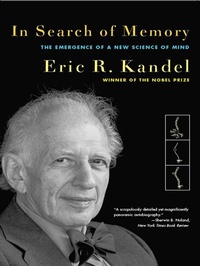
In Search of Memory
The Emergence of a New Science of Mind
Published on 17. March 2007
528 pages
978-0-393-07051-4 (ISBN)
Description

"A stunning book.”—Oliver Sacks
Memory binds our mental life together. We are who we are in large part because of what we learn and remember. But how does the brain create memories? Nobel Prize winner Eric R. Kandel intertwines the intellectual history of the powerful new science of the mind—a combination of cognitive psychology, neuroscience, and molecular biology—with his own personal quest to understand memory. A deft mixture of memoir and history, modern biology and behavior, In Search of Memory brings readers from Kandel's childhood in Nazi-occupied Vienna to the forefront of one of the great scientific endeavors of the twentieth century: the search for the biological basis of memory.More details
Other editions
Additional editions
Book
04/2007
WW Norton & Co
€20.00
Shipment within 15-20 days
Person
Eric R. Kandel is Kavli Professor and University Professor at Columbia University and senior investigator at the Howard Hughes Medical Institute. He received the Nobel Prize in Physiology or Medicine in 2000. He lives in New York City.
Content
- Intro
- Praise
- ALSO BY ERIC R. KANDEL
- Title Page
- Dedication
- Copyright
- CONTENTS
- Preface
- ONE
- 1. Personal Memory and the Biology of Memory Storage
- 2. A Childhood in Vienna
- 3. An American Education
- TWO
- 4. One Cell at a Time
- 5. The Nerve Cell Speaks
- 6. Conversation Between Nerve Cells
- 7. Simple and Complex Neuronal Systems
- 8. Different Memories, Different Brain Regions
- 9. Searching for an Ideal System to Study Memory
- 10. Neural Analogs of Learning
- THREE
- 11. Strengthening Synaptic Connections
- 12. A Center for Neurobiology and Behavior
- 13. Even a Simple Behavior Can Be Modified by Learning
- 14. Synapses Change with Experience
- 15. The Biological Basis of Individuality
- 16. Molecules and Short-Term Memory
- 17. Long-Term Memory
- 18. Memory Genes
- 19. A Dialogue Between Genes and Synapses
- FOUR
- 20. A Return to Complex Memory
- 21. Synapses Also Hold Our Fondest Memories
- 22. The Brains Picture of the External World
- 23. Attention Must Be Paid!
- FIVE
- 24. A Little Red Pill
- 25. Mice, Men, and Mental Illness
- 26. A New Way to Treat Mental Illness
- 27. Biology and the Renaissance of Psychoanalytic Thought
- 28. Consciousness
- SIX
- 29. Rediscovering Vienna via Stockholm
- 30. Learning from Memory: Prospects
- Glossary
- Notes and Sources
- Acknowledgments
