

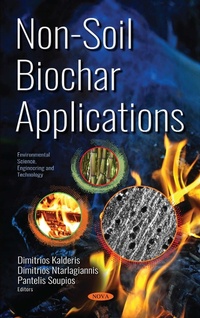
Non-Soil Biochar Applications
Published on 1. September 2018
276 pages
978-1-5361-3938-9 (ISBN)
Description

Biochar is a carbon rich solid material resulting from the pyrolysis of biomass under oxygen-free and low temperature conditions. Although most research is directed towards the application of biochar to soils, there are several other biochar properties that render it a suitable candidate for non-soil applications. A growing number of studies have tested biochar as a composite in building materials, as a hazardous substance adsorbent in drinking water and wastewater, and as a component in filters for indoor air quality and storm water management. The potential to utilize biochar for various applications depends on its properties. For example, biochar with high electrical conductivity, porosity and stability at lower temperatures is preferred as electrodes material in microbial fuel cells. Biochar containing relatively high structural bound oxygen groups is preferred in direct carbon fuel cells. On the other hand, biochars with increased particle strength, hydrophobicity and high surface area are suitable candidates for the development of reusable catalysts for chemical reactions. These new high-value applications are still in their infancy, and further research and development is needed to reach commercialization. Optimum reaction conditions for producing biochar are not always the same and reproducibility is often not satisfactory, even when the same biomass is used and the same production conditions are present. This book on non-soil biochar applications aims to highlight the diversity of biochar as a multi-functional material and introduce some new and emerging applications to the wider scientific community. It will act as a reference document to all groups and individuals working or interested in biochar research and will be a valuable contribution to existing published literature.
More details
Other editions
Additional editions
Dimitrios Kalderis | Dimitrios Ntarlagiannis | Pantelis Soupios
Non-Soil Biochar Applications
Book
09/2018
Nova Science Publishers Inc
€303.55
Shipment within 15-20 days
Content
- Intro
- Contents
- Foreword
- Preface
- Acknowledgments
- Chapter 1
- Challenges and Opportunities in the Field of Energy Storage: Supercapacitors and Activated Biochar
- Abstract
- Preliminary Considerations
- Energy Production and the Storage Issue
- Supercapacitors
- Pyrolytic Conversion of Biomasses
- New Perspectives: Use of Biochar Based Materials for Supercapacitors
- Activation of Biochar: Physical and Chemical Pathways
- Activated Biochar as Material for Supercapacitors
- Conclusion
- References
- Chapter 2
- Biochar Cookstoves as a Potential Clean Energy Source for Household Heating and Cooking in Developing Countries
- Abstract
- Introduction
- Biochar Technology as a Household Energy Source
- Household Heating and Cooking: The Case for Biochar Cookstoves
- Biochar Cookstoves: The Fundamental Design Considerations
- Biochar Feedstocks and Biochar-Producing Cookstoves
- Performance Evaluation of Biochar Cookstoves
- Beyond Energy: Potential Co-Benefits of Biochar Technology
- Constraints and Future Research Directions
- Socio-Economic Constraints and Barriers
- Knowledge Gaps and Future Research Directions
- Design of Biochar Cookstoves
- Performance Evaluation of Biochar Cookstoves
- Conclusion
- Acknowledgments
- References
- Chapter 3
- Biochars as Potential Adsorbents in Household Water Filters for Clean Drinking Water Provision in Developing Countries
- Abstract
- Introduction
- Appropriate Water Treatment Methods
- Fundamental Considerations
- Low-Cost Water Treatment Methods
- Biochar Technology and Drinking Water Treatment
- Synthesis of Biochar Adsorbents and Their Properties
- Biochars as Adsorbents for Removal of Contaminant in Aqueous Systems
- Inorganic Contaminants
- Organic Contaminants
- Pathogenic and Indicator Organisms
- Conceptual Design Configurations of Biochar Water Filters
- Discussion
- Summary, Conclusions and Outlook
- Acknowledgments
- References
- Chapter 4
- Application of Biochar in Advanced Oxidation Processes
- Abstract
- Introduction
- Advanced Oxidation Processes (AOPs)
- Biochar Definition and Background
- Environmental Biochar Application for Remediation of Toxic Metal-Contaminated Media
- Biochar Applications for Removal of Toxic Metals
- Environmental Application of Biochar in Systems Influenced by Organic Pollutants
- Dye Removal
- Pesticides and Herbicides Removal
- Pharmaceuticals Removal
- Recommendations for Future Studies
- References
- Chapter 5
- Re-Examining the Carbon Dioxide Enrichment Effect: Using Water Hyacinth Biochar for Controlling Indoor Carbon Dioxide Levels
- Abstract
- Introduction
- Literature Review
- Concept of Green Chimney and the Carbon Dioxide Enrichment Effect
- Water Hyacinth
- Factors Affecting Carbon Dioxide Sorptivity of Biochar
- Materials and Methods
- High Carbon Dioxide Dosage of Water Hyacinth and Production of Biochar
- High Carbon Dioxide Dosage of Water Hyacinth and Production of Biochar
- Calculation of Carbon Dioxide Adsorbed by Biochar
- Experimental Results and Discussion
- High Carbon Dioxide Treatment of Water Hyacinth Samples
- Conclusion
- References
- Chapter 6
- Wastewater Treatment Using Paper Mill Waste Biochar as a Bio-Adsorbent: A Techno-Economic Assessment
- Abstract
- Introduction
- Sources of Biochar and Application in Wastewater Treatment
- Biochar Production Processes
- Textile Wastewater Treatment Using Bio-Adsorbents
- Characteristics of Textile Wastewater
- Color
- Dissolved Solids
- Toxic Metals
- Residual Chlorine
- COD and BOD
- Materials and Methods
- Biochar Production and Characterization
- Determination of Textile Wastewater and Treat Effluent Characteristics
- Bio-Adsorption Equipment Set Up
- Pre-Economic Assessment
- Results and Discussion
- Biochar Physicochemical Characteristics
- Effect of Pyrolysis Temperature on Biochar Yield
- Effect of Adsorption Time on Treated Effluent pH
- Effect of Biochar on the Textile Wastewater Properties
- Process Design
- Textile Wastewater Storage
- Primary Treatment
- Flotation
- Adsorption Using Biochar
- Pre-Economic Assessment
- Economic Assessment Basis
- Total Fixed Capital Investment
- Equipment Cost
- Cost of Purchased Equipment
- Cost of Additional Accessories
- Total Equipment Cost
- Fixed Capital
- Total Production Costs
- Manufacturing Costs
- Operating and Labor Costs
- Revenue
- Cash Flow Forecast
- Return on Investment
- Payback Period
- Break Even Analysis
- Site Selection and Plant Layout
- Site Selection
- Plant Layout
- Safety Considerations
- Costing Considerations
- Environmental Impact Assessment (EIA)
- Site Preparation Environmental Impact
- Construction Phase Environmental Impact
- Operational and Decommissioning Phase Environmental Impact
- Conclusion
- References
- Chapter 7
- Biodiesel Production Using Biochar as a Heterogeneous Catalyst
- Abstract
- 1. Introduction
- 2. Biochar Preparation and Activation Techniques
- 3. Production of Biodiesel Using Biochar as Catalyst
- Conclusion
- Acknowledgments
- References
- Chapter 8
- Biochar as Sorbent for the Treatment of Inorganic Pollutants in Water and Wastewater
- Abstract
- 1. Introduction
- 2. Biochar as a Sorbent for Heavy Metals
- 2.1. Divalent Metals
- 2.2. Other Metals
- 2.3. Magnetic Biochar
- 2.4. Disposal of Spent Biochar
- 3. Biochar as a Sorbent for Ammonium and Other Non-Metal Cations
- 3.1. Ammonium
- 3.2. Other Non-Metal Cations
- 4. Biochar as a Sorbent for Phosphate and Other Anions
- 4.1. Phosphate
- 4.2. Other Anionic Non-Metals
- 4.3. Anionic Metal(loid)s
- Conclusion
- References
- About the Editors
- Index
- Blank Page
